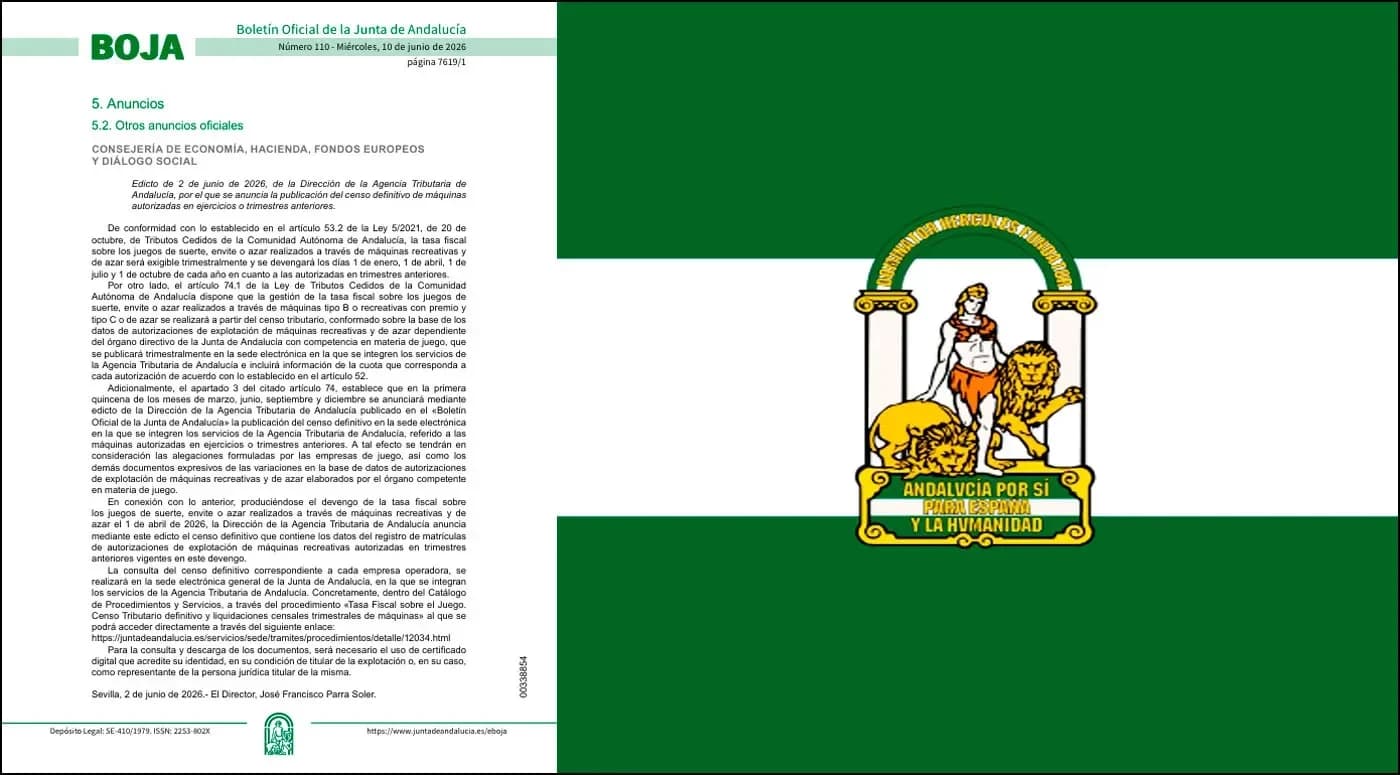
The Junta de Andalucía has approved a package of updated administrative procedures affecting gaming machine management and gambling self-exclusion registries, published in the BOJA (Boletín Oficial de la Junta de Andalucía). The move is part of a broader regional digitisation drive aimed at reducing bureaucratic burden and standardising electronic channels across sectors, including gaming.
Two Procedures, One Digital Push
The resolution targets two distinct areas of gaming administration. The first concerns information requests about recreational machines installed in hospitality establishments; the second addresses voluntary self-exclusion from gambling venues.
Both updates reflect the Andalusian administration's ongoing adaptation to Spanish electronic procedure law and its regional telematisation plan, which seeks to eliminate paper-based processes across government services.
Gaming Machines in Hospitality Venues
A new form has been approved — on an informative basis — allowing hospitality establishment owners to request information about authorised machines installed in their premises. Crucially, submission will be exclusively electronic, with no paper alternative offered.
The form operates within the framework of the Reglamento de Máquinas Recreativas y de Azar de Andalucía and allows operators to identify machines by exploitation authorisation, model, series, or circulation guide, while also stating the reason for the request. This digitisation step should reduce processing friction for licence-related queries and improve traceability within the regional regulatory framework. Earlier this year, Andalucía released its Q2 2026 gaming machine census and tax data, offering a snapshot of the scale of the machine estate these new procedures will govern.
Preparing for Electronic-Only Submission
Hospitality operators should verify that the responsible staff member holds a valid digital certificate (certificado digital) or Cl@ve credentials recognised by the Junta de Andalucía — without these, electronic submission to the new form is not possible. The Reglamento de Máquinas Recreativas y de Azar de Andalucía also requires that machine documentation stays current, so aligning a digital-certificate audit with a broader licence-file review is a practical efficiency gain.
Self-Exclusion Registry Modernisation
The resolution also updates the form governing the Registro de Control e Interdicciones de Acceso a los Establecimientos de Juego y Apuestas, Andalusia's voluntary self-exclusion registry for gambling premises. Citizens can use this instrument to request inscription, cancellation, or modification of their exclusion status.
Registration remains indefinite in duration, though a minimum permanence period of six months applies before any cancellation request can be submitted. The updated model also preserves the option to extend an exclusion to the national Registro General de Interdicciones de Acceso al Juego (RGIAJ), operating under a collaboration agreement between the Junta de Andalucía and the central state administration for mutual recognition of interdictions. Portugal's regulator took a comparable approach when SRIJ launched its mobile-optimised self-exclusion portal, integrating coverage across all licensed operators through a single digital gateway.
Importantly, individuals retain the right to oppose the transfer of their data to the national registry — a data protection safeguard embedded directly in the updated form.
Compliance and Operational Implications
Mandatory electronic submission signals a structural shift: operators who have relied on paper channels face a hard transition deadline embedded in the new procedures.
For gaming operators in Andalusia, the practical takeaway is straightforward: electronic channels are no longer optional. The updated forms also reflect input from regional government delegations, suggesting the changes address real operational friction points. Spain's national gambling regulator has been moving in the same direction — the DGOJ recently updated its player verification model with enhanced controls, underscoring a broader Spanish push toward standardised digital compliance infrastructure. Whether similar digitisation updates will cascade to other gaming sub-sectors in the region remains an open question — but operators and compliance teams should ensure their administrative workflows are already aligned with the electronic submission mandate.
The article mentions no transition period; the new procedures provide for electronic submission only, with no paper alternative. Operators should align their administrative processes as soon as possible, since the publication does not disclose a specific effective date.
Under the updated form, individuals have the right to object to the transfer of their data to the national Registro General de Interdicciones de Acceso al Juego; this safeguard is built directly into the document. However, the article does not explain how such an objection affects practical implementation of the cooperation agreement between the Junta of Andalusia and the central state administration.
The source does not disclose this detail, but Andalusia's updates are based on Spain-wide legislation on electronic procedures, which could theoretically encourage other autonomous communities to take similar steps. Operators active in multiple regions should monitor official bulletins from the relevant autonomous communities.
According to AzarPlus.
Legal Disclaimer
This content reflects a general overview of regulatory frameworks based on publicly available information. It does not constitute legal advice or a legal opinion. iGamingWriter.blog disclaims any liability arising from reliance on this material.