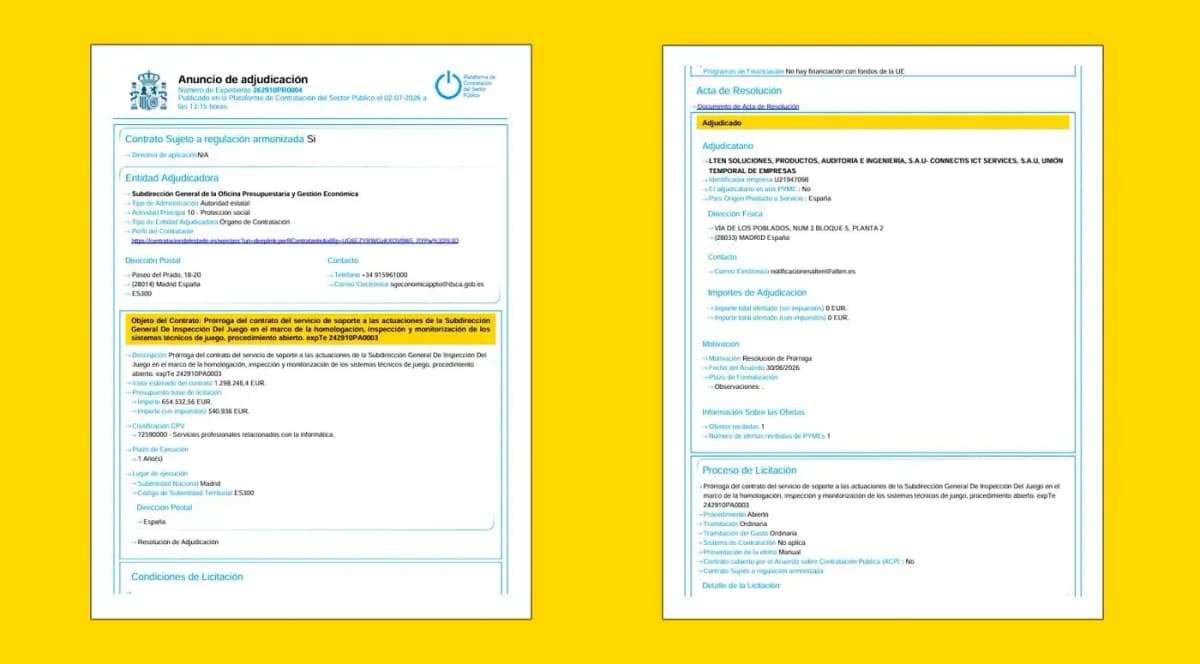
Spain's gaming regulatory infrastructure has received a quiet but consequential update. The Subdirección General de la Oficina Presupuestaria formalised a one-year extension of its technical support contract on 30 June, ensuring no interruption to the inspection and homologation services underpinning operator compliance oversight.
The contract, worth €654,532.56, keeps the UTE Alten-Connectis consortium — formed by Alten Soluciones and Connectis ICT Services — in place to support the Subdirección General de Inspección del Juego. The two firms provide professional IT services covering homologation, inspection, and monitoring of the technical systems operated by licensed gaming companies under the AZARplus framework.
Their mandate is precise: verify that operator platforms conform strictly to applicable regulation. The estimated total value of the contract across its full duration reaches €1,298,246.40.
Gaming Inspection Continuity Over Disruption
The extension avoids any gap in certification and surveillance functions — a practical priority for a regulator whose inspections directly validate the integrity of live gaming platforms. Spain's Dirección General de Ordenación del Juego (DGOJ) has been actively modernising its technical oversight tools, including the recent deployment of the AZARplus AI virtual assistant to support regulatory functions.
For operators, uninterrupted technical oversight means no procedural delays in homologation processes that would otherwise stall product launches or platform updates. The renewal signals that the current technical support model is considered operationally sound, at least for the year ahead. Whether a new open tender will follow remains the key question for the sector to watch.
What Homologation Delays Cost Operators
In Spain's regulated market, a lapse in homologation certification can freeze a game title or platform update from going live indefinitely. Under DGOJ oversight, operators must receive technical clearance before deploying any change to certified systems — meaning even a brief gap in inspection support infrastructure can translate into weeks of commercial standstill for affected licensees.
The DGOJ has also moved on related compliance infrastructure this year: centralised joint deposit limits specifications were published in July 2026, underscoring a broader push to harden Spain's regulatory technology stack before year-end.
According to AzarPlus.
Legal Disclaimer
This content reflects a general overview of regulatory frameworks based on publicly available information. It does not constitute legal advice or a legal opinion. iGamingWriter.blog disclaims any liability arising from reliance on this material.