Most business communications today read like they were drafted by an exhausted legal department — filled with corporate jargon, endless sentences, and zero personality. The predictable result? Clients scan three lines and immediately close the email, abandon the website, or tune out during presentations.
This epidemic of boring business writing costs companies millions in lost opportunities, weakened client relationships, and missed conversions. But the solution doesn't require hiring expensive copywriting agencies or overhauling your entire communications strategy.
The Hidden Cost of Corporate Drone Writing
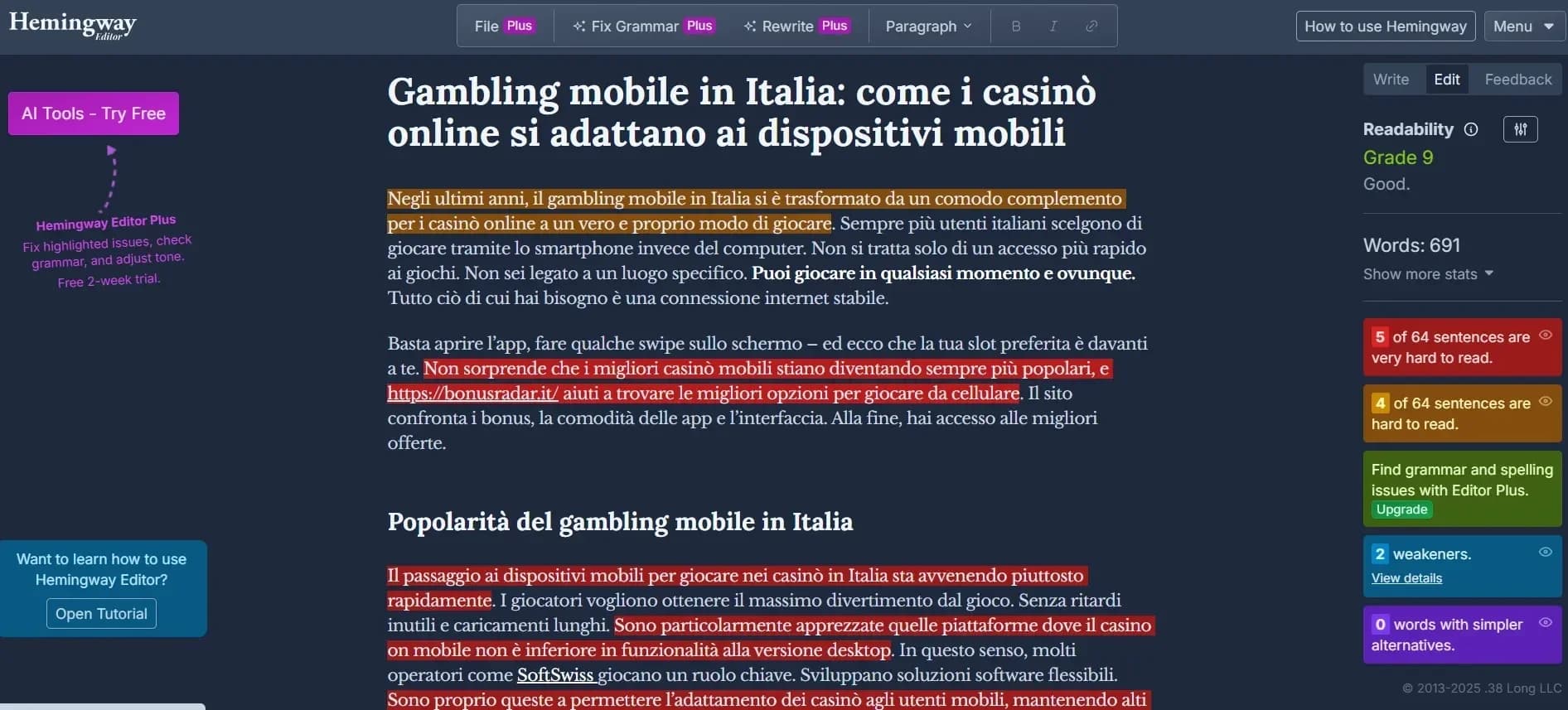
Traditional business writing follows an outdated playbook that prioritizes perceived professionalism over actual communication effectiveness. Companies load their content with phrases like "implement synergistic solutions" and "optimize strategic initiatives" — language that sounds impressive but conveys nothing meaningful to busy decision-makers.
3
Lines clients read before closing emails
2x
Engagement increase from using questions
1.5x
Longer reading time with structured text
The irony is striking: in an attempt to appear professional, businesses often sound robotic and disconnected. Clients don't want to decode corporate speak — they want clear, actionable information that helps them make decisions quickly.
"We always recommend writing as if you're talking to a colleague over a cup of coffee. Clients value transparency and simplicity, not dry business jargon."
— Olga Svichkar, We-Right Factory
Master the Art of Conversational Professionalism
The most effective business writing strikes a balance between accessibility and expertise. You can maintain credibility while speaking in plain English that busy executives actually want to read.
The Corporate Jargon Detector Test:
- Does your text overflow with words like "implement," "optimise," "facilitate," or "leverage"?
- Are your sentences longer than three lines?
- Do you start falling asleep re-reading your own content?
If you answered yes to any of these, your writing likely suffers from corporate drone syndrome.
Transform Dry Corporate Speak Into Engaging Communication
Consider this transformation:
Before: "To optimise business processes, our company is implementing a program aimed at increasing the efficiency of client interactions through strategic solutions."
After: "We launched a program that saves you time and speeds up your work. It connects in one click — want to try it?"
The second version delivers the same information but creates immediate value clarity and includes a compelling question that draws readers forward.
Tip
Write your first draft as if explaining the concept to a colleague during a coffee break. Then edit for clarity and precision while maintaining that conversational tone.
Deploy Strategic Questions as Engagement Magnets
Questions function as cognitive speed bumps that force readers to pause, process, and mentally engage with your content. Unlike passive information dumps, strategic questions create a dialogue between you and your reader.
The Psychology Behind Question-Based Engagement
When readers encounter a direct question, their brains automatically attempt to formulate an answer. This neurological response transforms passive consumption into active participation, significantly increasing retention and engagement rates.
"When we test texts with our clients, questions in the copy increase engagement almost twofold. A small question gets the reader thinking about your offer immediately."
— Olga Svichkar, We-Right Factory
Effective Question Strategies:
- Specific and relevant: "Do you want your team to spend 20% less time on routine tasks?"
- Value-focused: "What if you could implement this in one week?"
- Action-oriented: "Ready to see how this works?"
Questions to Avoid:
- Overly general: "Don't you want success?"
- Philosophical: "How do you assess the meaning of your life in the context of business strategy?"
- Rhetorical without purpose: "Isn't efficiency important?"
Warning
Limit questions to one per paragraph maximum. Too many questions create cognitive fatigue and make readers feel interrogated rather than engaged. Strategic placement is more effective than quantity.
Transform Abstract Promises Into Compelling Narratives
Stories create emotional connections that facts alone cannot achieve. While statistics might impress momentarily, compelling case studies and mini-narratives stick in readers' minds and help them visualise success scenarios.
The Mini-Case Study Framework
Effective business stories follow a simple three-part structure that builds credibility without overwhelming busy readers:
Problem Identification
Present a relatable challenge your target audience faces
Solution Implementation
Describe the specific actions taken to address the issue
Measurable Results
Provide concrete outcomes with specific numbers and timeframes
Example Transformation:
Before: "Our software helps companies increase sales and reduce marketing costs."
After: "One of our clients, a small marketing studio, used our software for a month and cut time spent on routine tasks by 15 hours a week while increasing sales by 20%. Imagine saving your time the same way."
The narrative version provides social proof, specific benefits, and helps readers visualise themselves achieving similar results.
Important
Always ground your stories in verifiable data. Specific numbers and realistic timeframes build trust and credibility.
Master the Science of Scannable Content Structure
Modern business readers don't consume content linearly — they scan for relevant information and key takeaways. Dense paragraphs and wall-of-text formatting guarantee your message will be overlooked, regardless of its quality.
The Visual Hierarchy Principles
Effective business writing uses formatting strategically to guide readers through key information and create natural stopping points that encourage continued engagement.
Structural Elements That Enhance Readability:
| Element | Purpose | Best Practice |
|---|---|---|
| Short paragraphs | Reduce cognitive load | 2-3 sentences maximum |
| Bullet points | Highlight key benefits | 3-5 items per list |
| Subheadings | Create logical sections | Descriptive and scannable |
| White space | Prevent visual overwhelm | Break up dense content |
"A clear structure with subheadings and lists makes texts easier to read. We've noticed that texts with short paragraphs and numbered lists are read 1.5 times longer."
— Olga Svichkar, We-Right Factory
Before and After: Structure Transformation
Before: "Our service helps improve team performance, save time, optimise processes, and increase sales, while offering a convenient interface and 24/7 support."
After: Our service helps you:
- Save up to 15 hours a week for your team
- Optimise key processes
- Increase sales through automation
- Get 24/7 support and a convenient interface
The restructured version immediately communicates value and allows readers to quickly identify relevant benefits.
Mobile Reading Patterns
Over 60% of business emails are now opened on mobile devices. Content that works on desktop often fails on smaller screens. Test your formatting on multiple devices to ensure readability across all platforms.
Replace Vague Promises With Concrete Value Propositions
Abstract language forces readers to fill in gaps with assumptions, creating opportunities for misunderstanding and skepticism. Specific numbers, timelines, and measurable outcomes build trust and help prospects evaluate potential return on investment.
The Specificity Framework
Effective business writing transforms general benefits into concrete value propositions that busy decision-makers can quickly assess and approve. Transformation Examples:
| Vague Promise | Specific Value Proposition |
|---|---|
| "Improve team performance" | "Cut time spent on routine tasks by 15 hours per week" |
| "Increase efficiency" | "Team productivity grows by 20%" |
| "Save resources" | "Your team can complete one more important task every week" |
The key insight: clients need to visualise exactly what success looks like in measurable terms.
Tools for Adding Credible Specifics
- Analytics platforms for performance data
- Case studies with verified results
- Client testimonials featuring specific outcomes
- Pilot program results with measurable improvements
Data Verification Standards
Always maintain documentation for any statistics you cite. Clients increasingly fact-check claims, and unverifiable numbers damage credibility. Consider creating an internal database of verified client results for consistent reference.
Design Irresistible Calls to Action
Even masterfully written content fails without clear next steps. Effective calls to action transform reader interest into concrete business outcomes by removing friction and creating urgency around the proposed solution.
CTA Psychology and Performance Factors
Compelling calls to action combine psychological triggers with practical clarity to motivate immediate responses from qualified prospects.
High-Performance CTA Elements:
- Action-oriented verbs: "Start," "Discover," "Transform"
- Specific benefits: "And boost sales by 20%"
- Urgency indicators: "Limited availability," "This week only"
- Clear instructions: "Click here to schedule," "Download the guide"
Pros
- "Start your free trial and save 10 hours this week"
- "Download the case study to see 20% growth strategies"
- "Schedule a demo to transform your workflow"
Cons
- "Click here for more information"
- "Contact us to learn more"
- "Submit your details below"
Tip
Test your CTAs regularly through A/B testing to optimise conversion rates. Small changes in wording can dramatically impact response rates.
Strategic Implementation: Your Business Writing Transformation Roadmap
Implementing these six techniques requires systematic application rather than random experimentation. Start with your highest-impact communications — client proposals, email sequences, and key landing pages — before expanding to all business content.
The 30-Day Implementation Plan
Week 1: Audit and Baseline
Review your current business writing using the corporate jargon detector test and identify improvement opportunities
Week 2: Apply Conversation and Questions
Rewrite key communications using conversational tone and strategic questions
Week 3: Add Structure and Specifics
Implement visual hierarchy principles and replace vague promises with concrete value propositions
Week 4: Optimise CTAs and Test
Deploy compelling calls to action and begin A/B testing for performance improvement
The techniques work synergistically — conversational tone makes questions feel natural, specific numbers make stories credible, and clear structure makes CTAs more compelling.
Each technique works independently, but together they transform any business text into a tool that grabs attention, holds it, and motivates action.
Implementation Priority
Start with client-facing materials that directly impact revenue: proposals, follow-up emails, and landing pages. Internal communications can be improved later once you've mastered the techniques on high-stakes content.
Measuring Your Business Writing Performance
Track engagement metrics to validate improvements and identify areas for continued optimisation. Key performance indicators include email open rates, time spent on page, click-through rates, and conversion percentages.
Essential Metrics to Monitor:
15%
Increase in email open rates
25%
Higher click-through rates
30%
Longer time on page
20%
Improved conversion rates
Use tools like Google Analytics, email marketing platforms, and heat mapping software to gather data on reader behaviour and content performance.
Effective business writing creates compounding benefits that extend far beyond individual communications, building trust and positioning your organisation as a thought leader.
Long-term Business Impact: Beyond Better Writing
Effective business writing creates compounding benefits that extend far beyond individual communications. Clear, engaging content builds trust, reduces sales cycles, improves client relationships, and positions your organisation as a thought leader in your industry.
Companies that invest in improving their business writing typically see improvements in client acquisition costs, customer lifetime value, and overall brand perception. The six techniques outlined here provide a foundation for sustained competitive advantage through superior communication.
Remember: your writing represents your brand, your expertise, and your commitment to client success. Make every word count by applying these nine proven strategies consistently across all business communications.
Concrete data helps prospects calculate potential ROI and creates credible expectations. "Save time" means nothing; "save 10 hours a week" immediately communicates value equivalent to almost two working days.
Focus on 2-3 key metrics that directly relate to your audience's primary concerns. Use timeframes, percentages, and cost savings that prospects can easily verify and benchmark.
According to We-Right Blog.