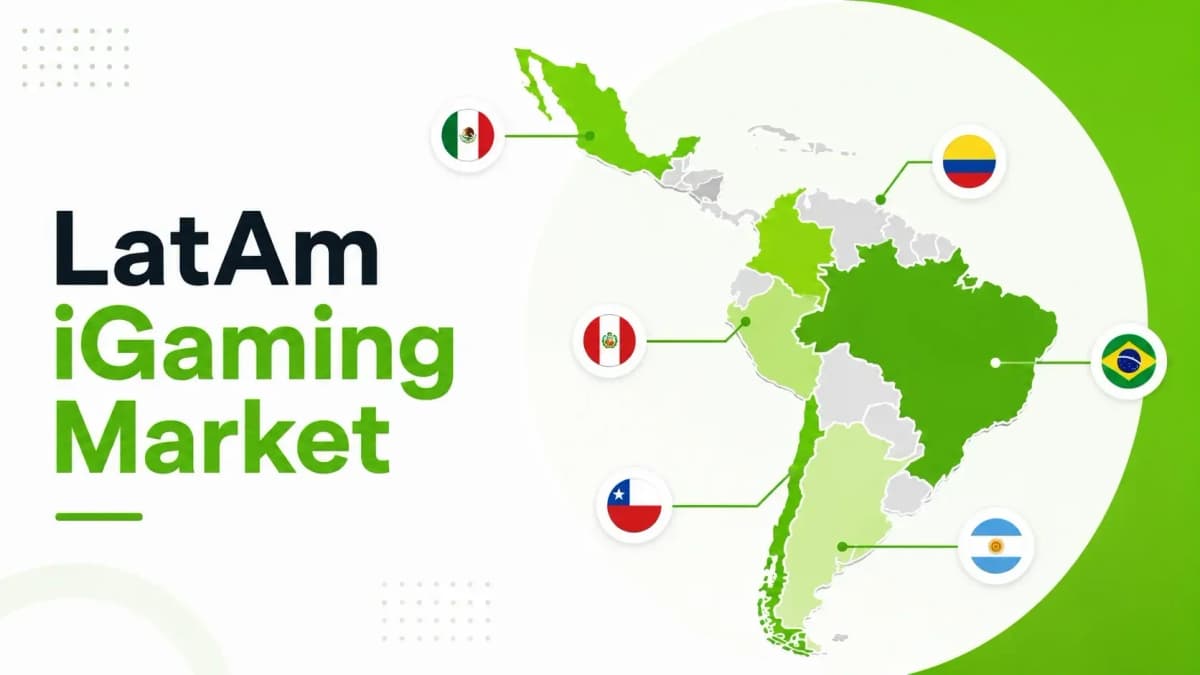
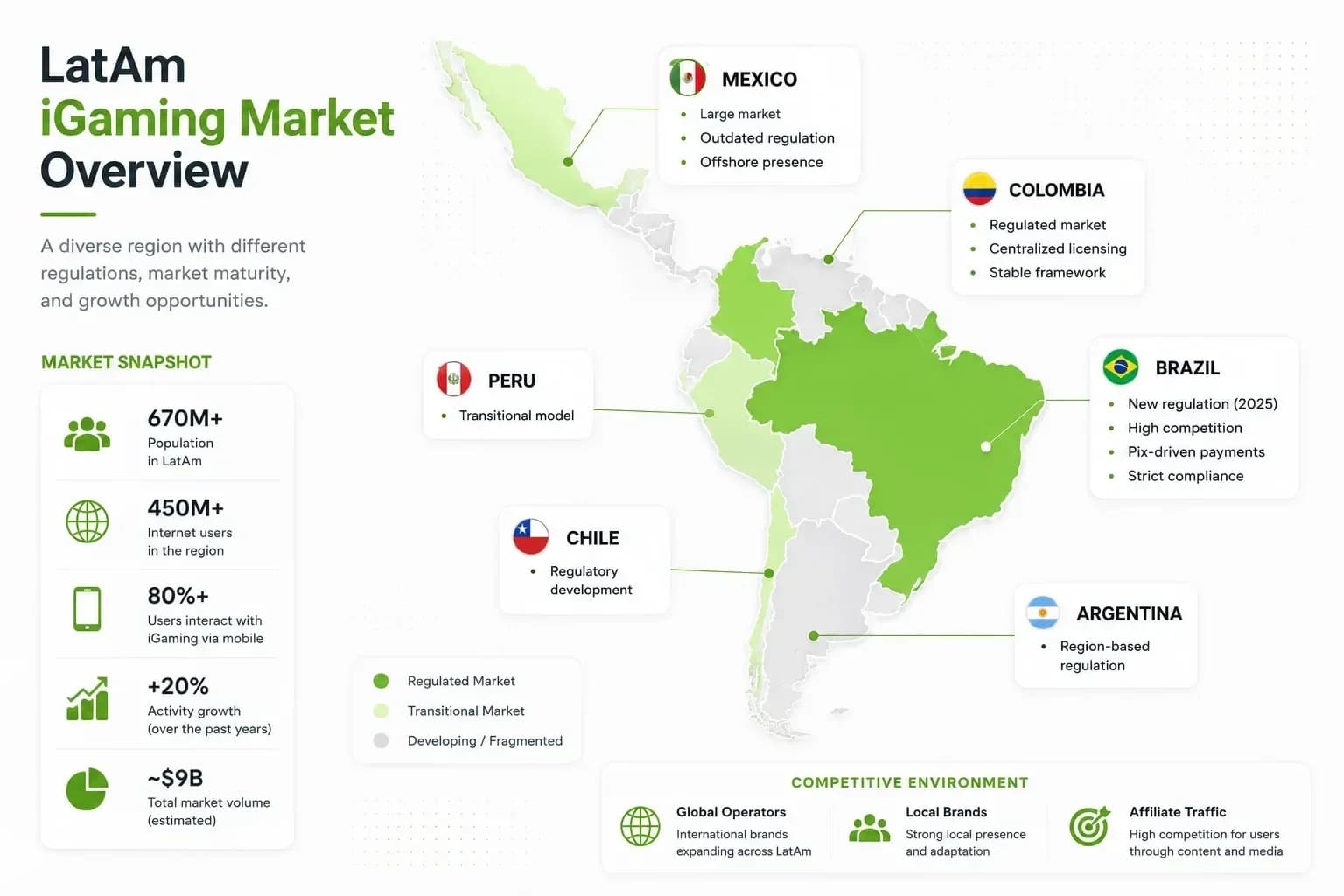
Latin America has transformed from an overlooked regional market into the most fiercely contested iGaming territory globally, driven by explosive mobile adoption, regulatory modernisation, and the entry of heavyweight international operators. With a population of 670 million and activity surging by more than 20%, the region's gambling market could reach $9 billion, sparking unprecedented competition across fragmented national jurisdictions.
The intensity of this competition stems from a unique convergence: massive untapped audiences meeting sophisticated global operators in markets where regulatory frameworks are either brand new or completely outdated. The result is a high-stakes environment where traditional expansion strategies fail and market entry requires country-specific approaches to succeed.
The Scale Behind LatAm's Competitive Surge

Mobile-First Demographics Drive Market Density
The foundation of Latin America's competitive intensity lies in its digital demographics. More than 450 million internet users populate the region, with the vast majority representing younger generations who form the core gambling demographic.
80%
Users interact with gambling products via smartphones
90%
Mobile registrations and payments in most markets
42%
First deposits originating from SEO traffic
This mobile-first consumption model creates immediate market saturation. Unlike traditional markets where operators could build desktop presence before adapting to mobile, LatAm operators launch with mobile-optimised platforms from day one, instantly competing for the same limited screen real estate and user attention spans.
Regulatory Transformation Creates Entry Windows and Barriers
The regulatory landscape across Latin America has undergone dramatic shifts, creating both opportunities and intense competition. Historical weak regulation and market fragmentation have given way to structured licensing frameworks that simultaneously legitimise markets and restrict access.
Brazil exemplifies this dynamic most clearly. The country's transition to full regulation on January 1, 2025, immediately forced all operators into a competitive licensed environment rather than allowing gradual market development.
Warning
The transformation from unregulated to licensed markets doesn't expand player pools – it concentrates competition among fewer, better-capitalised operators fighting for the same audiences.
Brazil: Regulatory Launch Creates Instant Market Saturation

Brazil's impact on regional competition extends far beyond its 200 million population. The country's immediate shift to regulated gambling created what industry analysts describe as "day-one competition" – where operators launched simultaneously into a structured market without the typical grace period of emerging jurisdictions.
Licensing Economics Shape Competitive Dynamics
The Brazilian regulatory framework establishes significant financial barriers that immediately separate serious operators from opportunistic entrants:
| Requirement | Cost/Duration | Impact |
|---|---|---|
| Licensing fee | R$30 million | 5-year term |
| GGR tax | 12% | Ongoing operational cost |
| Corporate taxes | IRPJ, CSLL, PIS, Cofins | Additional fiscal burden |
These substantial upfront costs mean only well-capitalised operators can enter the market, immediately creating a competitive environment dominated by global brands and well-funded local operators.
79
Licenses issued in first year of operation
25 million
Active player base (12% of national population)
R$37 billion
First-year GGR fiscal impact
R$10 billion
Tax revenue entering state budget
The Ministry of Finance's strict oversight through the Secretariat of Prizes and Betting (SPA) enforces compliance standards that raise operational costs across all licensed operators. Marketing restrictions, mandatory AML compliance, and comprehensive player verification requirements create ongoing competitive pressure as operators must deliver superior user experiences within tightly regulated parameters.
Payment Infrastructure Dominance
Brazil's Pix payment system, launched by the Central Bank of Brazil in 2020, has become the dominant competitive factor in the market. In 2024, the system processed 96.72% of all online betting transactions, making Pix integration essentially mandatory for market participation.
This payment concentration creates competitive advantages for operators who can optimise Pix integration and user experience, while simultaneously raising barriers for international operators unfamiliar with the system's technical requirements and user expectations.
Mexico: Scale Without Regulatory Clarity Intensifies Competition
Mexico presents a dramatically different competitive landscape, where the country's 130 million population and 90 million mobile internet users operate within an outdated regulatory framework that creates intense competition through uncertainty rather than structure.
Legacy Regulation Creates Competitive Chaos
Mexico's gambling regulation remains anchored to the Federal Law on Games and Lotteries, adopted in 1947 and only partially adapted for online environments in 2004. This regulatory antiquity creates several competitive distortions:
The Secretaría de Gobernación (SEGOB) oversees this fragmented system, but the lack of modern online gambling legislation means operators must navigate between licensed partnerships and grey-market competition.
46 million
People participating in gambling activities
1.2 billion
Total market size estimate (USD)
36
Approximate major license holders
Regulatory Uncertainty Impact
The absence of comprehensive online casino regulation forces operators to compete through partnerships with land-based venues, limiting market access to approximately 36 major license holders while leaving significant offshore competition unregulated.
Offshore Competition Fragments Market Share
Mexico's regulatory gaps allow extensive offshore operator presence, creating a three-tier competitive environment:
- Licensed operators working through land-based partnerships
- Offshore platforms operating without local licensing
- Hybrid operators leveraging regulatory uncertainties
This fragmentation means competition occurs across multiple regulatory interpretations simultaneously, with operators employing different strategies depending on their licensing status and risk tolerance.
Colombia: Structured Competition in a Mature Market

Colombia's 53 million population operates within Latin America's most structured gambling environment, where competition has evolved beyond regulatory arbitrage into sophisticated market positioning and retention strategies.
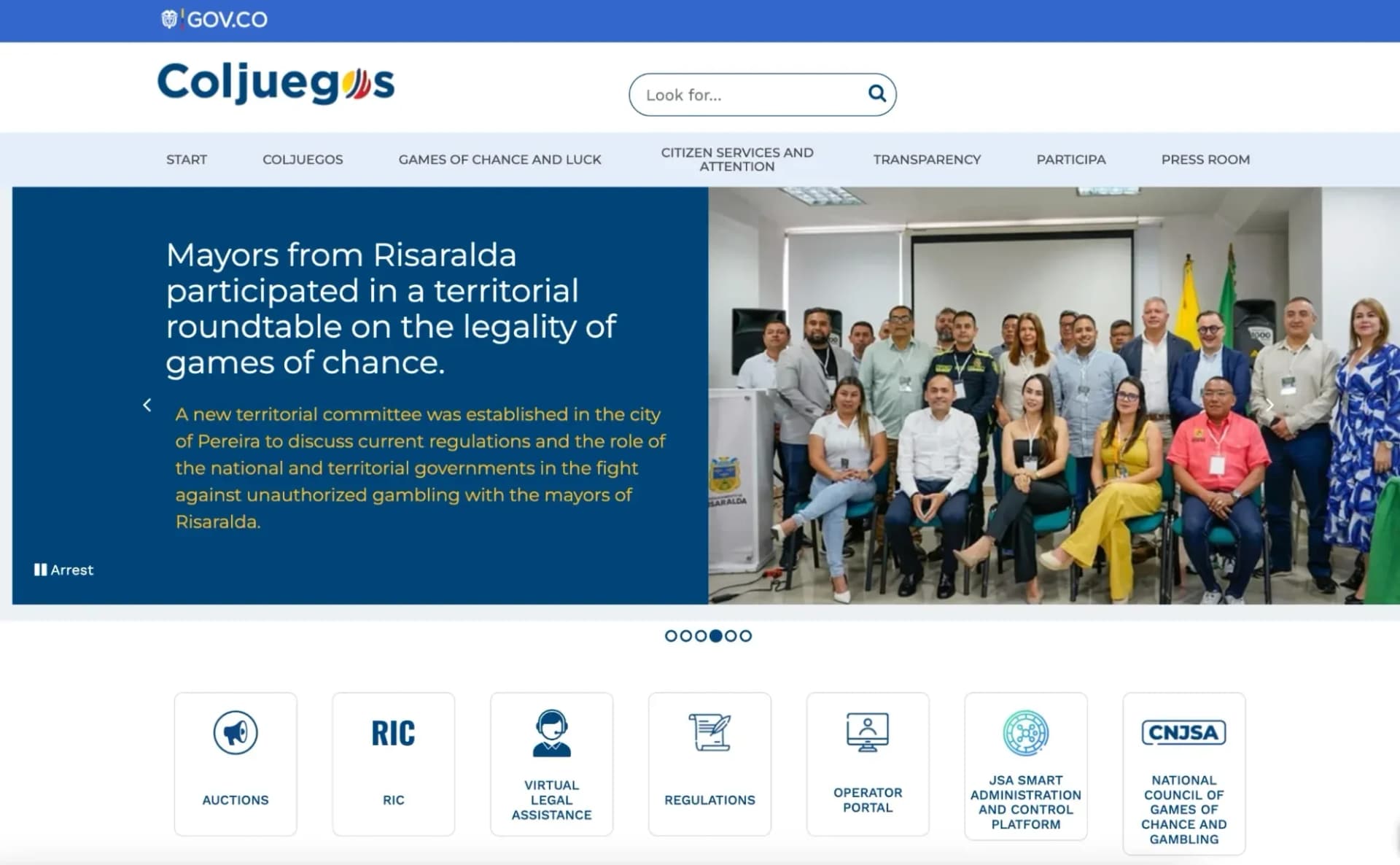
Coljuegos Creates Controlled Competition
The Colombian regulatory model, operational since 2016, demonstrates how structured oversight can intensify rather than reduce competition. Coljuegos maintains strict market control through comprehensive licensing and active enforcement:
Pros
- Predictable regulatory environment
- Clear licensing pathways
- Strong illegal operator enforcement
Cons
- Limited license availability (25+ brands)
- High compliance costs
- Restricted market expansion opportunities
The regulator's aggressive enforcement against illegal operators – blocking approximately 8,000 illegal websites and domains in recent years – creates a protected competitive environment where licensed operators compete intensely for market share without offshore interference.
Tax Structure and Revenue Allocation
Colombia's transparent tax system creates competitive pressure through its direct impact on operator profitability:
17%
Income tax rate for operators
8,000
Illegal websites blocked in recent years
25+
Licensed operators currently active
All gambling tax revenues are directed into Colombia's healthcare system, creating political support for the regulated market while ensuring operators compete within a stable fiscal framework.
Global Operators Reshape Regional Competition
The entry of international gambling giants has fundamentally altered competitive dynamics across Latin America. Flutter, Entain, and Bet365 don't simply add more operators to existing markets – they establish new competitive standards that local brands must match or exceed.
Strategic Approaches of Major International Operators
| Operator | Core Strategy | Key Markets | Competitive Impact |
|---|---|---|---|
| Bet365 | Multi-vertical expansion with strong localisation | Mexico, Colombia, Brazil | Sets product and UX standards, raises user expectations |
| Flutter Entertainment | Market entry through acquisitions and aggressive investment | Brazil | Accelerates market growth, increases pressure on local brands |
| Entain | Focus on regulated markets and local partnerships | Brazil, broader LatAm | Strengthens competition through scale and consolidation |
Global operators don't just add competition – they raise the bar for everyone. Better products, faster payments, stronger marketing – all of this quickly becomes the new normal.
Localisation as Competitive Weapon
International operators succeed in LatAm by implementing comprehensive localisation strategies that go beyond simple translation:
Product Localisation Process
Implement local languages (Spanish/Portuguese) across all user interfaces
Regional Sports Integration
Focus on football and other regionally preferred sports with localised odds and markets
Mobile Optimisation
Develop mobile-first platforms adapted specifically for LatAm user behaviour patterns
Payment System Integration
Integrate local payment systems including Pix, Mercado Pago, PicPay, SPEI, PSE, and cash-based solutions like OXXO
This localisation depth creates competitive pressure on local operators who may assume their regional knowledge provides natural advantages, only to find international operators delivering superior localised experiences.
Traffic Competition and Affiliate Ecosystem Saturation
SEO Dominance Shapes Market Entry
Competition for player acquisition in Latin America begins before users reach operator websites, occurring primarily within search engine results and affiliate marketing funnels. This pre-operator competition creates immediate market saturation for new entrants.
$70 – 250
CPA costs in regulated LatAm markets
The dominance of SEO as an acquisition channel means operators must compete for limited search result positions, with high-intent queries ("casino online," "apuestas deportivas," "bonus casino") quickly monopolised by established affiliate networks and content platforms.
Rising Acquisition Costs Create Competitive Pressure
The LatAm affiliate market experiences continuous cost inflation as competition intensifies:
This cost inflation particularly impacts smaller operators and new market entrants who lack the scale to negotiate favorable affiliate terms or invest in long-term SEO strategies required to compete effectively.
Escalating Acquisition Costs
CPA costs in regulated markets can reach $70 – 250 in the LatAm segment, with ongoing competition between affiliate networks and operators increasing cost per click and cost per lead by 20 – 30 percent annually.
Search Result Monopolisation
Key commercial queries are dominated by a limited number of local media networks, creating several structural competitive effects:
- SERP consolidation: Search results consist almost entirely of casino review sites and ranking platforms
- Investment barriers: New domains require significant investment to achieve organic visibility
- Network control: Top search positions are controlled by established affiliate partnerships
Payment Infrastructure as Competitive Differentiation
Banking Access Limitations Drive Payment Innovation
Latin America's fragmented financial infrastructure creates competitive opportunities for operators who successfully implement comprehensive local payment solutions. Banking access varies between 55 to 75% across countries, with 30 – 45% of adults in certain regions lacking bank accounts or payment cards.
Warning
Operators without comprehensive local payment coverage lose significant market share, as players simply cannot complete deposits using international banking solutions.
Alternative Payment Dominance
The share of alternative payments in Latin America exceeds 60 – 70% of all transactions, driven by high decline rates (40 – 60%) for international bank cards and user preference for local payment methods:
Key LatAm Payment Systems
Brazil: Pix system for instant 24/7 transfers without transaction fees
Regional E-Wallets
Mercado Pago, PicPay, and other local digital wallet solutions
Bank Transfer Systems
SPEI (Mexico), PSE (Colombia) for direct bank transfers
Cash-Based Solutions
OXXO (Mexico) and similar cash deposit/withdrawal networks
Operators who integrate comprehensive local payment stacks gain immediate competitive advantages through higher conversion rates, improved user retention, and enhanced player trust.
Regulatory Fragmentation Creates Strategic Complexity
No Unified Market Entry Strategy
Latin America's regulatory fragmentation means operators cannot treat the region as a single market, requiring country-specific approaches that multiply operational complexity and competitive pressures:
| Country | Regulatory Model | Key Characteristics | Market Impact |
|---|---|---|---|
| Brazil | New federal model (2025) | Centralised regulation, strict licensing, GGR taxation | High barriers, large-scale opportunity |
| Colombia | Fully regulated centralised | Coljuegos licensing, stable framework, active enforcement | Predictable market, strong compliance requirements |
| Mexico | Outdated hybrid model | 1947-based law, partial online coverage, land-based partnerships | High competition, limited regulatory clarity |
| Argentinaina | Region-based regulation | Provincial rule-setting and licensing | Complex entry, fragmented strategy required |
| Peru & Chile | Transitional/hybrid models | Ongoing regulatory development | Early-stage competition, evolving rules |
Tax Burden Variations Impact Competitive Positioning
Different tax structures across countries create competitive advantages and disadvantages that operators must factor into market entry and scaling decisions:
~12%
Brazil GGR tax (plus corporate taxes)
15 – 17%
Colombia GGR tax (plus licensing fees)
Provincial variation
Argentina tax rates
Hybrid model
Mexico taxation through local operators
These tax variations mean operators cannot develop uniform pricing or promotional strategies across the region, requiring market-specific competitive approaches that increase operational complexity.
Scaling Challenges Intensify Competition
The absence of regulatory harmonisation across Latin America creates several competitive pressures:
- Separate strategies required: Each country demands distinct licensing, payment, marketing, and legal approaches
- Increased operational costs: Fragmentation raises expenses for compliance, legal affairs, localisation, and marketing
- Scaling difficulties: Unlike European markets with passport systems, LatAm requires treating each country as a separate business case
Market Saturation Dynamics and Future Competitive Outlook
Growth Creates Immediate Saturation
Latin America demonstrates a unique competitive dynamic where rapid market growth leads to immediate channel saturation rather than expanded opportunity. Unlike traditional emerging markets that experience gradual development phases, LatAm markets quickly transition from growth to intense competition.
Rapid growth doesn't expand the market infinitely – it only accelerates competition for already available digital assets.
This acceleration occurs because digital infrastructure and user adoption reach critical mass quickly, meaning operators compete for finite attention spans and acquisition channels from market entry rather than gradually building market presence.
Regulatory Barriers Compound Competition
High licensing costs and complex regulatory requirements create additional competitive pressure by limiting market participants to well-capitalised operators while simultaneously raising operational costs for all licensed participants.
The combination of substantial entry barriers and ongoing compliance costs means operators must achieve significant scale quickly to remain competitive, intensifying the battle for market share and user acquisition.
Digital Asset Competition
Commercial search queries and affiliate partnerships represent finite digital assets that become increasingly expensive as competition intensifies. This creates a competitive environment where:
- Traffic costs escalate rapidly as more operators compete for limited search visibility
- Content networks consolidate power by controlling user acquisition funnels
- Player journey control shifts from operators to affiliate and content platforms
LatAm combines rapid growth with immediate market saturation. Unlike other regions where growth expands opportunity, LatAm's mobile-first demographics and regulatory changes create intense competition for finite digital assets from day one.
Global operators raise competitive standards across product quality, payment integration, marketing sophistication, and user experience. Local operators must match these standards while competing with significantly larger marketing budgets and technical resources.
Regulatory fragmentation requires separate strategies for each country, payment infrastructure demands local integration, and established affiliate networks control user acquisition channels. There's no single entry point – each market requires distinct investment and operational approaches.
With 60 – 70% of transactions using alternative payments and 30 – 45% of users lacking traditional banking access, operators without comprehensive local payment integration lose significant market share. Payment capability directly impacts conversion rates and competitive positioning.
Strategic Implications for Industry Competition
Latin America represents a fundamental shift in how iGaming competition develops in emerging markets. Rather than the traditional progression from opportunity to growth to maturation, LatAm demonstrates compressed competitive cycles where growth and saturation occur simultaneously.
For operators considering LatAm expansion, success requires understanding that this region demands portfolio-based market approaches rather than regional strategies. Each country presents distinct competitive environments requiring separate regulatory setups, payment stacks, acquisition models, and local positioning.
The operators who will succeed in Latin America are those who approach it as a collection of distinct markets requiring flexible, localised strategies rather than attempting to scale unified regional approaches.
The competitive intensity in Latin America will likely increase rather than moderate as markets mature, driven by ongoing regulatory development, continued global operator investment, and the finite nature of digital acquisition channels. This creates an environment where competitive advantage comes from execution quality and market-specific optimisation rather than first-mover advantages or broad regional strategies.
According to We-Right Blog.