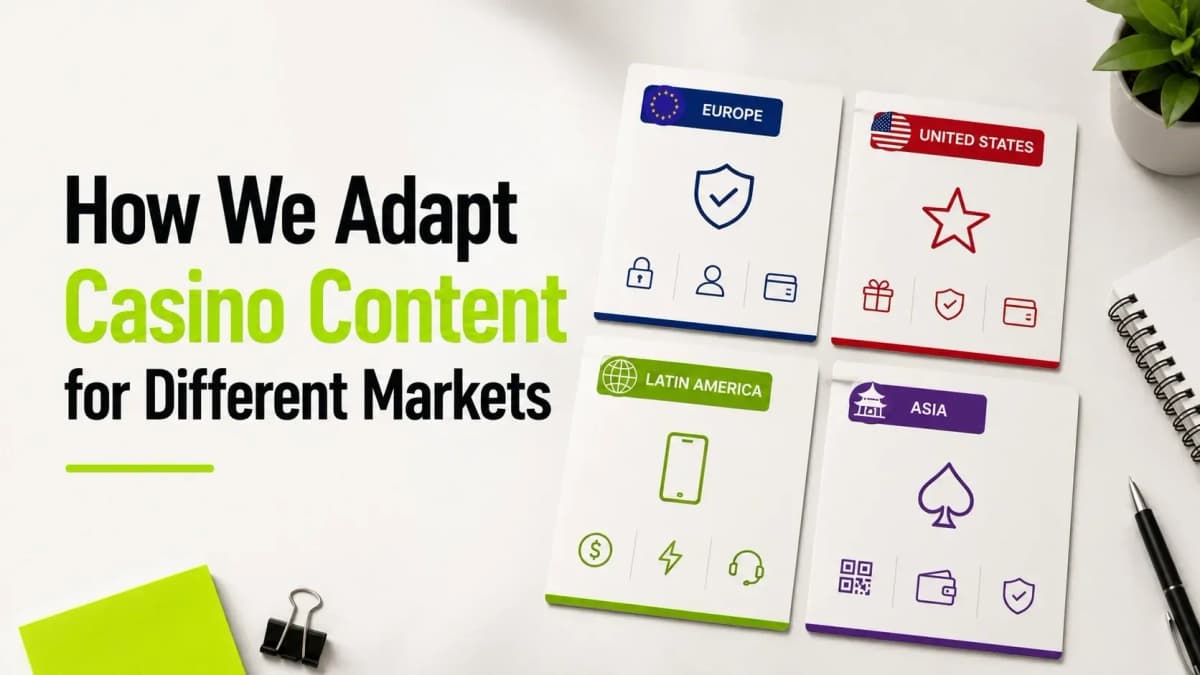
The global gambling industry's explosive growth – exceeding $80 billion last year and projected to reach $153.57 billion by 2030 – has intensified competition for new geographic markets. As operators expand internationally, content localisation has emerged as a critical differentiator that extends far beyond basic translation.
Market adaptation in iGaming requires sophisticated understanding of local regulations, payment preferences, cultural nuances, and search behaviour. Industry content specialists are increasingly recognising that successful expansion depends on crafting region-specific messaging that resonates with local players whilst maintaining regulatory compliance.
$80 billion
Global gambling industry value (last year)
$153.57 billion
Projected industry value by 2030
2030
Target year for industry growth projection
Beyond Translation: The Strategic Imperative
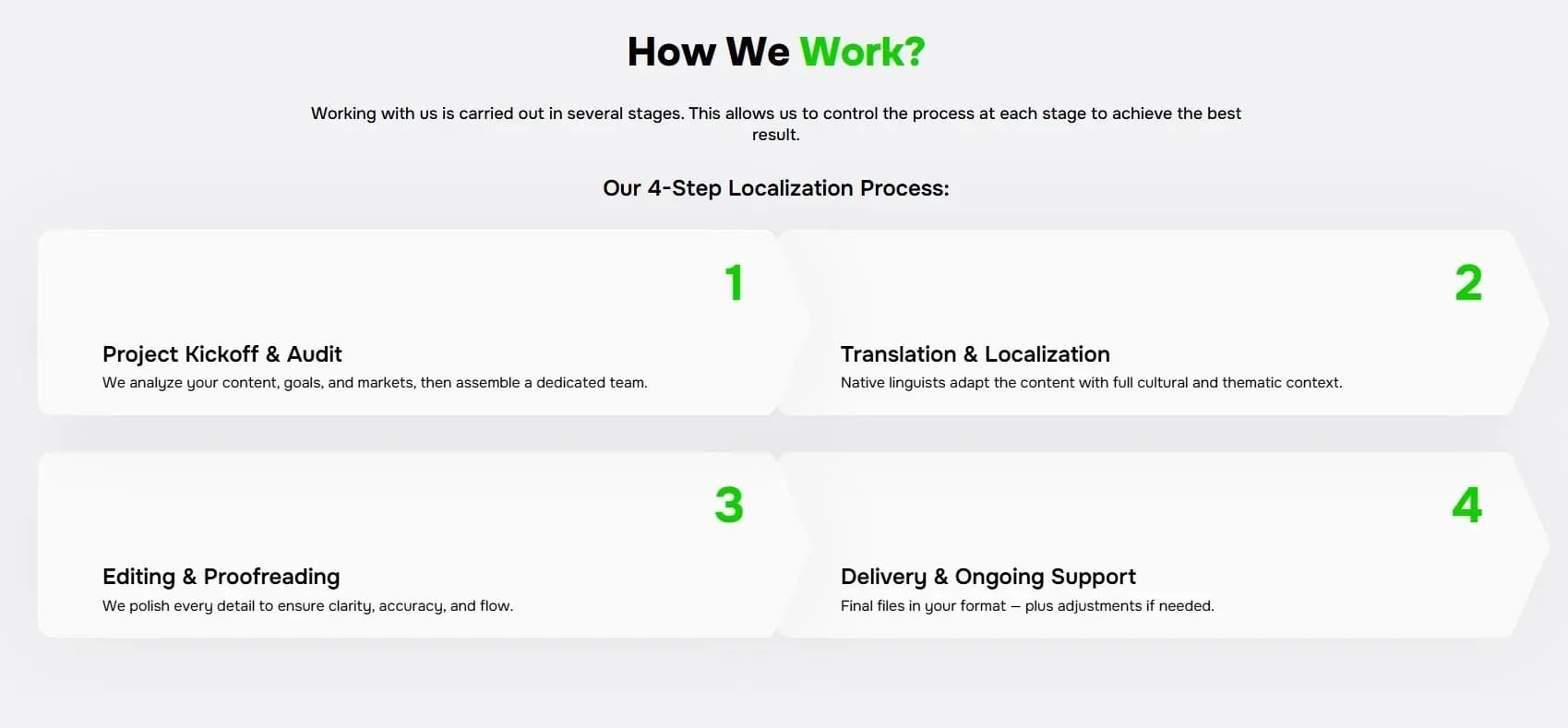
True market adaptation encompasses multiple layers of localisation that traditional translation services cannot address. Regulatory frameworks, payment ecosystems, and cultural expectations vary dramatically between jurisdictions, creating complex challenges for international operators.
"In iGaming, localization is more than just translation. Content is only effective when it aligns with local habits, laws, search queries, and player expectations."
— Olga Svichkar, We-Right Factory
The consequences of inadequate localisation extend beyond poor conversion rates. Compliance failures can result in severe penalties – Indonesia, for instance, prohibits gambling entirely, with the Indonesian Penal Code (KUHP) allowing penalties of up to 9 years in prison for gambling activity.
Warning
Inadequate market research and compliance checking can expose operators to significant legal risks. Some jurisdictions maintain strict prohibitions with severe criminal penalties for gambling-related activities.
Comprehensive Localisation Framework
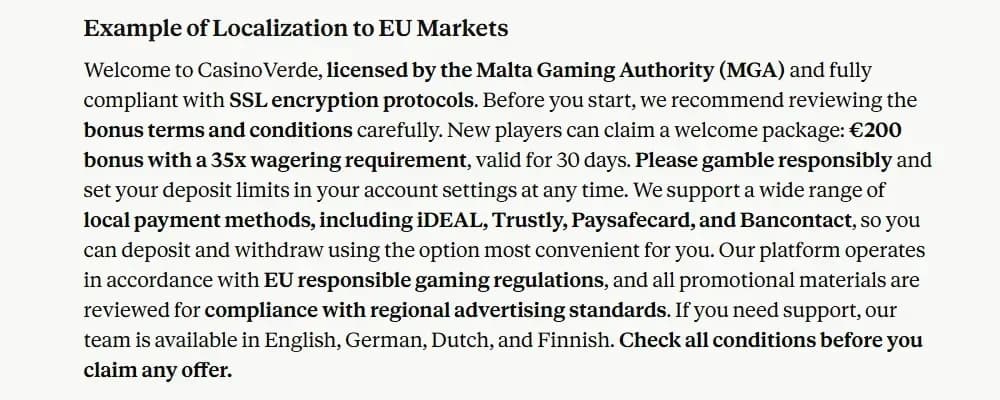
Effective casino content adaptation requires systematic methodology addressing multiple touchpoints simultaneously. Leading content agencies employ structured workflows that integrate market research, regulatory analysis, and cultural adaptation.
Research-Driven Market Analysis
The foundation of successful localisation begins with comprehensive market research extending beyond surface-level demographic data. This involves monitoring local forums, casino review sites, Reddit communities, and bookmaker discussions to understand authentic player language and information-seeking behaviour.
Market Research Protocol
Deep analysis of gambling market trends, player behaviour patterns, and local gaming preferences across target jurisdictions.
Competitor Benchmarking
Systematic evaluation of competitor content structures, bonus presentations, calls-to-action, and user experience patterns.
Compliance Verification
Thorough review of gambling regulations, advertising restrictions, and licensing requirements for each target market.
Keyword research requires particular attention in iGaming markets, as direct translation often fails to capture local search patterns. Different regions employ distinct terminology for identical casino features, necessitating region-specific keyword mapping strategies.
Localisation ROI Impact
Proper market localisation can significantly impact operator revenue through improved conversion rates, reduced bounce rates, and enhanced player lifetime value. Operators who invest in comprehensive localisation typically see measurable improvements in market penetration within 6-12 months of implementation.
Quality Assurance Through Native Expertise
Beyond automated writing tools like Grammarly, professional localisation requires native speaker review for grammar accuracy, cultural appropriateness, and natural language flow. This human oversight prevents robotic-sounding content whilst ensuring cultural sensitivity.
Important
Each localised page undergoes native speaker editing to address grammar, phrasing, cultural insensitivity, and awkward expressions before publication.
Content Testing Strategy
Before full market launch, operators should A/B test localised content with small user groups to validate messaging effectiveness. This approach helps identify cultural blind spots and optimises conversion rates before scaling content across broader audiences.
European Market Adaptation: Trust-Centric Approach
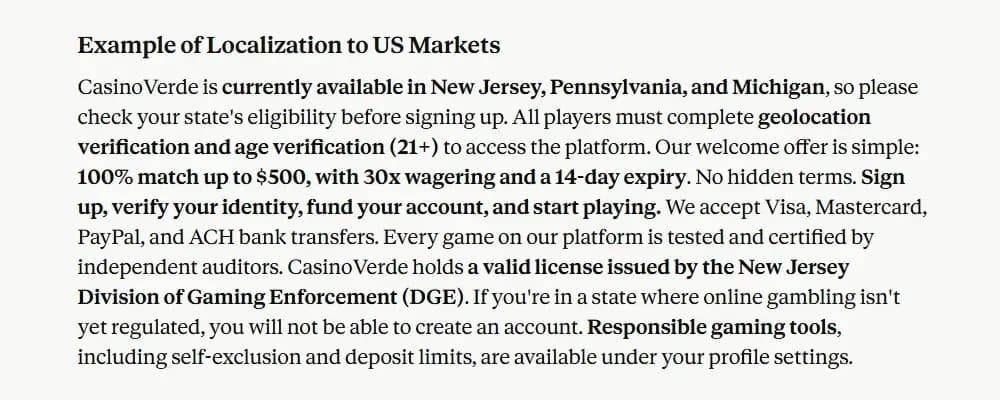
European players traditionally demand transparent information and minimal aggressive marketing tactics. Successful EU market adaptation emphasises regulatory compliance, responsible gaming protocols, and clear value propositions.
Regulatory Emphasis and Trust Signals
EU-focused content must prioritise licensing credentials and security protocols. Rather than generic "trusted casino" claims, effective messaging specifies "MGA licensed with SSL security protocols" to provide verifiable trust indicators.
| Generic Approach | EU-Optimised Approach |
|---|---|
| "Trusted casino" | "MGA licensed with SSL security protocols" |
| "Don't miss big offers!" | "Check bonus terms before claiming" |
| "Multiple safe payment methods" | "Deposit via iDEAL, Trustly, Paysafecard, or Bancontact" |
| "Low wagering" | "Wagering requirement: 35x" |
The neutral tone of communication proves most effective for European audiences, who prefer factual information over promotional hyperbole. ==Clear bonus conditions with specific wagering requirements build trust and prevent post-registration disappointment.==
Note
Germany maintains particularly strict regulations for cross-border gambling, including deposit limits and advertising restrictions. Norway operates under a monopoly model with restrictive operator and payment processing requirements.
EU Compliance Monitoring
European gambling regulations evolve rapidly, with countries like Germany implementing new restrictions annually. Operators must establish ongoing compliance monitoring systems rather than one-time regulatory reviews to avoid penalties and license suspensions.
Payment Method Integration
European players expect familiar, region-specific payment options including iDEAL, Trustly, Paysafecard, and Bancontact. Content must highlight these local preferences rather than generic "safe payment methods" messaging.
US Market Strategy: State-Specific Compliance
The United States presents unique challenges due to state-by-state regulation requiring precise geographical targeting and compliance verification. US players prefer direct, fact-based communication without promotional filler.
Jurisdictional Precision
Content must specify exact state availability rather than broad "available in USA" claims. Effective messaging states "Available in New Jersey and Pennsylvania" whilst clearly outlining verification requirements.
US Legal Liability
Marketing to players in non-licensed US states can result in cease-and-desist orders and potential criminal liability. Operators must implement robust geolocation verification and state-specific content delivery systems to avoid legal complications.
Direct Communication Style
US market content succeeds through straightforward messaging focusing on facts rather than emotional appeals. Bonus presentations should include exact numbers: "100% up to $500, 30x wagering" rather than vague promotional language.
The Canadian market operates differently, with provincial-level regulation. Ontario maintains its own licensing system whilst other provinces utilise government-controlled platforms, requiring distinct content approaches.
Tip
US players typically scan pages quickly for key information before engaging. Optimise content structure for rapid information discovery with clear headings and bullet points.
Latin American Localisation: Mobile-First Approach
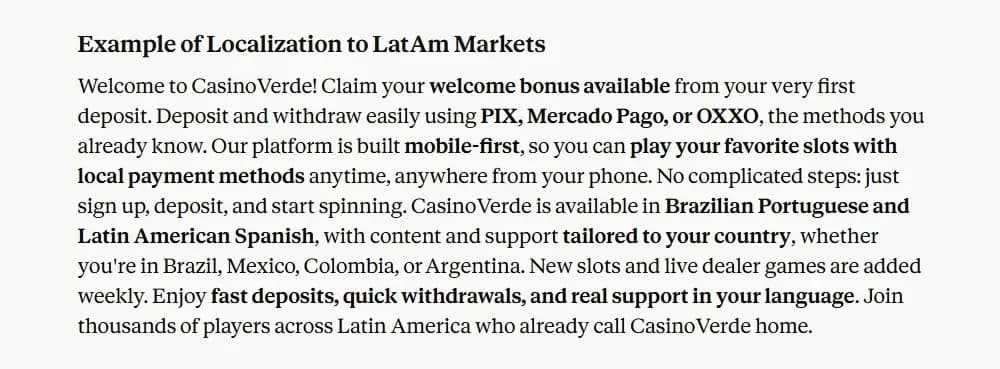
LatAm markets prioritise mobile accessibility, local payment methods, and culturally appropriate communication styles. Long-form content with extensive legal terminology typically underperforms in these regions.
Payment Method Specificity
LatAm players expect integration with familiar regional payment systems. Effective content highlights specific options: "Deposit with PIX, Mercado Pago, or OXXO" rather than generic "fast deposits available" messaging.
Country-specific localisation proves essential – Brazil requires Portuguese language and PIX integration, whilst Mexico demands Spanish language and OXXO payment options.
LatAm Payment Evolution
Latin American payment preferences shift rapidly as digital banking adoption accelerates. PIX in Brazil gained 140 million users within two years of launch, demonstrating how quickly market preferences can change and requiring ongoing payment method monitoring.
Conversational Tone Strategy
| Region | Optimal Messaging Style | Example Content |
|---|---|---|
| Brazil | Friendly, accessible Portuguese | "This is a non-English quote that should be translated or marked as a quote in the source language" |
| Mexico | Warm, familiar Spanish | "This is a non-English quote that should be translated or marked as a quote in the source language" |
| General LatAm | Short, simple phrases | Clear calls-to-action without lengthy descriptions |
Short, mobile-optimised content with immediate payment method recognition significantly improves conversion rates and reduces bounce rates in LatAm markets.
Asian Market Considerations: Cultural Sensitivity
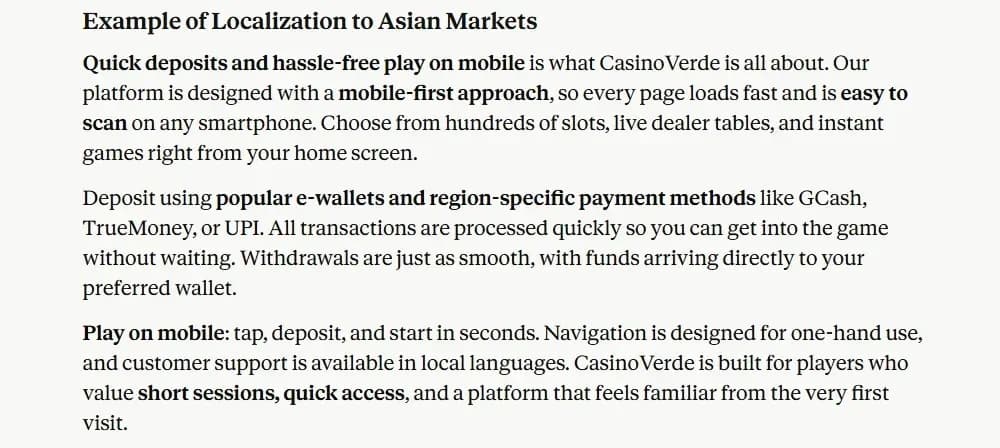
Asian markets require mobile-first design, cultural awareness, and restrained promotional messaging. Content must load quickly and maintain high scannability for smartphone-based players.
Mobile-Optimised Communication
Asian players primarily access gaming platforms via mobile devices, necessitating concise, fast-loading content. Effective messaging employs brief calls-to-action: "Play on mobile" rather than elaborate promotional descriptions.
Pros
- Mobile-first design improves engagement
- Cultural sensitivity builds long-term trust
- Short CTAs increase conversion rates
Cons
- Requires extensive cultural research
- Limited promotional messaging options
- Multiple regional variations needed
Cultural sensitivity remains paramount, utilising neutral imagery and language whilst avoiding aggressive promotional tactics that may conflict with local customs.
Regional Payment Integration
Asian markets utilise diverse payment ecosystems requiring specific regional integration. Content should mention "e-wallets and region-specific payment methods" with examples like GCash, TrueMoney, and UPI where appropriate.
This section heading appears incomplete and ends abruptly Analysis
Understanding cross-regional differences enables operators to develop targeted strategies for each geographic market. The following analysis highlights key differentiators across major iGaming regions:
| Parameter | EU | US | LatAm | Asia |
|---|---|---|---|---|
| Tone of Voice | Neutral, informative | Direct, fact-based | Friendly, casual | Clean, neutral |
| Regulation Focus | MGA, Anjouan, local compliance | State-by-state licensing | Country-specific laws | Varies by region |
| Payment Methods | iDEAL, Trustly, Paysafecard, Bancontact | Visa, PayPal, ACH | PIX, Mercado Pago, OXXO | GCash, TrueMoney, UPI |
| Bonus Presentation | Clear conditions, detailed wagering | Exact numbers | Short, simple descriptions | Non-aggressive presentation |
| Content Structure | Detailed, trust-focused | Concise | Short paragraphs, mobile-adapted | Fast-loading |
| Key Trust Signal | License and SSL protocols | Geolocation and age verification | Local language support | Mobile experience |
| Primary Device | Desktop and mobile | Desktop and mobile | Mobile | Mobile |
| Language Style | Formal | Straightforward | Localised per country | Brief |
Note
These regional preferences reflect broader cultural and regulatory patterns but require individual market research for optimal implementation.
Strategic Implementation Challenges
Successful multi-market content adaptation requires sophisticated understanding of interconnected factors affecting player behaviour and regulatory compliance.
Regulatory Complexity Management
Each jurisdiction maintains distinct regulatory frameworks requiring specialised knowledge. Germany's strict cross-border gambling regulations include deposit limits and advertising restrictions, whilst Norway's monopoly model creates unique operational constraints.
Important
Operators must maintain current awareness of evolving regulations across target markets, as compliance requirements frequently change with new legislation and regulatory interpretations.
SEO Localisation Beyond Translation
Effective keyword strategies require understanding local search behaviour patterns rather than direct translation approaches. Regional terminology variations for identical casino features necessitate comprehensive keyword mapping for each target market.
Cultural Adaptation Depth
Surface-level cultural adaptation often fails to resonate with local audiences. Successful localisation requires deep understanding of regional gaming preferences, communication styles, and trust-building mechanisms.
9 years
Maximum prison penalty in Indonesia for gambling activity
35x
Specific wagering requirement example for EU markets
$500
US bonus cap example for direct messaging
140 million
PIX users gained within two years in Brazil
Technology and Process Integration
Modern content localisation demands integration between market research, compliance monitoring, SEO optimisation, and cultural adaptation processes. Leading operators employ systematic workflows ensuring consistency across multiple markets whilst maintaining regional relevance.
Advanced Localisation Workflow
Comprehensive market research including competitor analysis, regulatory review, and player behaviour studies.
Multi-Layered Compliance Verification
Legal review processes covering advertising restrictions, licensing requirements, and promotional limitations.
Native Speaker Quality Control
Cultural appropriateness verification and natural language refinement by regional experts.
The convergence of regulatory complexity, cultural diversity, and technological advancement creates both challenges and opportunities for international iGaming operators seeking sustainable growth across multiple markets.
Industry Impact and Future Considerations
The sophisticated approach to content localisation reflects broader industry maturation as operators recognise that sustainable international expansion requires deep market understanding rather than generic global strategies. ==Successful multi-market adaptation serves as a competitive differentiator in increasingly crowded regional markets.==
Operators investing in comprehensive localisation strategies position themselves advantageously for long-term growth whilst minimising regulatory risks and cultural missteps that can damage brand reputation. As global gambling markets continue expanding toward the projected $153.57 billion by 2030, content localisation capabilities will likely become essential operational requirements rather than competitive advantages.
The evolution toward region-specific content strategies also reflects growing regulatory sophistication across international markets, with authorities demanding higher standards for player protection, cultural sensitivity, and transparent communication practices.
As the industry matures toward $153.57 billion by 2030, content localisation capabilities will transition from competitive advantages to essential operational requirements for sustainable international growth.
iGaming in the USA operates under state-by-state regulation, making broad geographical claims potentially misleading and legally problematic. Players require precise jurisdictional information.
US players expect clear statements about geolocation and age verification requirements, building trust through transparency rather than promises of "instant access."
According to We-Right Blog.