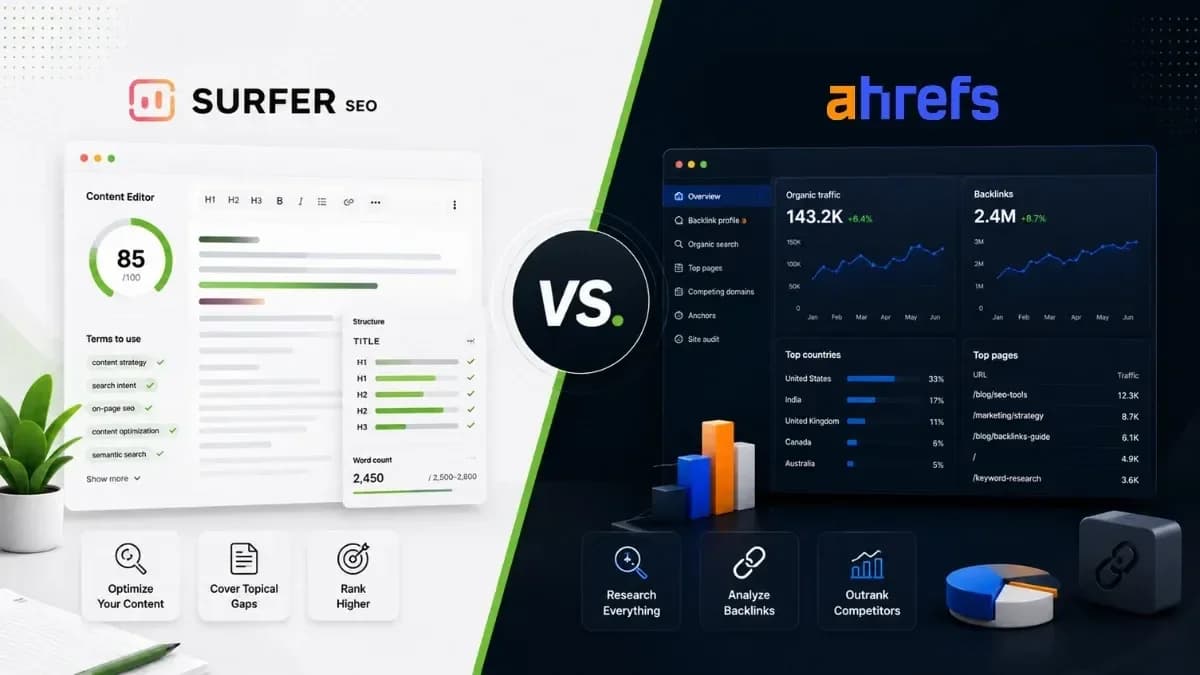
Content optimization tools have evolved from simple keyword density checkers into sophisticated platforms that can make or break your SEO strategy. This comprehensive analysis examines two industry leaders – Surfer SEO and Ahrefs – to help content teams make informed platform decisions.
Important
This review was created by the We-Right Factory team through independent testing and verified sources, not promotional material. Our editorial standards stay the same regardless of commercial arrangements.
The Strategic Imperative: Why Tool Selection Matters

The choice between content optimization platforms extends far beyond feature lists and monthly costs. Teams that select the wrong tool face cascading consequences that compound over months of usage.
Financial and Operational Risks
Budget constraints represent the most immediate concern. Most content tools charge monthly, and costs accumulate rapidly when teams pay for unused features. The optimal service becomes the one actually utilized, not necessarily the platform with the most impressive demonstration.
==Bad data compounds over time, sending content strategies in fundamentally wrong directions.==
Data accuracy issues create longer-term strategic problems. A single inaccurate search volume estimate can misdirect an entire content cluster, resulting in months of articles targeting suboptimal terms. The platform you trust establishes the ceiling for decision-making accuracy.
Migration costs often prove prohibitive. Historical data, tracked keywords, and baseline metrics rarely transfer between platforms cleanly. Every switch resets visibility into performance metrics and requires weeks of rebuilding before teams return to baseline functionality.
Cost Accumulation Reality
Content optimization tools typically charge $100-500+ monthly per user, with enterprise features pushing costs to $1,000+ monthly. Teams often discover they're paying for multiple overlapping services when a single focused platform would suffice.
Strategic Considerations
The tool fundamentally shapes what teams measure and optimize for. Platforms surface different metrics and frame SEO priorities differently. What your dashboard displays daily becomes what the team optimizes toward – making the choice of tracking signals critical for long-term success.
Complexity directly impacts consistency. Services with confusing interfaces get opened less frequently. Delayed keyword research due to frustrating workflows and postponed audits because reports require excessive interpretation time represent output problems disguised as tool issues.
Future scalability requirements rarely match current needs. A platform handling 10 projects comfortably may collapse under 50. Selecting services with growth capacity proves more cost-effective than absorbing forced migrations when operations outgrow initial tool selection.
Surfer SEO: Content-Centric Optimization
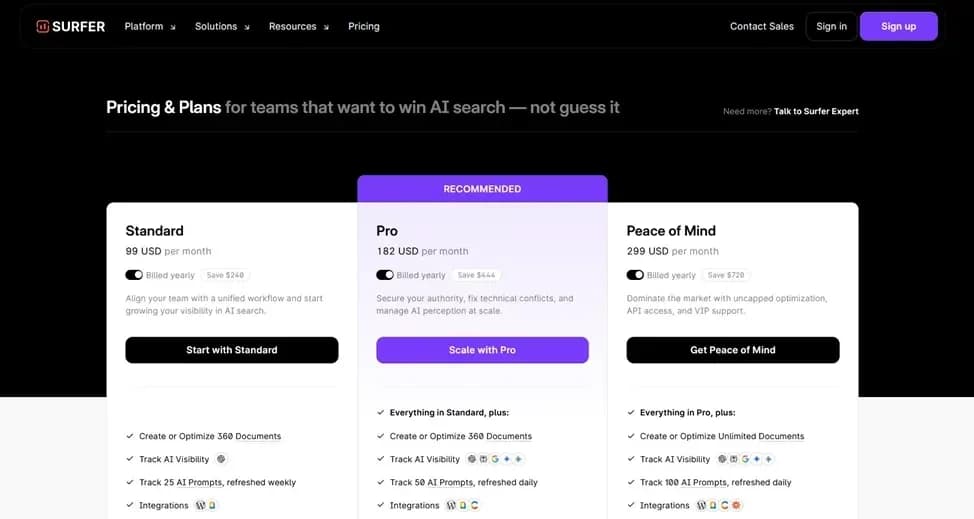
Surfer SEO positions itself as a planning and improvement tool specifically designed for search-optimized content creation. The platform focuses primarily on blog posts and website pages with one core objective: improving search rankings and increasing organic traffic.
The workflow typically begins with keyword research before moving into content planning. Surfer SEO transforms keywords into structured outlines, providing clear direction before writers open blank documents.
Core Functionality Analysis
Content Editor serves as the platform's primary feature. Users input keywords, select language and location parameters, then receive comprehensive content guides. The tool enables direct writing within the editor or draft importation. The Content Score updates in real-time, comparing draft content against top-ranking pages for target keywords.
Real-time scoring
Content Editor updates live
Pattern analysis
Compares against top-ranking pages
Structure guidance
Heading recommendations included
Topical Map functionality addresses content planning at scale. The feature takes broad topics and breaks them into full clusters: primary articles, supporting content pieces, and internal linking structures. For organizations building topical authority, this eliminates manual mapping requirements and accelerates content planning.
Content Audit capabilities focus on existing published content. The tool identifies pages experiencing ranking declines and provides specific improvement recommendations. For sites with extensive content libraries, this often generates quick optimization wins.
AI Tracker monitors content appearance across AI services including ChatGPT, Perplexity, and Google AI Overviews, tracking based on target keywords. This addresses growing concerns about AI content attribution and visibility.
Warning
Surfer's Content Score is based on current top-ranking pages, which may include outdated content or pages ranking for different reasons. Blindly following score recommendations without understanding search intent can lead to over-optimized content that feels unnatural to readers.
Integrated Writing Assistance
Surfer SEO includes Surfy, an AI writing assistant capable of rewriting sections, expanding paragraphs, and auto-inserting missing keywords to improve Content Scores. While functional for basic edits, the We-Right Factory team notes that tools like GPT-4 or Claude still deliver superior results for natural writing and deeper nuance.
Surfer SEO is one of the best tools for search optimization agencies and consultants. You can use it for client work, quick content briefs, and large-scale on-page fixes.
Integration Capabilities
The platform connects with WordPress and Google Search Console, fitting existing workflows without disruption. However, working within page builders like Elementor or Thrive Architect may feel clunky and slow according to user reports.
Pros
Cons
WordPress Optimization
For maximum efficiency with Surfer SEO's WordPress integration, install the official plugin and use Gutenberg blocks rather than page builders. This maintains real-time scoring accuracy and prevents the interface slowdowns reported with visual editors like Elementor.
Ahrefs: Comprehensive SEO Intelligence Platform

Ahrefs operates as an all-in-one SEO platform designed to help teams grow organic traffic through comprehensive website analysis. The platform excels at detailed website breakdowns including backlinks, referring domains, keywords, anchor text analysis, and competitive intelligence.
The platform's distinguishing characteristic lies in its data quality. Ahrefs runs one of the largest web crawlers, second only to Google's, which explains why its backlink data and keyword insights are considered among the most reliable for SEO planning.
Feature Portfolio Breakdown
Site Explorer provides comprehensive domain and URL analysis including backlinks, organic traffic, paid search performance, and competitive intelligence. This serves as the primary entry point for most SEO investigations.
Keywords Explorer delivers deep keyword research capabilities with search volume data, difficulty scores, SERP breakdowns, click-through rates, and intent analysis across multiple countries and languages.
Typical Ahrefs Workflow
Input target domain or keyword into relevant explorer tool
Analysis Phase
Review comprehensive data including backlinks, traffic, and competitive metrics
Strategic Planning
Use insights to inform content strategy and optimization priorities
Rank Tracker monitors rankings across desktop and mobile devices, enables competitor tracking, and provides visibility trend analysis over time.
Site Audit functions as an automated crawler identifying technical and on-page issues. The tool runs automatically and flags problems requiring attention.
Content Explorer helps identify high-performing content, useful for link opportunity identification, content gap analysis, and PR ideation.
Brand Radar tracks brand mentions across the web and within AI-generated responses, providing reputation monitoring capabilities.
2nd largest
Web crawler size (after Google)
170+ countries
Keyword data coverage
24/7
Site audit monitoring frequency
500M+
Keywords in database
Advanced Platform Features
Web Analytics offers privacy-friendly analytics without cookie requirements, connecting directly with SEO data for unified reporting.
Dashboard & Portfolios provide centralized project tracking, primary metric monitoring, and performance analysis across multiple sites. AI Content Helper & Grader assists with content outlining, writing, and review based on search intent analysis and ranking page comparison.
Local SEO tools include local ranking tracking and Google Business Profile monitoring.
Social Media Manager enables post planning, scheduling, and tracking while maintaining alignment with SEO objectives.
SEO Toolbar provides browser extension functionality for Chrome, Firefox, and Safari, enabling quick on-page SEO checks, SERP data access, and link insights.
API & integrations allow data extraction into custom tools, dashboards, and reporting systems.
API Usage Considerations
Ahrefs API access requires separate pricing beyond standard subscriptions, with rate limits that vary by plan tier. Development teams should budget additional $500-2,000 monthly for meaningful API integration depending on query volume requirements.
Platform Assessment
"Ahrefs can work well for small businesses that depend on organic traffic and have someone focused on SEO or content. Even the lower-tier plans cover the basics – keyword research, competitor checks, and site audits."
— Olga Svichkar, We-Right Factory
However, the platform may exceed requirements for occasional SEO users. The pricing and credit system can feel excessive for teams requiring only periodic optimization checks.
Pros
Cons
Strategic Platform Comparison
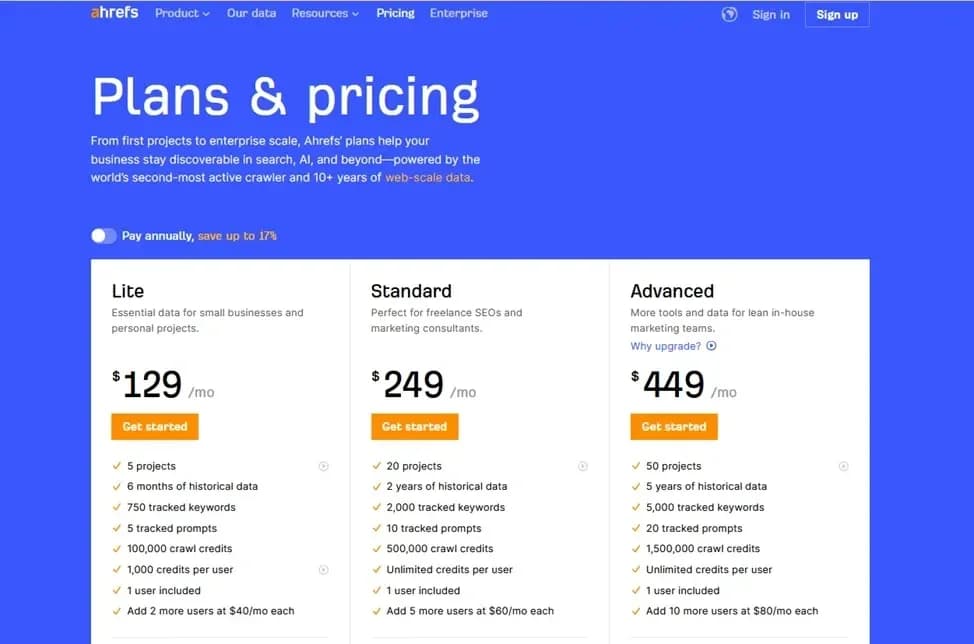
Understanding the fundamental differences between these platforms requires examining their core design philosophies and target use cases.
| Feature | Surfer SEO | Ahrefs |
|---|---|---|
| Main focus | Built around content optimization and on-page SEO | Covers the full SEO workflow, from research to analysis |
| Best for | Content teams, writers, and agencies focused on ranking pages | SEO specialists, agencies, and teams working with data at scale |
| Keyword research | Good for basics and content planning | Much deeper, with advanced data and insights |
| Content optimization | One of its strongest areas | Not its main focus |
| Backlink analysis | Very limited | One of the best parts of the platform |
| Site audit | Basic | Strong and detailed |
| SERP analysis | Focused on content structure and patterns | Broader view of rankings and competitors |
| Competitor analysis | Covers the basics | Much more detailed and flexible |
| Pricing style | Built around content workflows | Built as a full SEO platform |
| Best use case | Improving and optimizing individual pages | Running full SEO strategy and research |
Workflow Integration Analysis
Surfer SEO integrates more naturally into content creation workflows. The platform connects effectively with tools like Google Docs and WordPress, making it suitable for teams primarily focused on content production and optimization.
Ahrefs excels in analytical workflows, integrating better with tools like Google Search Console and Looker Studio for comprehensive SEO strategy development and performance analysis.
Note
The choice between platforms often comes down to team structure: Surfer SEO for content-centric teams, Ahrefs for data-driven SEO operations.
| Feature | Surfer SEO | Ahrefs |
|---|---|---|
| Main focus | Built around content optimization and on-page SEO | Covers the full SEO workflow, from research to analysis |
| Best for | Content teams, writers, and agencies focused on ranking pages | SEO specialists, agencies, and teams working with data at scale |
| Keyword research | Good for basics and content planning | Much deeper, with advanced data and insights |
| Content optimization | One of its strongest areas | Not its main focus |
| Backlink analysis | Very limited | One of the best parts of the platform |
| Site audit | Basic | Strong and detailed |
| SERP analysis | Focused on content structure and patterns | Broader view of rankings and competitors |
| Competitor analysis | Covers the basics | Much more detailed and flexible |
| Pricing style | Built around content workflows | Built as a full SEO platform |
| Best use case | Improving and optimizing individual pages | Running full SEO strategy and research |
Pros
- Surfer integrates directly with Google Docs for seamless writing workflow
- WordPress plugin provides real-time optimization without leaving CMS
- Ahrefs connects with Google Analytics for unified traffic analysis
- Browser extensions enable quick competitor analysis during research
Cons
- Surfer requires export/import steps for most external writing tools
- Ahrefs data export limitations restrict custom dashboard creation
- Neither platform offers native Slack or project management integrations
- API limitations prevent real-time data sync with most marketing stacks
Alternative Platform Considerations
Teams finding neither platform suitable should consider these alternatives:
Semrush provides strong competitor research and keyword data with extensive detail, though the interface requires adjustment time. The platform offers superior PPC tool depth compared to Ahrefs.
Moz delivers easy navigation and solid everyday SEO functionality, particularly for backlink analysis. Some users report data depth limitations compared to other enterprise tools.
Ubersuggest serves as a budget-friendly option for keyword research and basic site auditing. The platform works well for simple requirements but lacks advanced functionality depth.
Screaming Frog SEO Spider specializes in technical audits and site crawling with excellent performance in these areas, though users require additional tools for keyword and backlink analysis.
Budget-Conscious Alternatives
Ubersuggest offers 90% of basic SEO functionality at $29/month versus $99+ for premium platforms. For startups and small businesses, this price difference often outweighs advanced features that require dedicated SEO expertise to utilize effectively.
Industry Impact and Strategic Implications
The choice between content optimization platforms reflects broader trends in SEO strategy evolution. Organizations increasingly face the decision between specialized tools that excel in specific areas versus comprehensive platforms attempting to address all SEO requirements.
Content-first strategies benefit from Surfer SEO's integrated approach to writing and optimization. Teams focused on producing high-volume, search-optimized content find the platform's real-time guidance and topical mapping invaluable for maintaining consistency at scale.
Data-driven SEO operations require the comprehensive intelligence that Ahrefs provides. Organizations building competitive intelligence, conducting extensive keyword research, and managing complex link building campaigns need access to reliable, large-scale data sets.
The platform choice also signals strategic priorities to stakeholders. Surfer SEO investments indicate focus on content quality and search optimization, while Ahrefs subscriptions suggest comprehensive SEO strategy development and competitive analysis priorities.
Future platform development will likely continue this specialization versus comprehensiveness trend. Content optimization tools will integrate more AI writing assistance and real-time search engine algorithm updates.rithm adaptation, while comprehensive SEO platforms will expand data sources and analytical capabilities.
Teams should evaluate their core competencies, primary workflows, and strategic objectives when selecting between these approaches. The right choice depends less on platform capabilities and more on organizational needs and execution capacity.
The most expensive tool with the most features often provides less value than a focused platform that excels at your specific use cases.
Platform Selection Strategy
Start with a 30-day trial of your top choice and run it parallel to your current workflow. Track time saved versus additional insights gained - many teams discover they need fewer features than initially assumed, leading to significant cost savings.
Ahrefs operates one of the largest web crawlers second only to Google's, providing more comprehensive and accurate backlink and keyword data than most competitors.
The platform includes specific local ranking tracking tools and Google Business Profile monitoring capabilities for location-based optimization.
Yes, through WordPress plugins, API access, browser extensions for Chrome, Firefox, and Safari, and connections with Google Analytics and Search Console.
According to We-Right Blog.