
The global digital marketplace presents operators with a critical strategic decision that directly impacts user acquisition and retention rates. While 76% of online shoppers prefer to buy products with information in their native language, and 40% say they will never purchase from websites written in other languages, the approach to linguistic adaptation varies significantly across the industry.
Recent analysis by We-Right Factory demonstrates that the choice between translation and localization represents far more than a linguistic preference – it fundamentally determines market penetration success and user engagement metrics.
Understanding Translation: The Precision-First Approach
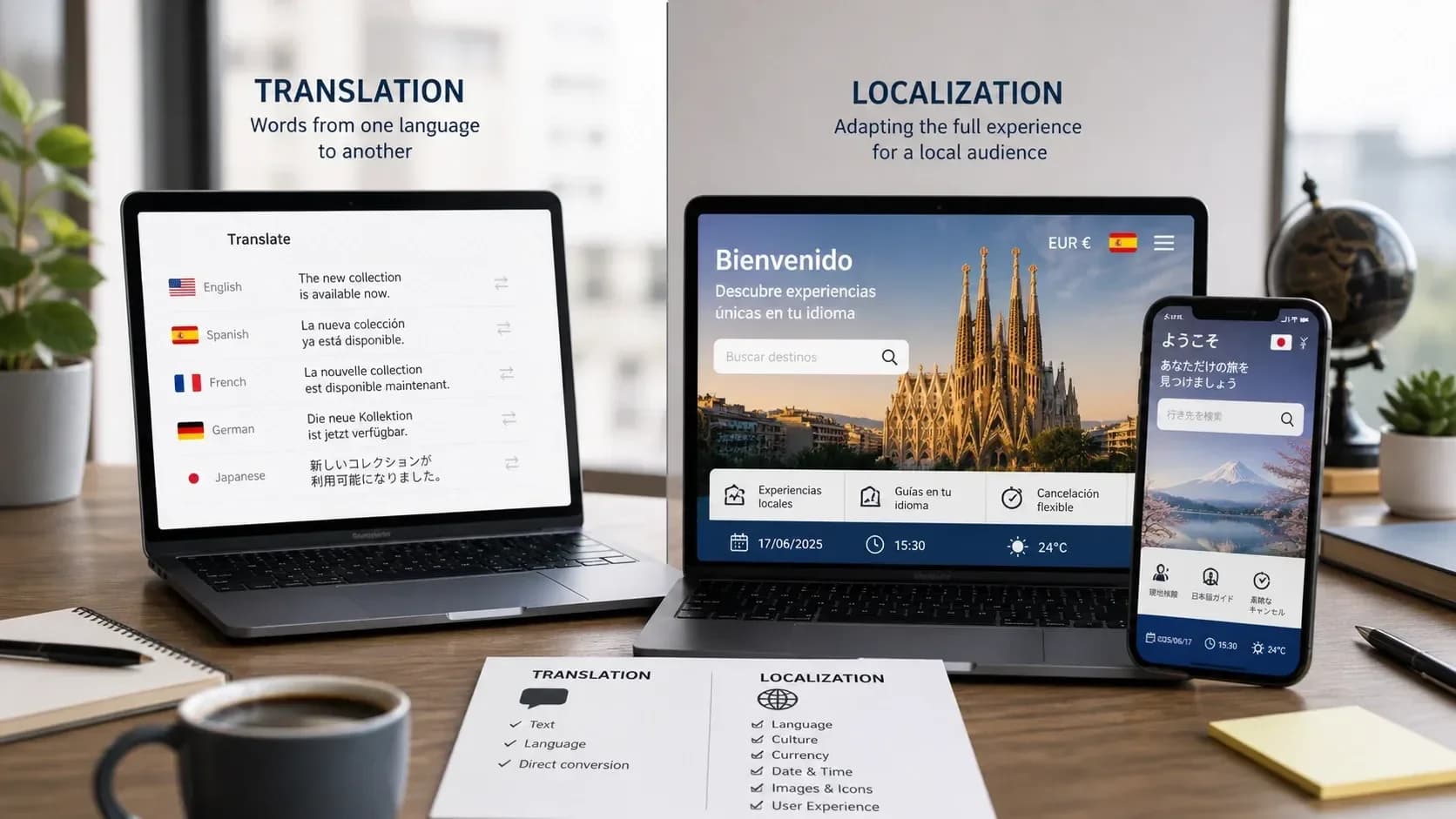
Translation focuses on linguistic accuracy while maintaining the original structure and meaning of source content. This approach prioritises exactness over cultural adaptation, making it essential for specific industry applications.
Core Translation Principles
Translation maintains literal accuracy, preserves original formatting, and ensures terminology consistency across all content iterations.
When Translation Takes Priority
Several sectors within the broader digital entertainment industry require direct translation approaches where accuracy supersedes marketing appeal:
- Legal documentation and compliance frameworks
- Technical specifications and operational procedures
- Financial reporting and regulatory submissions
- Medical disclaimers and safety information
- Software documentation and API guides
76%
Users preferring native language content
40%
Users avoiding non-native language sites
The translation methodology preserves several critical elements that localization might compromise:
Accuracy preservation ensures the original meaning transfers without interpretation gaps. Literal wording maintains phrase structures close to source material. Structure consistency keeps paragraph order, sentence flow, and formatting unchanged. Terminology standardisation repeats specific words and phrases throughout the text, particularly important in regulated industries.
Real-World Translation Limitations
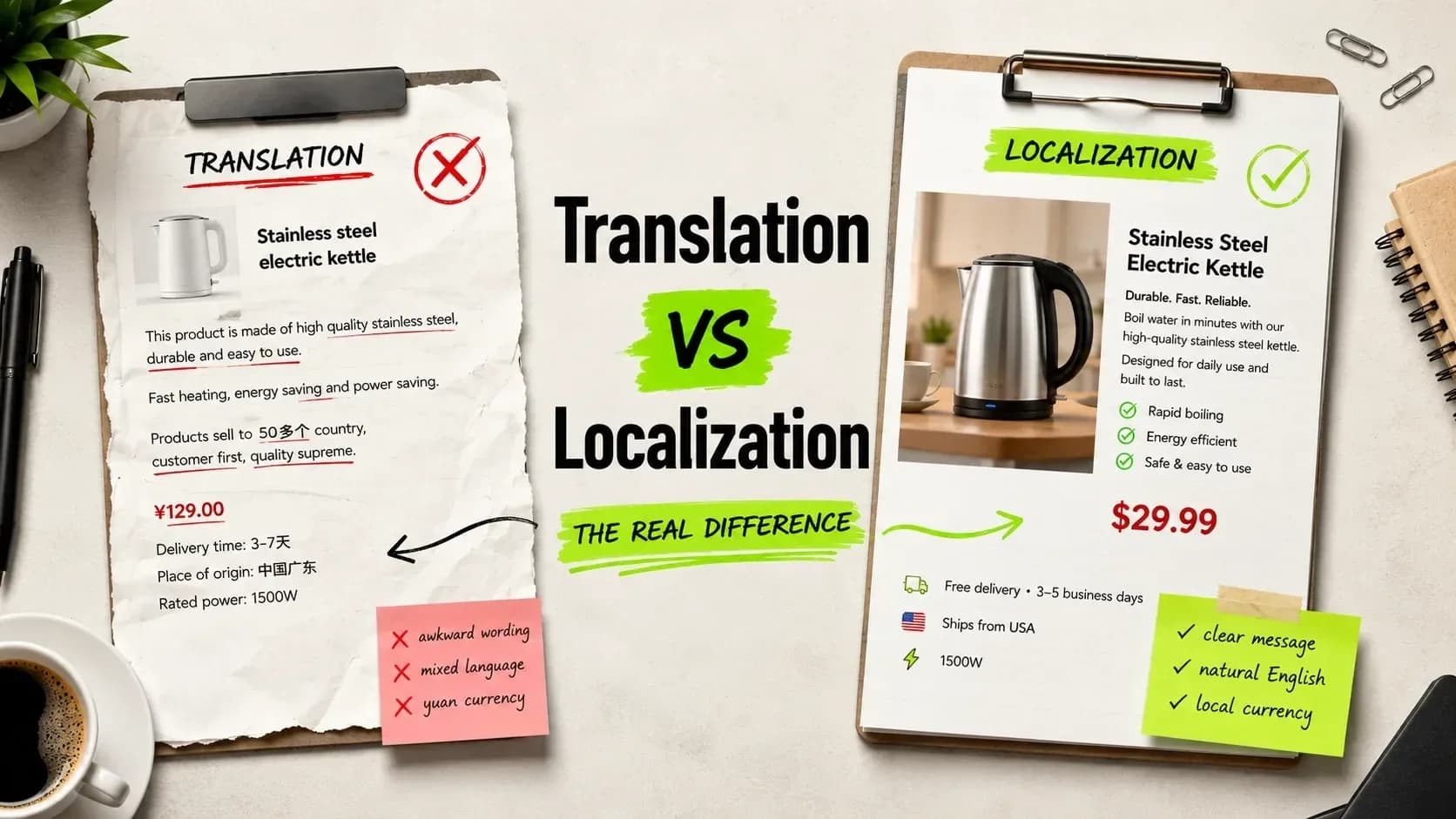
We-Right Factory's analysis of a Chinese electric kettle product description reveals common translation pitfalls that affect user confidence:
The translated version maintained meaning but exhibited awkward sentence structures that followed Chinese grammar patterns rather than English conventions. Mixed language formatting preserved Chinese characters like "年" and "月" in dates, compromising readability. Unnatural phrasing produced expressions like "products sell to 50+ countries" that native speakers would avoid.
Additional issues included currency mismatches where prices remained in yuan without context, forced brand messaging with directly quoted slogans like "Customer first, quality supreme", and grammar inconsistencies that reduced overall product credibility.
Translation Accuracy Standards
Professional translation maintains source-to-target accuracy rates above 95% for technical content, while marketing translation often accepts lower precision thresholds to preserve brand voice and cultural relevance.
Localization: The Market-Adaptation Strategy
Localization transforms content, products, and services for specific markets and cultures, creating the impression that offerings originated locally rather than requiring adaptation from external sources.
Comprehensive Localization Elements
Modern localization extends far beyond language conversion, encompassing multiple user experience factors:
Currency and Measurement Adaptation
Converting prices to local standards and implementing region-appropriate payment options
Date and Time Standardisation
Reformatting temporal information to prevent booking and purchase confusion
Tone and Humour Calibration
Adapting jokes, slogans, and casual phrases to local communication styles
UX and Navigation Optimization
Adjusting layout, reading direction, and button placement for local usage patterns
Visual and Cultural Alignment
Modifying images, colours, and symbols to match cultural associations and legal requirements
Netflix exemplifies comprehensive localization strategy in its Japanese market entry. Beyond menu translation, the platform adapted movie thumbnails, modified recommendation algorithms based on local viewing preferences, and restructured content presentation for cultural alignment.
Localization Case Study Analysis
The same Chinese kettle description underwent complete localization for English-speaking markets, demonstrating the substantial difference in user reception:
| Element | Original Translation | Localized Version |
|---|---|---|
| Product Name | Tian Mei brand intelligent constant temperature kettle, model TM-2588 | AquaPerfect Pro 1700, your new smart temperature kettle |
| Pricing | ¥399.00 yuan | $59.99 |
| Date Format | This is a date in Chinese format and should be presented as March 15, 2025 in the context shown, or left as-is if representing original source material | March 15, 2025 |
| Marketing Tone | Customer first, quality supreme | We believe great mornings start with the right cup |
The localization process transformed awkward phrasing like "Chinese famous household appliance enterprise after 20+ years" into natural English: "After over 20 years of development, it has become a Chinese well-known household appliance enterprise loved by more than 50 countries."
Cultural messaging also received significant adaptation. The original "Sincerely hope every family can enjoy the convenient life our products bring" became "We're proud to bring that experience into your home" – maintaining sentiment while adopting conversational English patterns.
The localized version feels significantly more natural to English-speaking users. Product information becomes more transparent, and the message aligns with English-speaking ecommerce standards.
Pricing Psychology Localization
Price presentation affects purchase decisions beyond currency conversion. The Chinese ¥399.00 format suggests precision pricing, while $59.99 uses psychological pricing common in Western markets to increase perceived value.
Strategic Comparison Framework

Understanding when to deploy translation versus localization requires analysis across multiple operational parameters that directly impact user behaviour and business outcomes. This mirrors how successful operators adapt content strategies based on specific market requirements.
Methodology Comparison Matrix
| Parameter | Translation Approach | Localization Strategy |
|---|---|---|
| Primary Objective | Transfer meaning to another language | Adapt content for local audience |
| Content Focus | Word and sentence accuracy | User habits, culture, expectations |
| Currency Handling | Usually remains unchanged | Converted to local formats |
| Communication Tone | Preserves original voice | Adapts to local communication styles |
| Date/Time Formats | Often copied without change | Rewritten for regional standards |
| Marketing Language | Literal translation | Reworked for natural appeal |
| UX Elements | Minimal changes | Adapted for local behaviour |
| End Result | Understandable content | Native-feeling content |
Implementation Decision Factors
The choice between approaches depends on several business-critical considerations:
Content type significantly influences methodology selection. Technical documentation, legal frameworks, and safety information often require translation precision. Marketing materials, user interfaces, and customer communications typically perform better with localization approaches, much like how content services define operator success through strategic adaptation.
Market maturity affects user expectations. Established markets with sophisticated digital literacy may expect comprehensive localization, while emerging markets might prioritise basic comprehension over cultural nuance.
Resource allocation impacts feasibility. Translation requires linguistic expertise, while localization demands cultural knowledge, market research, and often technical implementation across multiple platform elements. This process parallels how professional content agencies manage quality processes to ensure consistent results.
Regulatory Compliance Requirements
Legal documentation, safety warnings, and regulatory submissions typically require exact translation to maintain liability protection and compliance status. Localization of these materials may void legal protections.
Strategic Implications for Digital Markets
The translation versus localization decision creates measurable impacts on user acquisition, engagement metrics, and conversion optimisation across digital platforms.
Performance Impact Analysis
Localization typically delivers superior results when building trust, driving user engagement, and improving conversion rates compared to translation-only approaches. However, implementation costs and complexity increase substantially.
Translation serves specific purposes where message precision supersedes marketing appeal. Legal compliance, technical accuracy, and regulatory documentation require faithful reproduction rather than cultural adaptation.
Market entry strategy should align methodology with business objectives. Rapid market testing might justify translation approaches for initial validation, while long-term market commitment benefits from comprehensive localization investment.
Industry Best Practice
Consider hybrid approaches where critical legal and technical content receives direct translation treatment, while user-facing marketing and interface elements undergo full localization.
The evidence suggests that successful global expansion requires strategic deployment of both methodologies based on content type, regulatory requirements, and user experience objectives. Operators must evaluate their specific market conditions, resource availability, and competitive positioning when determining the optimal linguistic adaptation strategy.
Market entry strategy should align methodology with business objectives – rapid testing might justify translation approaches, while long-term commitment benefits from comprehensive localization investment.
Resource Investment Planning
Localization projects typically require 3-5 times more resources than translation projects due to market research, cultural consultation, technical implementation, and ongoing maintenance requirements across multiple platform elements.
Translation converts text from one language to another while preserving original meaning. Localization adapts the entire user experience – including content tone, visual elements, pricing formats, and cultural references – for specific target markets.
AI can accelerate translation and basic adaptation processes. However, human expertise remains essential for cultural nuance, local humour interpretation, legal context understanding, and strategic communication decisions that affect brand perception.
Simple word substitution (colour vs color) represents translation. Comprehensive adaptation including tone modification, pricing adjustments, cultural references, and format changes constitutes localization strategy.
According to We-Right Blog.