
The iGaming content landscape has evolved far beyond basic copywriting services. As operators and affiliates face intensifying search competition, complex regulatory frameworks, and mounting compliance pressures, professional content agencies have emerged as strategic partners rather than simple text producers.
Unlike consumer marketing verticals, iGaming content operates under unique constraints: every bonus description must be legally accurate, each game review requires technical precision, and regulatory missteps can trigger fines or licensing issues. This environment has separated professional agencies from generalist writers, creating a specialized ecosystem where process discipline determines success.
The Architecture of Professional iGaming Content Production
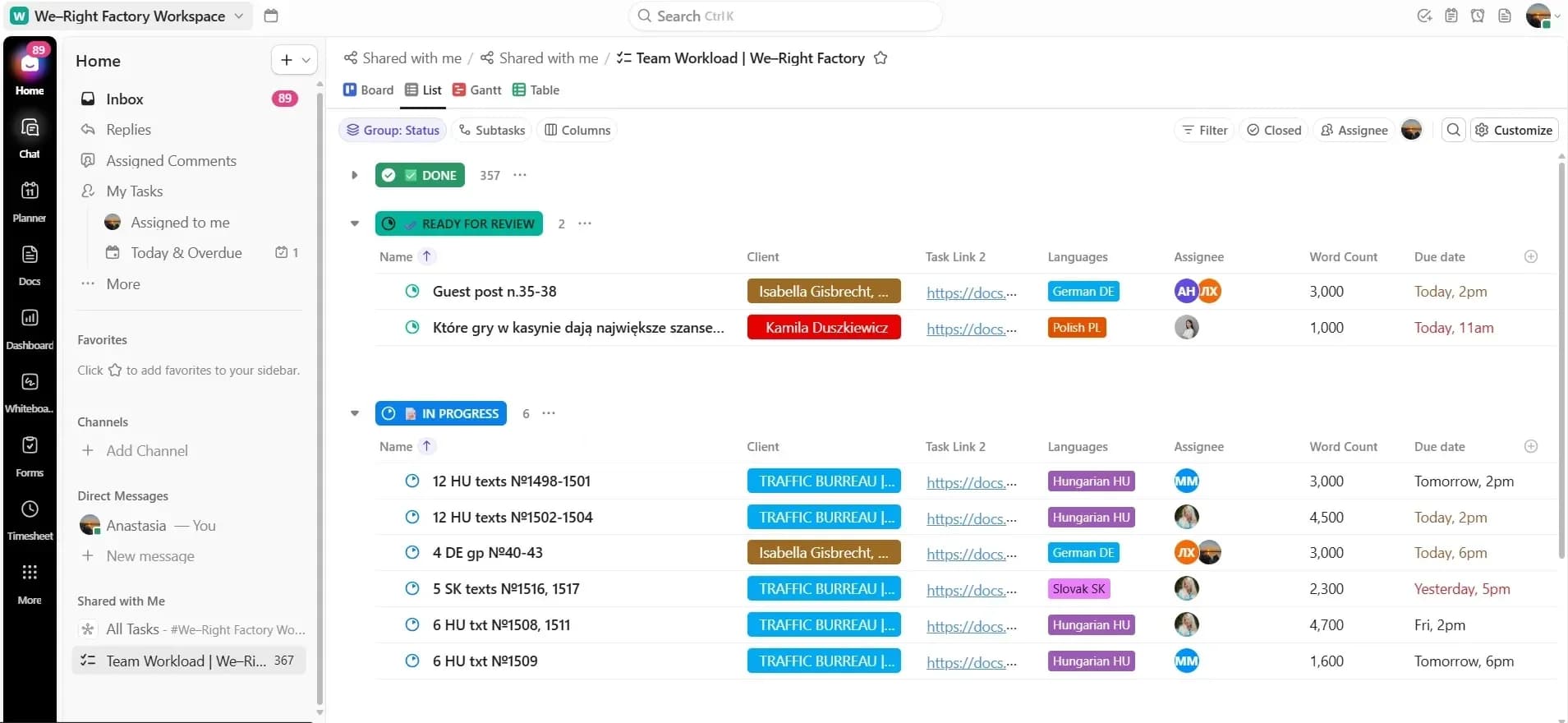
Professional iGaming content agencies operate as structured systems rather than collections of writers. Each stage in their workflow serves a specific risk mitigation function, particularly crucial in markets where content errors can escalate to regulatory violations.
The standard workflow begins with comprehensive research and briefing. This phase involves building SEO keyword cores matched to search intent, mapping legal and regulatory requirements by jurisdiction, and analyzing competitor approaches within specific market segments. This groundwork ensures content aligns with both search algorithms and compliance frameworks before writing begins.
Writing follows with verified specialists who understand iGaming mechanics rather than general marketing writers. These professionals navigate complex bonus structures, integrate gambling terminology accurately, and maintain SEO optimization while preserving content clarity. The distinction matters significantly – general copywriters often oversimplify technical concepts or make promotional claims that violate advertising regulations.
Editing represents a critical quality gate where content undergoes structural review, factual verification, and compliance alignment. Professional editors in this space understand how regulatory bodies interpret specific wording and which terms carry legal implications across different jurisdictions.
Quality assurance completes the cycle through comprehensive review covering fact-checking, SEO evaluation including metadata optimization, originality verification, and regulatory compliance confirmation. This multi-layered approach reduces error rates that could compromise search rankings or trigger regulatory scrutiny.
Key Workflow Stages
Professional iGaming content agencies operate through structured workflows with specific risk mitigation functions: comprehensive research and briefing, writing by verified specialists, multi-layered editing for compliance alignment, and quality assurance covering fact-checking and regulatory compliance confirmation.
Process Discipline Over Speed in High-Risk Verticals
Speed-focused approaches create substantial risks in iGaming content production. The complexity of topics – spanning bonus mechanics, payment processing, legal restrictions, and platform operations – demands thorough verification rather than rapid output.
Search algorithms evaluate iGaming content not only for keyword relevance but also for semantic accuracy and user value. Creating content that satisfies these dual requirements requires time investment and systematic checking procedures that rushed workflows cannot accommodate.
Regulatory risks compound these challenges. Minor wording errors in regulated markets can trigger content blocking, licensing warnings, or financial penalties. Professional agencies structure their workflows to prevent "firefighting" scenarios where public corrections become necessary.
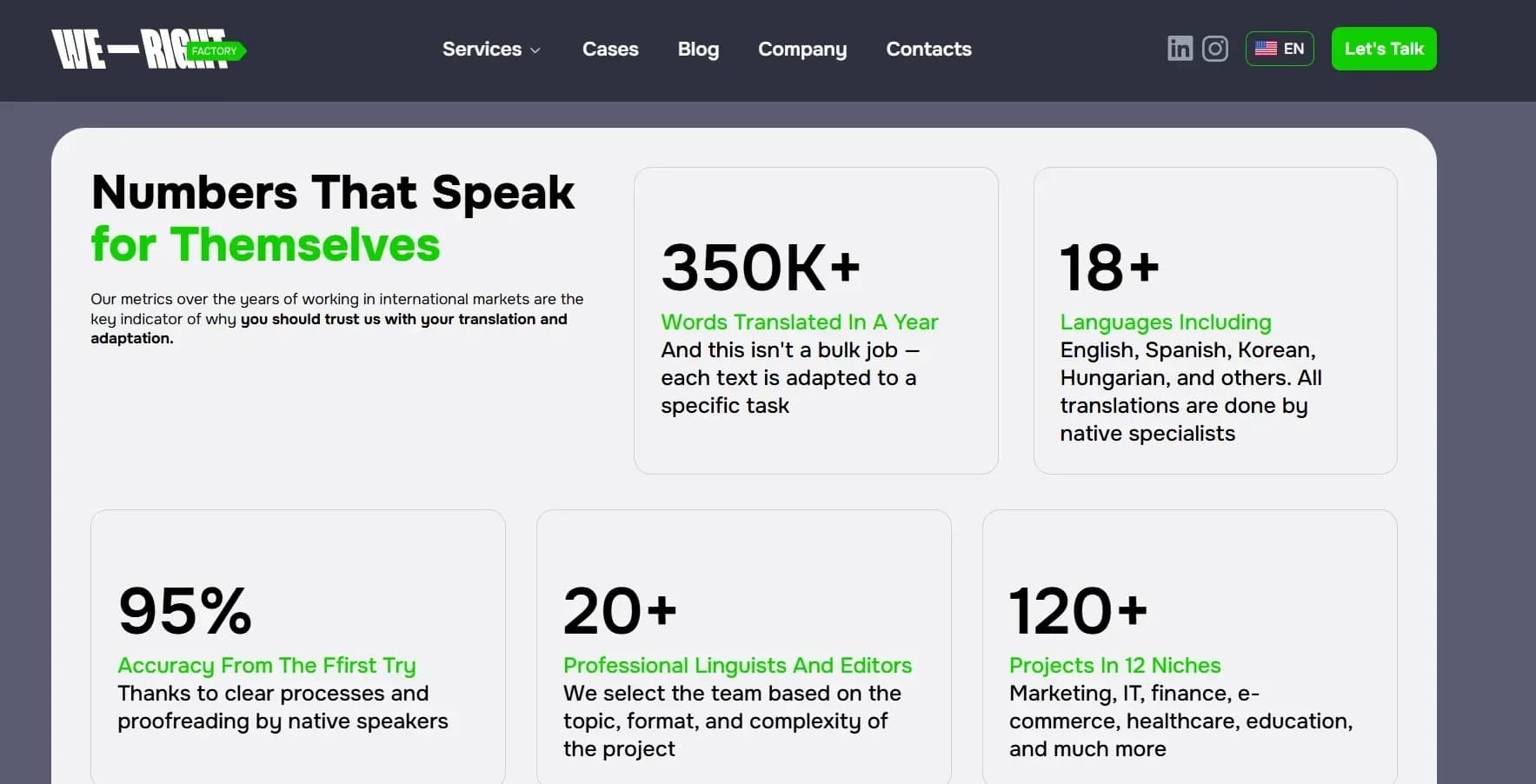
We – Right Factory demonstrates this approach through documented performance metrics. In June 2025, their team completed 128 tasks totaling 806,000+ words across 15 languages while maintaining quality standards and meeting established deadlines. The previous month, May 2025, they handled 108 projects covering 16 languages and more than 740,000 words, illustrating how structured processes enable scale without quality degradation.
This systematic approach distinguishes professional agencies from freelance alternatives that prioritize speed over accuracy. In iGaming's complex regulatory environment, consistent workflow adherence provides the risk management that arbitrary processes cannot deliver.
128
Tasks completed by We-Right Factory in June 2025
806,000+
Words produced in June 2025
15
Languages covered in June 2025
108
Projects handled in May 2025
740,000+
Words produced in May 2025
16
Languages covered in May 2025
Quality Assurance as Regulatory Protection
Quality assurance in iGaming content extends beyond traditional editing to encompass multi-level risk management. Professional agencies treat QA as comprehensive control combining editorial review, factual verification, and compliance checking.
The role of specialized editors proves critical in this environment. These professionals verify terminology accuracy, ensure brand voice consistency, eliminate factual errors, and coordinate content with SEO requirements. Their expertise in iGaming-specific language prevents misinterpretations that could mislead players or violate advertising standards.
Fact-checking represents a necessity rather than luxury in iGaming content. Materials frequently contain specific data including bonus terms, slot RTP percentages, wagering requirements, operator licensing information, and regional regulatory details. Inaccurate information damages player trust and creates legal exposure, particularly in strictly regulated markets like those overseen by UKGC or MGA.
Comprehensive fact-checking verifies numerical accuracy, confirms bonus conditions match actual offers, validates game characteristics and operator details, and ensures proper source attribution. This verification process protects both content quality and legal compliance.
SEO quality assurance constitutes a specialized discipline within content review. Texts undergo evaluation for search query alignment, heading structure optimization, keyword density assessment, metadata accuracy, and internal linking effectiveness. Google has become particularly sensitive to the YMYL (Your Money, Your Life) niche, which includes gambling content, making SEO QA essential for maintaining organic visibility.
The critical importance of QA in gambling content stems from multiple risk factors: regulatory authorities monitor information presentation closely, with incorrect descriptions potentially triggering fines and licensing issues; search engines penalize low-quality content more severely in high-stakes verticals; and gambling website visitors expect accurate information before making financial commitments, making trust essential for conversion.
Warning
Minor content errors in regulated markets can trigger content blocking, licensing warnings, or financial penalties. Google has become particularly sensitive to YMYL (Your Money, Your Life) content, which includes gambling materials, making comprehensive QA essential for maintaining organic visibility.
Scaling Content Production Without Quality Compromise
Professional iGaming agencies face the challenge of increasing content volumes while maintaining accuracy, compliance, and audience relevance. Successful scaling requires systematic approaches that prevent quality degradation as output grows.
Clear standards and documented processes form the foundation of scalable content production. Agencies develop content guides covering tone of voice requirements, stylistic standards, and SEO specifications for different content formats. Without established standards, multiple writers create inconsistent materials that reduce brand coherence and SEO effectiveness.
We – Right Factory establishes these standards during project approval phases, before work commences, creating a foundation for handling large volumes while maintaining consistency. This systematic approach enables simultaneous work on diverse projects – from SEO cluster development to long-term content series – without introducing chaos or quality gaps.
Structured role distribution becomes essential for scaling beyond simple writer recruitment. Professional agencies organize teams with defined responsibilities: SEO specialists develop semantic strategies, writers create content according to specifications, editors ensure quality and structure, QA teams verify accuracy and compliance, and project managers coordinate workflows and deadlines.
This organizational approach enabled We – Right Factory to manage dozens of simultaneous tasks during their documented performance periods while maintaining professional standards across all deliverables.
Market localization adds complexity to scaling efforts. Professional agencies adapt gambling content to specific regional requirements including language nuances, regulatory frameworks, payment method preferences, and cultural considerations. Simple machine translation fails to address these localization needs, requiring specialized expertise for effective market adaptation.
Properly structured scaling avoids quality loss through several mechanisms: early planning establishes fixed requirements for all team members, creating predictable workflows; balanced production maintains content depth alongside volume increases; and comprehensive quality control at each workflow stage prevents errors, duplication, and inconsistencies that emerge in less structured organizations.
How to Scale iGaming Content Production
Establish Clear Standards
Develop documented content guides covering tone of voice, stylistic standards, and SEO specifications for different content formats
Structure Role Distribution
Organize teams with defined responsibilities: SEO specialists, writers, editors, QA teams, and project managers
Implement Market Localization
Adapt content to regional requirements including language nuances, regulatory frameworks, and cultural considerations
Maintain Quality Control
Apply comprehensive verification at each workflow stage to prevent errors and inconsistencies
Risk Management in Regulated iGaming Markets
The iGaming vertical presents significant reputational and regulatory risks that content agencies must actively manage. These risks extend beyond abstract concerns to concrete challenges affecting traffic, compliance, and business operations.
Content directly influences brand perception among users and search engines, particularly in review formats, bonus presentations, and rule explanations. Inaccuracies create cascading problems: audience trust erosion when incorrect information appears, regulatory sanctions in jurisdictions with strict advertising requirements, and organic visibility loss as search engines penalize low-quality materials.
Based on 12+ years of experience in regulated iGaming markets, professional agencies understand how minor inaccuracies in bonus terms or licensing statements can trigger traffic decline, compliance warnings, and reputational damage.
Professional agencies implement multi-level control systems to minimize these risks. Internal legal and regulatory fact-checking ensures content compliance with jurisdictional requirements, including accurate bonus descriptions, game rules, age restrictions, and responsible gambling elements. This verification proves critical as regulators closely monitor compliance with established standards.
Built-in SEO QA focuses on content usefulness rather than keyword density alone. Modern search algorithms evaluate information accuracy, structural quality, and user value, making comprehensive QA essential for avoiding search engine penalties.
Specialized editing by iGaming experts addresses terminology interpretation, regulatory compliance, and jurisdictional requirements. These editors understand how specific wording may mislead players and which regulations apply across different markets, preventing common errors where text revision distorts meaning.
Internal quality standards formalize style requirements, regulatory compliance, and presentation formats through documented guidelines. This standardization enables multiple team members to work within unified frameworks while avoiding inconsistencies that could damage brand reputation.
Professional Risk Mitigation
Professional agencies implement multi-level control systems including internal legal fact-checking, built-in SEO QA focused on content usefulness, specialized editing by iGaming experts, and formalized internal quality standards through documented guidelines.
Identifying Reliable iGaming Content Partners
Selecting appropriate iGaming content agencies requires evaluation beyond basic writing capabilities. The high-risk nature of gambling content demands partners with demonstrated expertise, structured processes, and regulatory understanding.
Process transparency serves as a primary indicator of agency reliability. Professional providers clearly describe workflow stages including research phases, editing procedures, quality control measures, and material delivery timelines. They formalize cooperation terms through official contracts with defined deadlines and payment structures.
We – Right Factory exemplifies this transparency through documented workflows, NDA agreements, and clear contractual terms that reduce disagreement risks and increase client confidence. Agencies unwilling to demonstrate their processes or promising unrealistic turnarounds without detailed planning should raise immediate concerns.
Experience in regulated markets becomes crucial for iGaming content success. Professional agencies adapt content to legal requirements and cultural considerations across different jurisdictions. Regulators like UKGC and MGA establish strict requirements for advertising content, particularly regarding bonus terms, age restrictions, and player protection measures.
Quality standards in professional agencies extend beyond error correction to comprehensive content management including structured guides and checklists, mandatory QA stages combining editing with fact-checking and SEO review, internal standards for usability and terminology, and adherence to E-A-T principles covering expertise, authority, and trustworthiness.
Agencies should provide examples of their content guides or quality checklists to demonstrate preparation depth and systematic approaches.
Proven results through documented cases, traffic growth examples, localized content samples, and client testimonials indicate genuine expertise. Professional agencies share specific outcomes including organic traffic improvements, successful market adaptations, and solutions to complex regulatory challenges. Reluctance to provide cases or offering only generic traffic screenshots may indicate insufficient experience.
Pros
- Process transparency with documented workflows and clear contractual terms
- Experience in regulated markets with adaptation to legal requirements
- Quality standards extending beyond error correction to comprehensive content management
- Proven results through documented cases and client testimonials
Cons
- Higher initial costs compared to generalist providers
- Longer turnaround times due to comprehensive verification processes
- Limited availability due to specialized expertise requirements
- Complex onboarding procedures for new clients
Common Warning Signs in Agency Selection
Several red flags indicate agencies lacking necessary structure or expertise for iGaming content production. Absence of documented QA processes or fact-checking procedures signals inadequate risk management capabilities.
Unrealistic turnaround promises for large content volumes typically indicate insufficient understanding of iGaming complexity. Professional content requires research, compliance verification, and quality control that cannot be rushed without compromising accuracy.
Limited experience in regulated markets suggests agencies may not understand jurisdictional requirements that affect content legality and effectiveness. Lack of clear SEO strategy explanations indicates potential gaps in technical optimization capabilities.
Refusal to share workflow transparency, case studies, or client references suggests either limited experience or unsatisfactory results. In high-risk verticals like gambling, these gaps create direct exposure to ranking declines, compliance issues, and reputational damage.
Professional agencies distinguish themselves through documented processes, transparent workflows, regulatory expertise, and proven results in similar market conditions.
In iGaming, content quality directly impacts compliance, search visibility, and player trust – making structured processes essential rather than optional for sustainable success.
Critical Red Flags
Avoid agencies showing absence of documented QA processes, unrealistic turnaround promises for large content volumes, limited experience in regulated markets, lack of clear SEO strategy explanations, or refusal to share workflow transparency and case studies.
Strategic Considerations for Content Investment
The choice between price-focused and quality-focused content approaches carries significant implications in iGaming markets. Low-cost providers often compromise verification standards, creating higher error risks that prove costly in regulated environments.
Professional agencies justify higher rates through comprehensive compliance, factual accuracy, and SEO optimization that protect long-term brand value. While initial costs may appear higher, structured approaches reduce risks of traffic loss, regulatory issues, and reputation damage that can far exceed content investment savings.
Professional iGaming content agencies provide systematic risk management through verified processes, regulatory expertise, and quality control measures that generic providers cannot match. The investment in proper content infrastructure pays dividends through sustained organic performance, regulatory compliance, and audience trust.
Investment Perspective
While professional iGaming content agencies may have higher initial costs, structured approaches reduce risks of traffic loss, regulatory issues, and reputation damage that can far exceed content investment savings. The investment in proper content infrastructure pays dividends through sustained organic performance.
Industry Evolution and Future Requirements
The iGaming content landscape continues evolving toward greater specialization and regulatory scrutiny. Search engines implement more sophisticated quality assessments while regulators expand oversight across new jurisdictions and content formats.
Professional agencies adapt to these changes through process refinement, expanded compliance capabilities, and enhanced quality control measures. Operators and affiliates benefit from partnering with providers who understand these evolving requirements and maintain systems capable of adapting to new challenges.
Services like ClickUp help organize workflow management for professional agencies, enabling better project coordination and quality control across large-scale content operations. The separation between professional iGaming content agencies and general providers will likely increase as regulatory requirements become more complex and search algorithms more sophisticated in quality assessment.
The separation between professional iGaming content agencies and general providers will likely increase as regulatory requirements become more complex and search algorithms more sophisticated in quality assessment.
iGaming content operates under unique constraints where every bonus description must be legally accurate, each game review requires technical precision, and regulatory missteps can trigger fines or licensing issues. This environment demands specialized expertise rather than general copywriting skills.
Professional agencies implement multi-level control systems including internal legal fact-checking, specialized editing by iGaming experts, and comprehensive verification of regulatory requirements by jurisdiction. They understand how regulators like UKGC and MGA interpret specific wording and which terms carry legal implications.
Higher costs reflect specialized expertise, comprehensive quality control processes, and regulatory compliance measures that generic providers cannot match. The investment protects against traffic loss, regulatory issues, and reputation damage that can far exceed content cost savings.
Look for process transparency with documented workflows, proven experience in regulated markets, comprehensive quality standards, and willingness to share case studies and client references. Avoid agencies promising unrealistic turnarounds or lacking clear compliance procedures.
Successful scaling requires documented standards, structured role distribution with specialized team members, proper market localization capabilities, and comprehensive quality control at each workflow stage. Clear processes enable volume increases while maintaining accuracy and compliance.
According to We-Right Factory.