The battle for SEO platform dominance intensifies as industry professionals demand more sophisticated tools than traditional solutions can deliver. With organic search driving the majority of website traffic and first-page rankings capturing 27.6% of clicks according to Backlinko research, the stakes for choosing the right SEO platform have never been higher.
The SEO Platform Landscape: Beyond Basic Tools
===
Search engine optimization forms the backbone of digital marketing strategy, yet the tools powering these efforts vary dramatically in capability and scope. The gap between first and second position results tells the story – while Google's top organic result averages 27.6% click-through rates, the second position drops sharply to 15.8%. This stark difference explains why SEO teams increasingly scrutinise their toolsets for competitive advantage.
27.6%
First position average CTR
15.8%
Second position average CTR
The modern SEO professional faces challenges that extend far beyond keyword tracking. Today's requirements encompass comprehensive competitor intelligence, deep backlink analysis, technical site auditing, and emerging demands like AI search visibility monitoring. Traditional platforms struggle to meet these evolving needs within single ecosystems.
Moz: Foundation Platform Showing Its Limits

Rand Fishkin and Gillian Muessig launched Moz in 2004, originally as SEOmoz – a blog and community platform where early SEO practitioners shared experimental insights and search engine theories. The platform's evolution from content hub to software solution reflects the industry's own maturation.
Today's Moz serves digital marketers and SEO specialists with core functionality focused on practical, everyday challenges. The platform emphasises accessibility for teams new to SEO while providing essential metrics for ranking improvements and competitor analysis.
Pros
Cons
===
Database Limitations Constrain Growth
The most significant constraint facing Moz users emerges from database size limitations. Our analysis at We-Right Factory reveals Moz's keyword database contains 1.25 billion entries – substantially smaller than competitors offering 5.3 billion (SE Ranking), 26.3 billion (Semrush), and 28.7 billion (Ahrefs) keywords respectively.
"This service is suitable only for small businesses and those who are just starting with SEO."
— Olga Svichkar, We-Right Factory
This disparity becomes critical when teams require comprehensive keyword research across multiple markets or need detailed competitor analysis spanning diverse geographic regions.
Ahrefs: The Backlink Intelligence Leader
Dmitry Gerasimenko built Ahrefs in 2010, establishing what would become the industry's most comprehensive backlink analysis platform. Major technology companies including Shopify, eBay, LinkedIn, Uber, Adobe, Zoom, and Facebook integrate Ahrefs into their SEO workflows.
The platform's core strength lies in Site Explorer functionality, delivering deep backlink intelligence, streamlined keyword research, historical SEO data, and rapid competitor analysis capabilities.
Comprehensive Backlink Intelligence
Ahrefs maintains the industry's largest backlink index, providing 28.7 billion keyword entries and comprehensive link data covering both established websites and emerging domains. The platform's strength extends beyond raw data volume to include historical link tracking, broken link identification, and granular geographic analysis down to city-level keyword tracking capabilities.
The platform supports 15 languages and includes Core Web Vitals monitoring with both real-world and laboratory data integration. However, pricing structures can constrain smaller teams, particularly on entry-level plans where reporting credits deplete rapidly.
How to Leverage Semrush Core Features
Keyword research
Utilize reliable volume and difficulty metrics for SEO and PPC planning
Competitor analysis
Gain clear visibility into organic search and paid advertising strategies
AI search monitoring
Track brand visibility within AI-generated search responses
Backlink analysis
Access comprehensive database coverage across domain sizes
PPC data
Deliver paid search insights and campaign optimization opportunities
Audience insights
Enable data-driven marketing decisions across channels
Enterprise Client Base
Ahrefs serves major technology platforms including Shopify, eBay, LinkedIn, Uber, Adobe, Zoom, and Facebook across their SEO operations.
Semrush: Integrated Marketing Intelligence
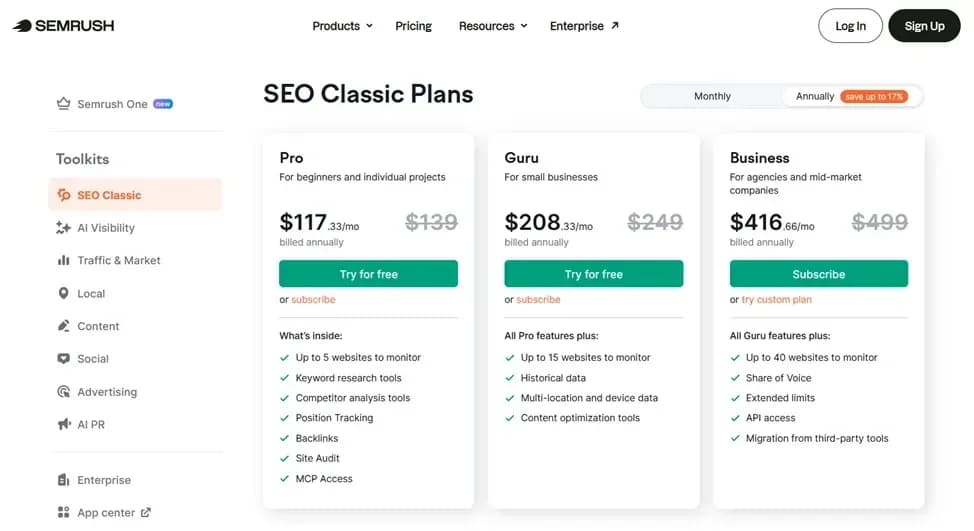
Oleg Shchegolev and Dmitry Melnikov created Semrush in 2008, developing what has become the most comprehensive integrated marketing platform in the SEO space. The platform serves approximately 117,000 paying subscribers according to its Q3 2025 financial report.
Semrush distinguishes itself through integrated functionality spanning SEO, paid search, content marketing, social media management, and emerging AI search monitoring capabilities.
Core Semrush Functionality
Keyword research with reliable volume and difficulty metrics for SEO and PPC planning Competitor analysis providing clear visibility into organic search and paid advertising strategies AI search monitoring tracking brand visibility within AI-generated search responses Backlink analysis with comprehensive database coverage across domain sizes PPC data delivering paid search insights and campaign optimisation opportunities Audience insights enabling data-driven marketing decisions across channels
Advanced AI Search Capabilities
Modern SEO extends beyond traditional search result pages into AI-generated responses and voice search results. Semrush addresses this evolution through AI search monitoring that tracks brand visibility, sentiment analysis, and conversation data within AI-powered search experiences.
The platform's visual reporting capabilities make ranking trends and traffic patterns immediately apparent, while sophisticated filtering options enable rapid identification of keyword and SERP opportunities.
Learning Curve Consideration
Semrush's comprehensive feature set requires significant time investment to master, particularly for teams transitioning from simpler platforms.
Strategic Platform Comparison: Core Capabilities
| Feature Category | Moz | Ahrefs | Semrush |
|---|---|---|---|
| Backlink Database | Solid for basic audits, smaller index | Industry-leading comprehensive data | Large index, slightly behind Ahrefs |
| Keyword Research | Reliable core metrics, limited database | Largest database – over 28 billion keywords | Strong data with accurate difficulty scores |
| Interface Design | Most beginner-friendly of the three | Clean UI with moderate complexity | Feature-rich but can overwhelm new users |
| Site Auditing | Competent for standard technical checks | Detailed crawl data with actionable insights | Most comprehensive issue detection range |
| Rank Tracking | Basic but functional monitoring | Accurate daily tracking across devices/locations | Advanced tracking with competitive benchmarking |
| Competitive Analysis | Limited compared to alternatives | Strong link and content gap analysis | Most complete competitor intelligence suite |
| Primary Use Case | Beginners and smaller budgets | Link building and backlink research | All-in-one SEO and content marketing |
The choice between platforms ultimately depends on workflow priorities rather than feature checklists – the best tool is the one teams actually use consistently.
Database Scale Implications
The keyword database disparities create practical implications for different user types:
- Moz (1.25 billion keywords): Suitable for local businesses and SEO beginners
- SE Ranking (5.3 billion keywords): Mid-market solution bridging basic and enterprise needs
- Semrush (26.3 billion keywords): Comprehensive coverage for multi-market campaigns
- Ahrefs (28.7 billion keywords): Maximum coverage for enterprise and agency requirements
These differences become critical when teams require extensive international keyword research or comprehensive competitor analysis across diverse geographic markets.
Integration and Workflow Considerations
Modern SEO teams demand seamless integration with existing marketing technology stacks. Semrush provides direct integration with Google Search Console and Google Analytics, pulling organic performance data directly into platform workflows. Ahrefs connects with Google Search Console on professional plans, while Moz supports Search Console integration across Pro-level subscriptions.
International SEO Capabilities
Global SEO requirements vary significantly between platforms. Semrush supports over 140 geographic databases with comprehensive multilingual keyword research across major international markets. Ahrefs provides strong international coverage with country-specific SERP analysis spanning diverse geographic regions. Moz focuses primarily on English-language markets with limited international database coverage.
Integration Priority
Teams heavily dependent on Google Analytics data should prioritize platforms offering native integration to streamline reporting workflows and reduce manual data compilation.
Cost-Benefit Analysis for Different Team Structures
Budget allocation becomes critical when evaluating platform options, particularly given the significant pricing variations between solutions.
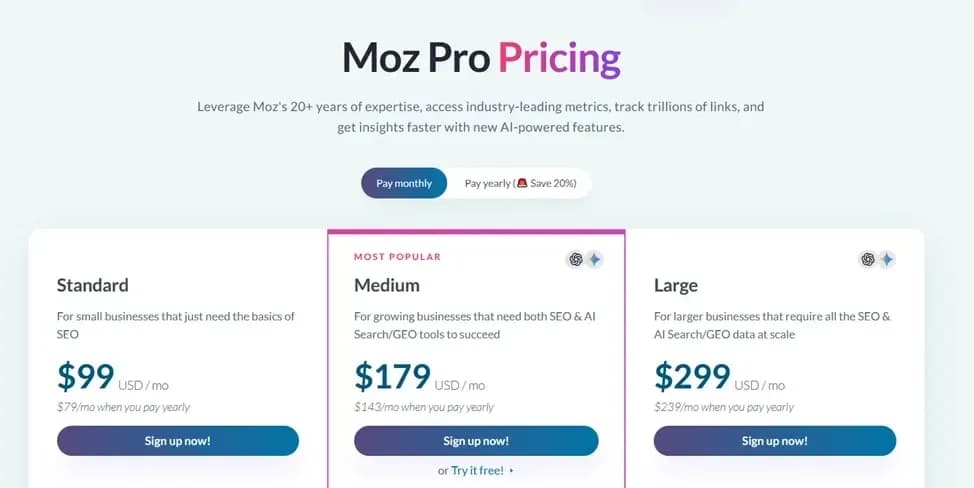
Moz appeals to cost-conscious teams and SEO beginners through competitive pricing and user-friendly interfaces. Ahrefs commands premium pricing justified by superior backlink data and comprehensive keyword coverage. Semrush positions itself as an all-in-one solution, potentially replacing multiple marketing tools despite higher subscription costs.
Agency-Specific Requirements
Digital agencies face unique platform requirements including client reporting capabilities, multi-domain management, and white-label functionality. Ahrefs domain verification system proves particularly valuable for agencies managing multiple client properties without proportional cost increases.
Semrush visual reporting capabilities streamline client communication through clear, professional-grade reports that effectively communicate SEO performance and recommendations to non-technical stakeholders.
Startup Considerations
Teams with limited budgets benefit from Moz's lower entry costs and extensive free trial, while established businesses requiring comprehensive data should consider higher-tier platforms despite increased investment.
Platform Selection Framework
Choosing between these platforms requires careful consideration of team priorities, technical requirements, and budget constraints:
Decision Framework
Budget Assessment: Determine available monthly investment and evaluate cost-per-feature ratios across platforms Team Experience: Consider current SEO expertise levels and training time availability for complex platforms Core Requirements: Identify primary use cases – backlink analysis, keyword research, competitor intelligence, or integrated marketing Growth Planning: Evaluate scalability requirements and potential feature needs as teams and projects expand Integration Needs: Assess existing tool compatibility and workflow integration requirements
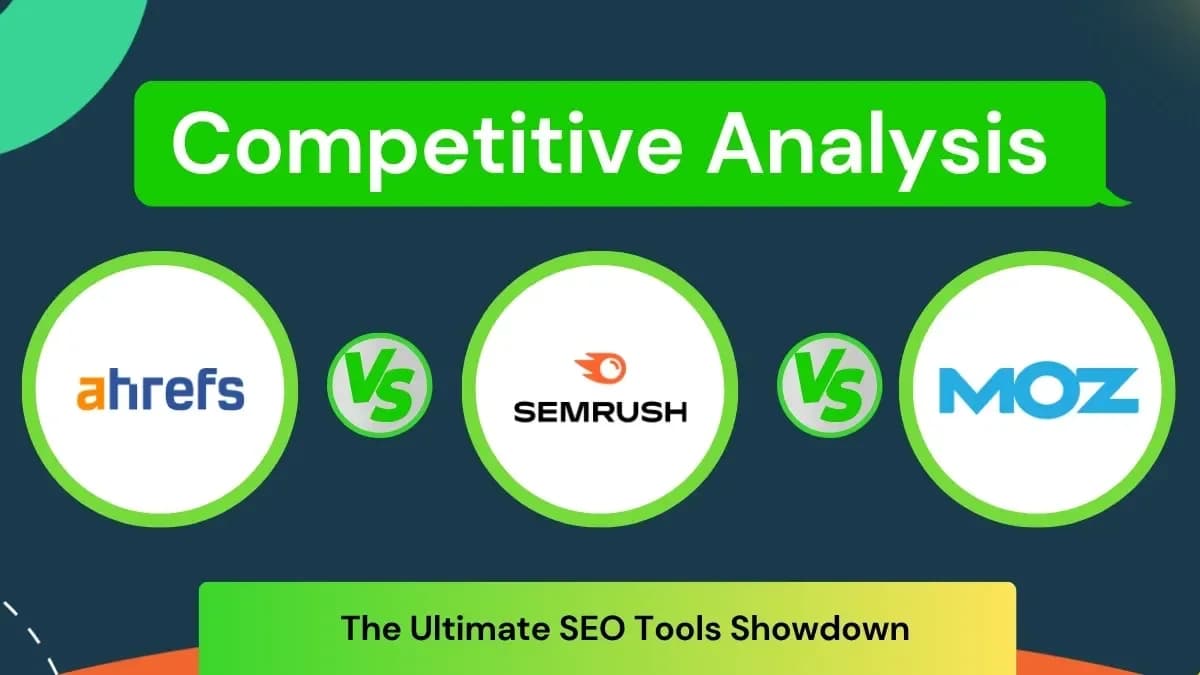
Teams prioritising link building and backlink research find Ahrefs unmatched for comprehensive link intelligence and historical data tracking. Those requiring integrated marketing workflows benefit from Semrush capabilities spanning SEO, PPC, content, and social media management. Moz serves teams seeking cost-effective core functionality without overwhelming complexity.
Industry Impact and Future Considerations
The competitive landscape between these platforms drives continuous innovation in SEO tool development. Recent advances include AI search monitoring, voice search optimisation features, and enhanced mobile SEO capabilities reflecting industry evolution toward diverse search experiences.
The right instrument is the one you actually open every day, not the one that wins on paper.
Platform selection ultimately determines team productivity and strategic capabilities. Teams using comprehensive platforms like Ahrefs or Semrush access deeper market insights and competitive intelligence, potentially translating into superior campaign performance and client results.
Strategic Platform Migration
Teams considering platform transitions should leverage available free trials to evaluate workflow compatibility before committing to long-term subscriptions. The learning curve associated with platform changes can temporarily impact productivity, making thorough evaluation essential.
Migration timing should align with campaign cycles and team availability to minimise disruption during critical SEO activities or client deliverable periods.
Market Evolution and Competitive Dynamics
The SEO platform market continues evolving as search engines introduce new ranking factors and user behaviour shifts toward AI-assisted search experiences. Platforms investing in AI search monitoring and voice optimisation capabilities position themselves for future market requirements.
Traditional metrics like keyword rankings remain important, but comprehensive platforms now integrate brand visibility tracking across AI-generated responses, featured snippets, and voice search results. This evolution favours platforms offering integrated functionality over point solutions addressing individual SEO aspects.
The competitive pressure between Moz, Ahrefs, and Semrush benefits end users through continuous feature development and pricing competition. However, feature proliferation can overwhelm teams seeking straightforward SEO solutions, creating market space for focused tools addressing specific workflow requirements.
Teams must balance comprehensive capability against workflow complexity when evaluating platform options. The most sophisticated platform provides no value if team members avoid using advanced features due to interface complexity or training requirements.
The domain verification system enables agencies to manage multiple client sites without substantial additional costs, making it particularly attractive for service providers handling diverse client portfolios.
The "traffic potential" metric helps identify valuable keyword opportunities that traditional volume metrics might overlook, providing insights into actual traffic possibilities rather than search volume alone.
According to We-Right Blog.