Australia's gambling regulation presents one of the most structurally complex frameworks in the global iGaming landscape. Unlike jurisdictions with centralised authorities, the Australian model operates through a deliberate federal-state division that fundamentally shapes market entry, compliance obligations, and operational strategies for gambling operators.
The regulatory architecture deliberately fragments authority between federal oversight of interactive gambling and state-based control of licensing, creating a system that demands nuanced understanding rather than simplified regulatory assessments.
The Federal-State Regulatory Division
Australia's gambling regulation operates through a dual-layer model that assigns distinct responsibilities across governmental levels. This structure represents more than administrative convenience – it creates fundamentally different compliance pathways for different gambling products.
Federal vs State Responsibilities
The division reflects constitutional arrangements where telecommunications and online services fall under federal jurisdiction, while physical gambling venues remain state and territory matters.
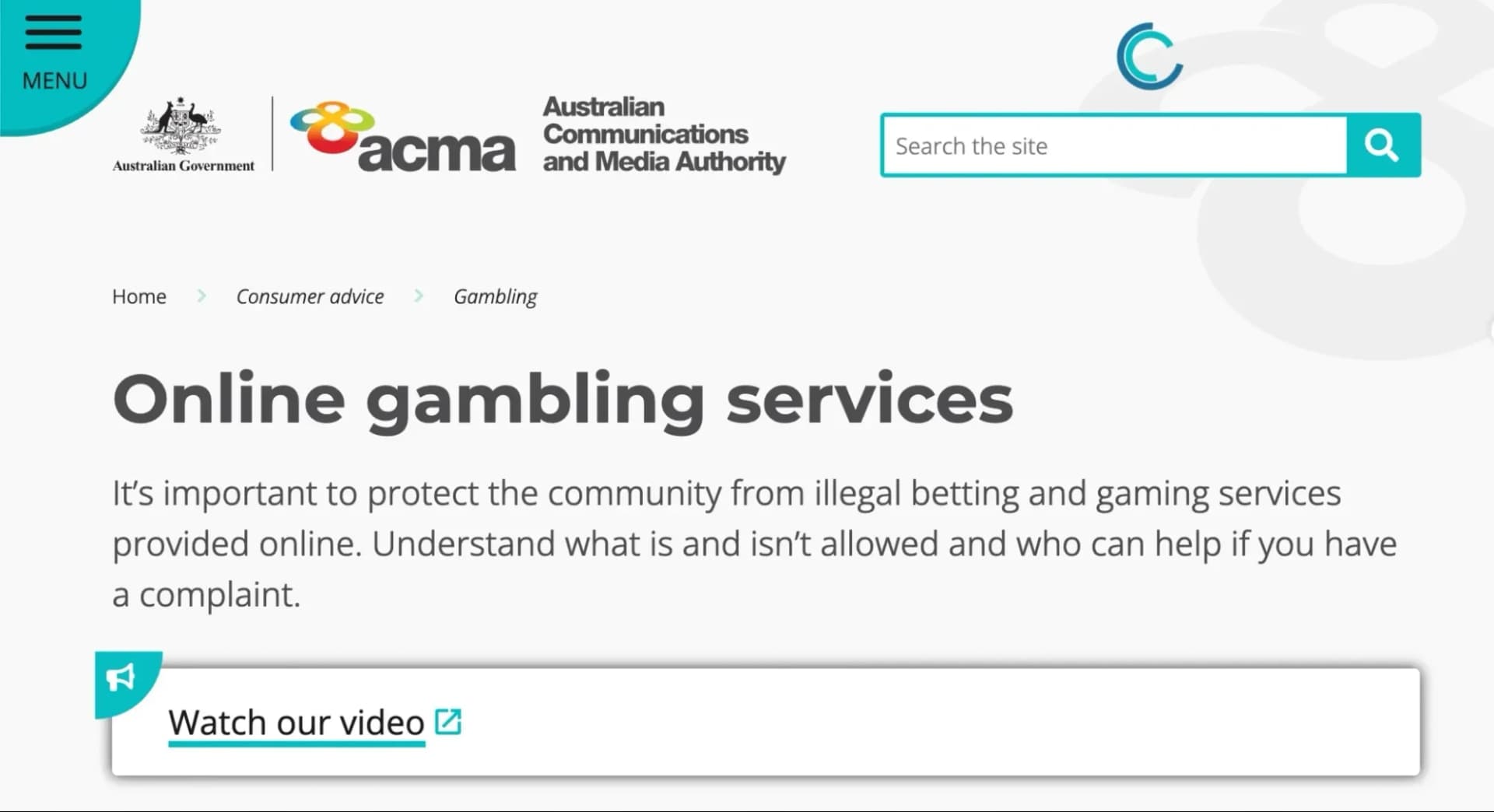
At the federal level, the Australian Communications and Media Authority (ACMA) enforces the Interactive Gambling Act 2001, focusing specifically on online and telephone wagering services, gambling advertising compliance, and enforcement against illegal offshore operators.
State and territory governments control the licensing apparatus for land-based gambling activities, including casinos, gaming machines (pokies), betting venues, lotteries, and club operations.
| Regulatory Level | Core Authority | Primary Responsibilities |
|---|---|---|
| Federal | ACMA | Interactive gambling, advertising rules, illegal operator enforcement, BetStop system |
| State/Territory | Various regional regulators | Licensing, casinos, gaming machines, wagering venues, local compliance |
This division creates a regulatory environment where no single authority controls the entire gambling market, requiring operators to navigate multiple jurisdictions simultaneously.
Why the Split System Exists
The federal-state division reflects Australia's constitutional framework, where telecommunications infrastructure and cross-border commerce fall under federal jurisdiction, while local business licensing and venue regulation remain state responsibilities.
"Australia is not a straightforward iGaming market. For iGaming content writing, compliance analysis, and operator-facing materials, it is not enough to mention ACMA – it is essential to clearly explain where federal control ends and where state and territory responsibility begins."
— Olga Svichkar, We-Right Factory
This structural approach means that gambling regulation in Australia cannot be analysed through a single regulatory lens, requiring distinct compliance strategies for different product categories and operational models.
ACMA's Federal Oversight Framework
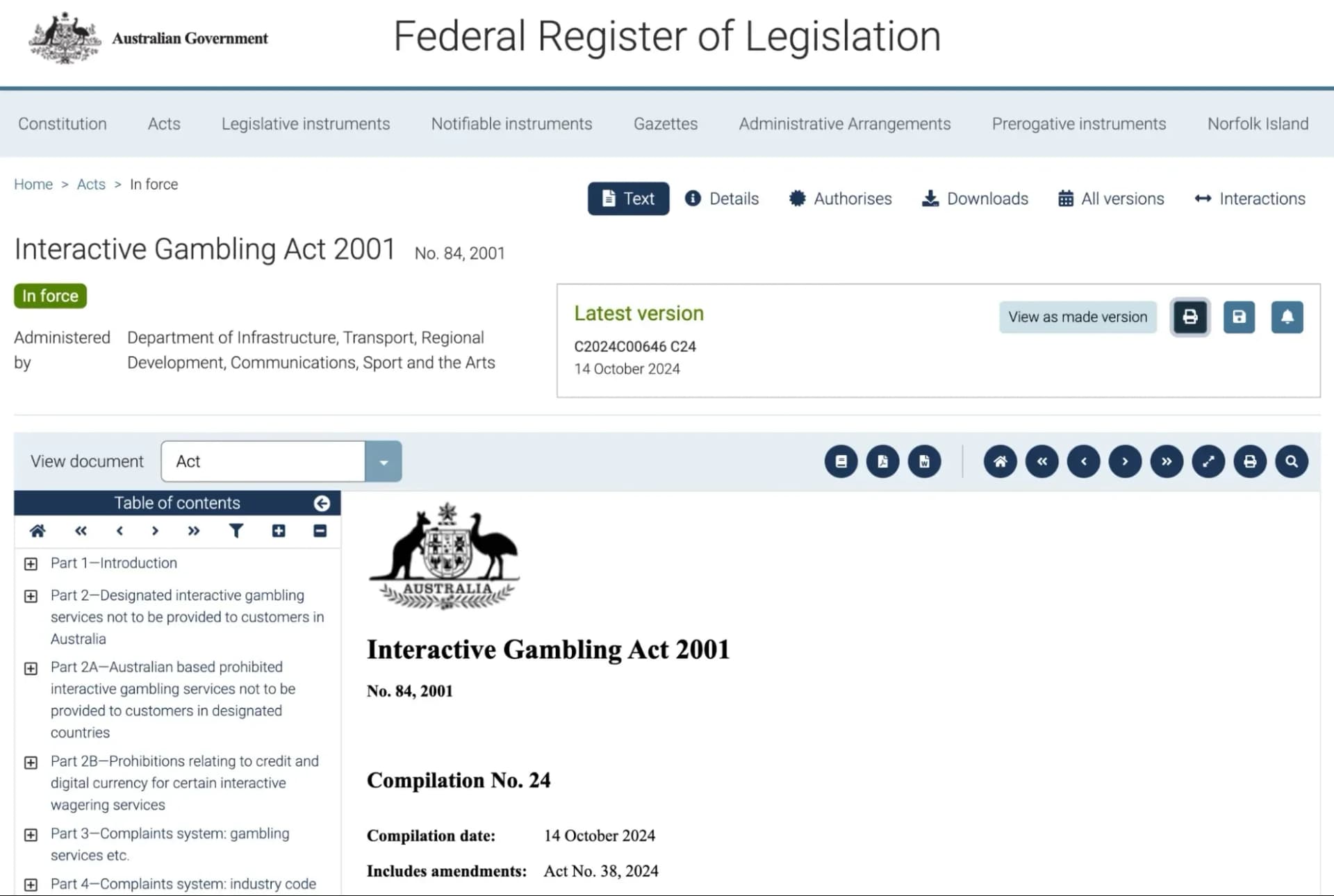
The Australian Communications and Media Authority serves as the federal regulator for interactive gambling compliance and enforcement, operating under the Interactive Gambling Act 2001 (IGA) as its primary legal mandate.
ACMA's regulatory scope encompasses several critical areas that directly impact operator compliance and market access strategies.
ACMA Enforcement Powers
ACMA possesses investigation authority, formal warning capabilities, civil penalty powers, Federal Court action initiation, and ISP blocking request mechanisms for non-compliant operators.
Interactive Gambling Prohibition Framework
The Interactive Gambling Act 2001 establishes comprehensive prohibitions on specific gambling services for Australian customers, including:
- Online casinos and slot machines
- Online poker services
- Certain types of in-play betting
- Online instant lotteries
- Unlicensed wagering services
These prohibitions create a regulatory environment where Australia does not function as an open online casino market, limiting legal operations to specifically licensed wagering services within defined parameters.
Warning
The prohibition framework means traditional online casino business models are not viable under current Australian law, requiring operators to focus on permitted wagering services or land-based operations.
Advertising Compliance Requirements
ACMA enforces strict gambling advertising rules across television, radio, and digital platforms, with particular focus on live sports broadcasting contexts. The regulatory framework treats advertising as an integral component of harm minimisation rather than merely commercial activity.
Key advertising restrictions include:
- Live Sports Broadcasting – Specific rules apply before, during, and after live sports broadcasts
- Children's Programming – Enhanced restrictions during content targeting younger audiences
- Digital Platform Compliance – Online streaming services face equivalent restrictions to traditional media
State Licensing Strategy
When targeting Australian markets, operators should consider starting with a single state jurisdiction to understand regulatory complexity before expanding. Victoria's VGCCC provides detailed guidance documentation that can serve as a model for understanding other state requirements.
State and Territory Regulatory Architecture
Each Australian state and territory operates its own gambling regulatory framework, creating a decentralised system where licensing requirements, compliance standards, and operational obligations vary significantly across jurisdictions.
8
Separate state/territory regulatory jurisdictions
Multiple
Licensing frameworks across Australia
Decentralised
Approach to land-based gambling control
Comprehensive State Regulator Overview
| State/Territory | Primary Regulator | Core Regulatory Functions |
|---|---|---|
| New South Wales | Liquor & Gaming NSW / Independent Liquor & Gaming Authority | Licensing, compliance, casino oversight, clubs, gaming machines, disciplinary functions |
| Victoria | Victorian Gambling and Casino Control Commission (VGCCC) | Licensing, monitoring, regulation of gambling and casino activity |
| Queensland | Office of Liquor and Gaming Regulation (QOLGR) | Licensing and compliance for gambling, casinos, liquor, gaming |
| South Australia | Consumer and Business Services | Policy, licensing, compliance for betting, casinos, gaming machines, lotteries |
| Tasmania | Tasmanian Liquor and Gaming Commission | Gambling and liquor licensing, compliance, regulation |
| Western Australia | Department of Local Government, Sport and Cultural Industries | Gambling policy, licensing, compliance |
| Northern Territory | Northern Territory Racing Commission / Licensing NT | Wagering and betting licensing and compliance |
| Australian Capital Territory | ACT Gambling and Racing Commission | Gambling licensing, compliance, regulation, education |
This decentralised structure means that licensing in Australia depends on the product, delivery channel, jurisdiction, and operator type, rather than following a unified national licensing model.
28,300
BetStop first-year registrations
53,000
Total BetStop registrations by December 2025
34,000
Active exclusions by December 2025
Victoria's Regulatory Framework Example
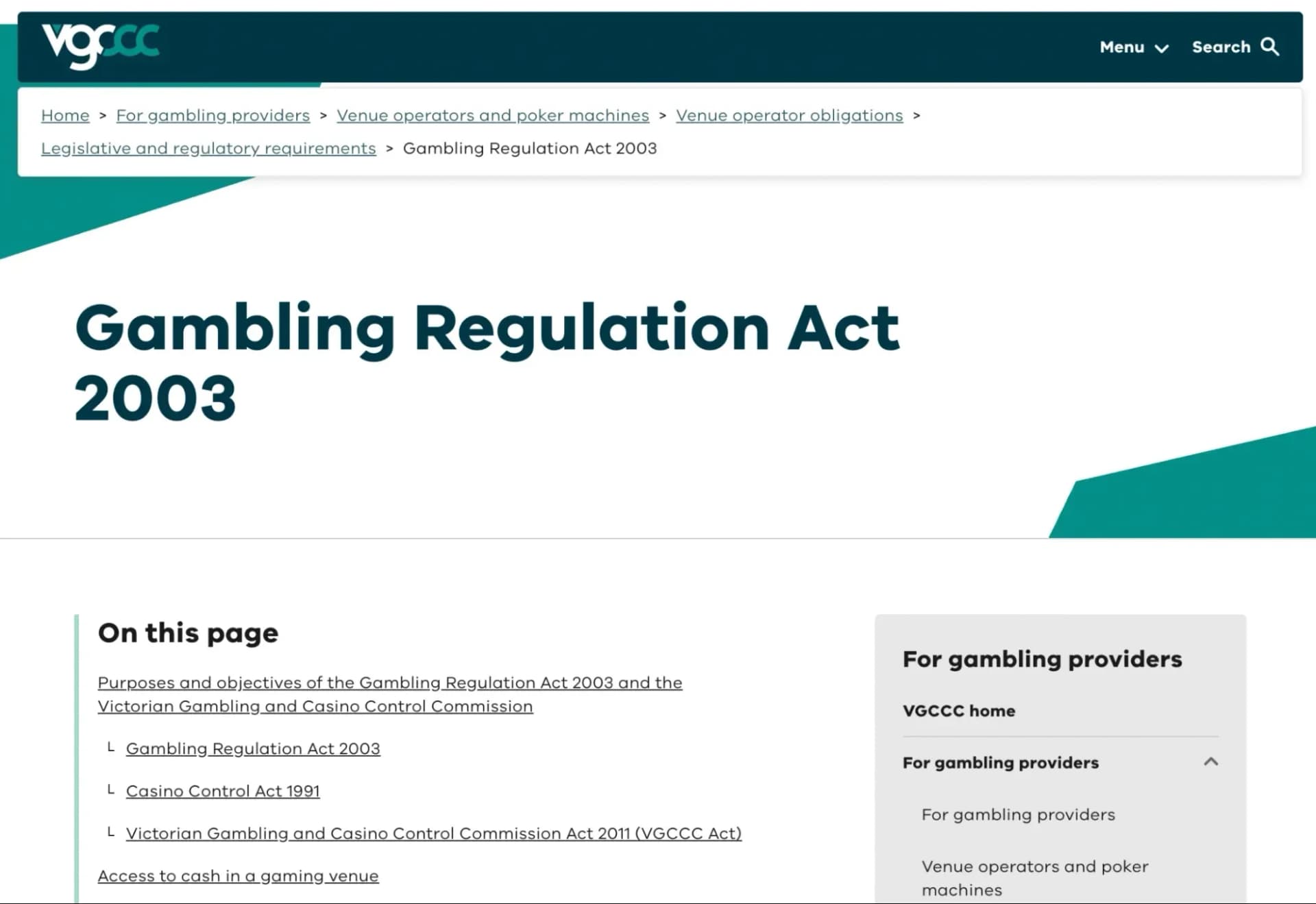
The Victorian Gambling and Casino Control Commission (VGCCC) demonstrates how state-level regulation operates in practice, overseen under the Gambling Regulation Act 2003 as the primary legal framework for venue operators.
Victorian Compliance Requirements
Operators must satisfy not only initial licensing requirements but also ongoing regulatory compliance, ministerial directions, technical standards, and continuous operational obligations under VGCCC oversight.
The Victorian model illustrates that regulation extends beyond licensing into day-to-day operational compliance, which receives active monitoring at the state level rather than passive oversight.
BetStop: National Self-Exclusion Infrastructure

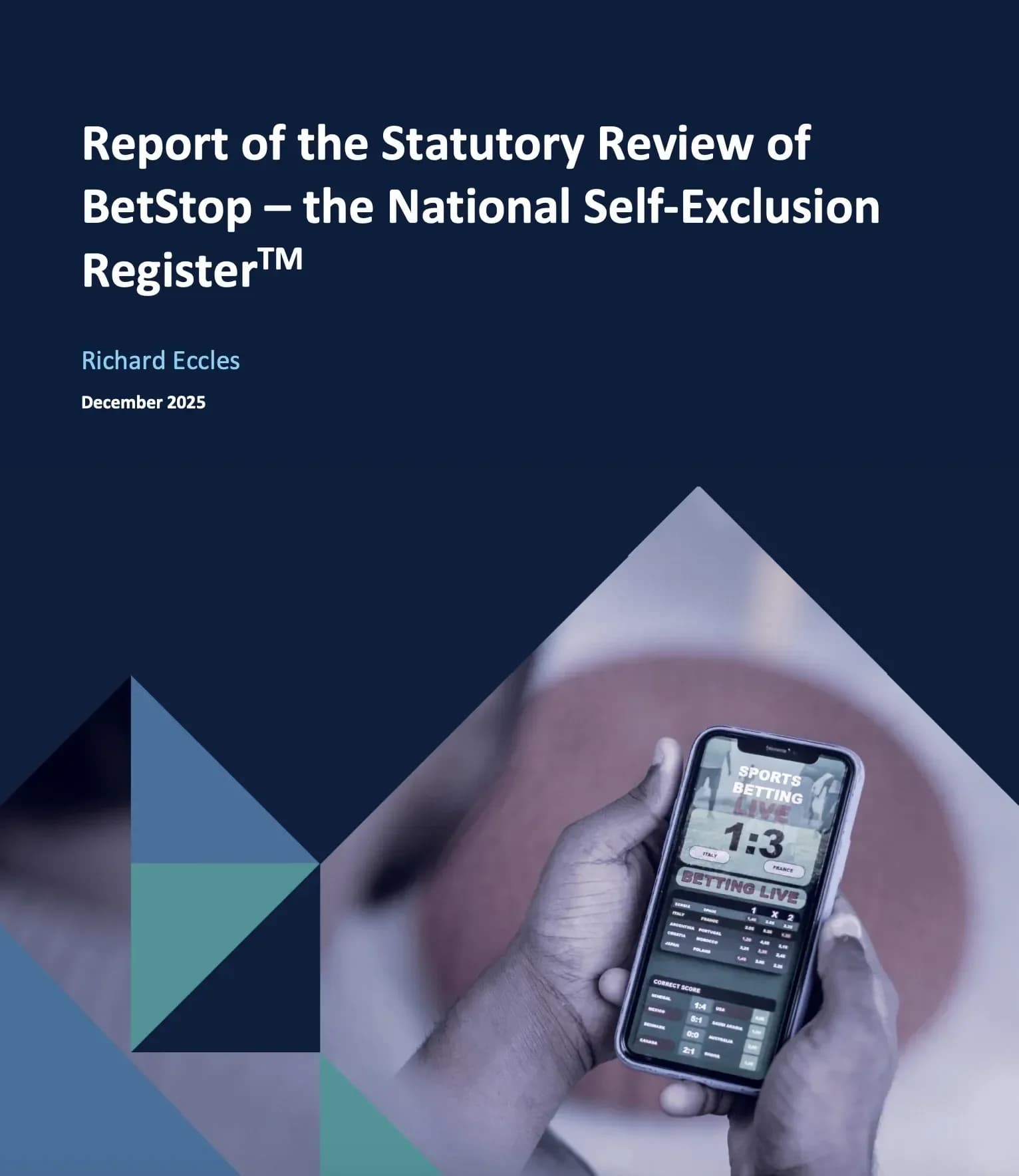
BetStop represents Australia's National Self-Exclusion Register, functioning as a mandatory compliance element embedded within the national regulatory framework rather than an optional operator tool.
The system allows individuals to exclude themselves from all licensed online and telephone wagering providers across Australia, with exclusion periods ranging from three months to lifetime bans.
BetStop Usage Patterns and Behavioral Data
Analysis of BetStop registration data reveals significant insights into user behaviour and the system's role as a long-term control mechanism:
- Nearly half of users choose lifetime exclusion, indicating sustained commitment to gambling cessation
- Around 17% select the minimum three-month period, suggesting short-term cooling-off intentions
- Older users demonstrate higher likelihood of selecting long-term exclusion periods
BetStop functions as a sustained behavioral control mechanism, not just a support feature, with integration requirements making self-exclusion mandatory rather than optional for licensed operators.
Compliance Integration Requirements
Unlike voluntary self-exclusion tools in other jurisdictions, BetStop operates as mandatory compliance infrastructure. Licensed wagering operators must integrate with the system, making self-exclusion a structural requirement rather than an optional service enhancement.
This integration requirement demonstrates how Australia embeds consumer protection mechanisms directly into regulatory compliance obligations, creating enforceable rather than voluntary harm minimisation measures.
Payment Restrictions and Credit Prohibitions
From 11 June 2024, Australia introduced comprehensive restrictions on credit-based payments for online and telephone betting services, representing a direct regulatory intervention in payment processing methods.
Payment Method Compliance Framework
| Payment Type | Regulatory Status | Applicability |
|---|---|---|
| Credit Cards | Prohibited | Online and telephone betting |
| Credit-Linked Wallets | Prohibited | Online and telephone betting |
| Cryptocurrency | Prohibited | Online and telephone betting |
| Debit Cards | Permitted | Subject to operator-specific rules |
The payment restrictions apply specifically to online and telephone betting services as part of broader harm minimisation policy, though land-based and lottery products may face different requirements depending on jurisdictional rules.
Payment System Integration
Australia treats payment methods as regulatory control mechanisms rather than technical operational layers, using financial instruments actively to reduce gambling harm rather than merely processing transactions.
Implementation Timeline
The credit payment restrictions came into effect on 11 June 2024, giving operators limited time to modify payment processing systems. Operators discovered accepting prohibited payment methods after this date face immediate compliance violations.
AML/CTF Compliance Through AUSTRAC
Anti-money laundering and counter-terrorism financing regulation operates through AUSTRAC oversight, with certain gambling activities classified as designated services requiring strict monitoring and reporting protocols.
Mandatory AML/CTF Requirements
Licensed gambling operators must implement comprehensive compliance frameworks including:
- Customer Identification (KYC) – Enhanced due diligence procedures
- Suspicious Transaction Monitoring – Ongoing surveillance systems
- AUSTRAC Reporting – Regular regulatory submissions
- Internal AML/CTF Programs – Documented compliance procedures
Financial Compliance Integration
AML compliance operates as an integral component of gambling regulation rather than background administrative requirement, directly shaping operational risk assessment and business structure decisions.
For operators, AUSTRAC compliance extends beyond standard licensing into ongoing financial monitoring, reporting obligations, and potential enforcement actions under AML/CTF frameworks.
Australia embeds consumer protection and financial compliance directly into regulatory architecture, making harm minimisation and AML obligations structural requirements rather than optional enhancements.
Enforcement Mechanisms and Regulatory Tools
ACMA possesses comprehensive enforcement authority for investigating breaches of online and telephone gambling regulations, including violations related to illegal services, advertising non-compliance, and BetStop integration failures.
Available Enforcement Actions
Investigation and Warning Phase
Formal investigations, official warnings, and compliance guidance for regulatory breaches
Penalty and Legal Action Phase
Infringement notices, civil penalties, and Federal Court proceedings for serious violations
Technical Enforcement Phase
Website blocking requests through Australian internet service providers and ongoing monitoring
Enforcement extends beyond traditional gambling websites, as demonstrated by action against "skins" gambling services, showing that casino-style mechanics are prohibited even when embedded in alternative digital formats.
Market Access Implications for Operators
Australia's regulatory structure creates fundamental challenges for traditional iGaming business models, requiring operators to reconsider standard market entry strategies.
Pros
- Strong wagering sector with established betting culture
- Clear regulatory frameworks once understood
- Sophisticated consumer market with high digital adoption
Cons
- Online casino products prohibited under current law
- Complex multi-jurisdictional licensing requirements
- Strict advertising and payment processing limitations
Strategic Considerations for Market Entry
The regulatory framework forces operators to approach Australia through layered strategy development rather than unified market entry plans:
- Product Restrictions – Online casino models are not viable under current legal frameworks
- Jurisdictional Complexity – No single license covers the entire market; operations depend on specific location and product type
- Compliance Variability – Requirements change across states and product categories, especially for land-based operations
- Advertising Controls – Sports-related advertising faces tight regulation, particularly around live events
- Payment Limitations – Credit-based transaction restrictions affect revenue processing methods
Operator Guidance
Australia requires structural correctness from market entry rather than rapid scaling strategies, with regulatory compliance determining operational viability rather than market demand alone.
Regulatory Trajectory and Industry Impact
Australia's gambling regulatory approach demonstrates a systematic preference for harm minimisation integration rather than market liberalisation, with recent developments indicating continued tightening of operational controls.
The credit payment restrictions, BetStop mandatory integration, and active enforcement against alternative gambling formats suggest a regulatory trajectory focused on control tightening rather than market expansion.
"What defines the market is how multiple regulatory layers work together – and how those layers shape what is allowed, how operators are licensed, and how control is actually enforced."
— Olga Svichkar, We-Right Factory
This approach creates a gambling market that prioritises regulatory compliance over commercial flexibility, requiring operators to structure operations around regulatory requirements rather than market opportunities.
For the broader iGaming industry, Australia represents a model where consumer protection mechanisms are embedded structurally rather than implemented voluntarily, potentially influencing regulatory developments in other jurisdictions seeking enhanced gambling harm minimisation.
The Australian framework demonstrates that sophisticated gambling markets can operate under restrictive regulatory conditions while maintaining commercial viability, provided operators align business models with regulatory architecture rather than attempting to circumvent control mechanisms.
Australia uses active enforcement including investigations, penalties, public registers, and internet service provider blocking mechanisms rather than relying solely on policy frameworks.
Illegal gambling websites can be blocked through Australian ISPs via ACMA requests, with operators potentially facing civil penalties and Federal Court actions.
Yes, enforcement extends to casino-style mechanics in alternative digital formats, including "skins" gambling and similar services that replicate prohibited gambling experiences.
According to We-Right Blog.
Legal Disclaimer
This content reflects a general overview of regulatory frameworks based on publicly available information. It does not constitute legal advice or a legal opinion. iGamingWriter.blog disclaims any liability arising from reliance on this material.