Austria's gambling sector stands as one of Europe's most tightly controlled markets, operating under a federal monopoly system that restricts legal gambling to just two authorized operators. The Federal Ministry of Finance (Bundesministerium für Finanzen – BMF) serves as the sole regulatory authority, overseeing all licensing, supervision, and enforcement activities within the Republic of Austria.
This centralized approach contrasts sharply with the liberalized gaming markets adopted across much of Europe, positioning Austria as a regulatory outlier that prioritizes state control over market competition. The framework operates under the Austrian Gambling Act (Glücksspielgesetz – GSpG), which establishes strict quantitative and qualitative restrictions on gambling activities.
Federal Monopoly Structure
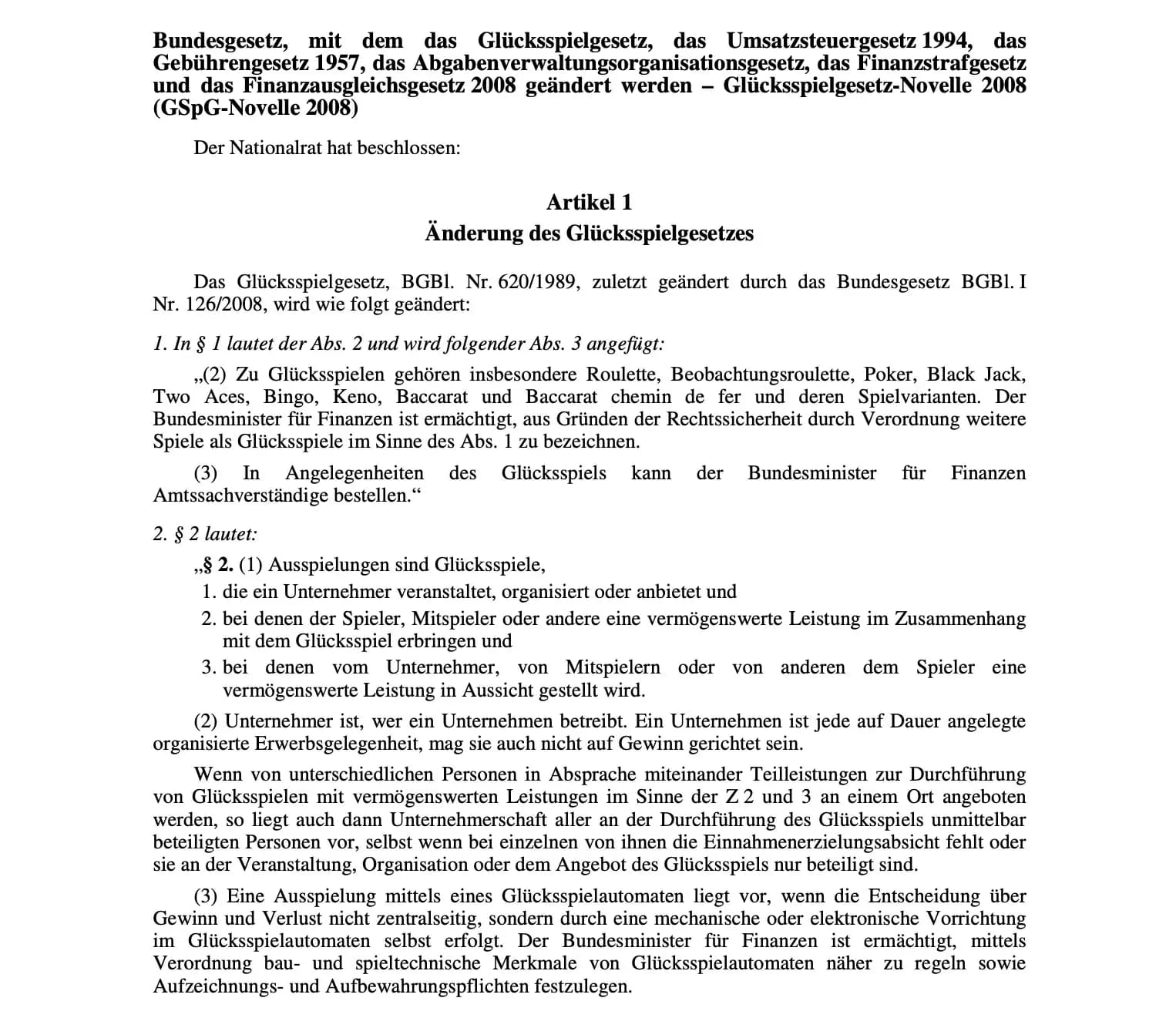
Austria has not adopted a liberalized gambling market structure, instead permitting gambling only within limits explicitly defined by law. The regulatory model applies to land-based casinos, lotteries, and approved forms of online gambling under a concession-based system that severely limits market access.
The Federal Ministry of Finance, headquartered in Vienna, holds exclusive authority over licensing, supervision, and enforcement within the national gambling system. Its official website bmf.gv.at serves as the primary resource for regulatory guidance and compliance information.
The Ministry's regulatory scope encompasses:
- Licensing and concession management
- Compliance monitoring and enforcement
- Player protection implementation
- Cooperation with law enforcement authorities
Regulatory Authority Details
The Federal Ministry of Finance operates from Vienna as Austria's sole gambling regulatory body, with its official website bmf.gv.at serving as the primary resource for compliance information and regulatory guidance.
Current License Holders

Within the framework of the federal gambling monopoly, only two operators currently hold nationwide gambling concessions issued by the Federal Ministry of Finance.
Österreichische Lotterien GmbH
Österreichische Lotterien GmbH operates under an exclusive concession covering lotteries and electronic lotteries, including online gambling activities, valid until 30 September 2027. The operator's authorization encompasses a defined catalogue of games of chance explicitly listed in the concession decision.
The company operates the licensed online platform win2day.at, representing Austria's only legal online gambling destination. This monopolistic online arrangement places Austria among Europe's most restrictive digital gambling jurisdictions.
Casinos Austria AG
Casinos Austria AG holds concessions to operate twelve land-based casinos across Austria. Depending on individual casino locations, these concessions remain valid until either 31 December 2027 or 31 December 2030.
The casino operator's facilities represent the entirety of Austria's legal land-based gaming infrastructure, with no additional licenses available to competing operators.
12
Licensed Land-Based Casinos
2
Authorized Operators Nationwide
2,027
Österreichische Lotterien Concession Expires
2,010
Staff Unit for Addiction Prevention Established
Online Gambling Restrictions

Online gambling in Austria constitutes a separate and strictly regulated segment subject exclusively to federal regulation within a closed monopoly framework. Unlike certain land-based gambling activities, which may receive regional authorization, online gambling operates solely under federal control.
Under the Austrian Gambling Act, lawful online gambling requires possession of a federal concession. Austrian law provides no mechanism for competitive licensing of online gambling services, effectively creating a single-operator digital market.
Important
Foreign gambling licenses do not confer market access in Austria for online gambling activities, regardless of whether operators hold valid licenses from other EU jurisdictions.
The Austrian Federal Economic Chamber (Wirtschaftskammer Österreich – WKO) has published legal summaries indicating that contracts concluded with unauthorized online gambling providers may be considered legally ineffective under Austrian law. This creates potential civil law consequences for unlawful operations, including disputes related to contract validity.
| Element | Regulatory Position in Austria |
|---|---|
| Market access | Restricted, monopoly-based |
| Licensing model | Federal concession only |
| Authorised online operator | Österreichische Lotterien GmbH |
| Licensed online platform | win2day.at |
| Recognition of foreign licences | Not recognised |
| Competitive licensing | Not available |
| Legal status of unauthorised operators | Unlawful under Austrian law |
Warning
The Austrian Federal Economic Chamber has published guidance indicating that contracts with unauthorized online gambling providers may be legally ineffective under Austrian law, creating potential civil law consequences for unlawful operations.
Regulatory Oversight Framework
Supervision and enforcement responsibilities rest exclusively with the Federal Ministry of Finance, which monitors compliance across multiple operational areas:
- Concession condition adherence
- Monopoly rule enforcement
- Player protection measure implementation
- Technical requirement compliance
The Ministry operates a dedicated Staff Unit for Addiction Prevention and Counselling, established in 2010 to support gambling harm prevention initiatives. This unit coordinates research and data collection while maintaining relationships with regional protection facilities.
Regulatory Approach
Gambling supervision in Austria combines regulatory control with public policy objectives, emphasizing consumer protection and crime prevention over market liberalization.
| Category | Information |
|---|---|
| Official name | Federal Ministry of Finance (Bundesministerium für Finanzen – BMF) |
| Legal basis | Austrian Gambling Act (Glücksspielgesetz – GSpG) |
| Jurisdiction | Republic of Austria |
| Regulatory scope | Licensing, supervision, enforcement, player protection |
| Headquarters | Vienna |
| Licensing authority | Federal Ministry of Finance |
| Official website | bmf.gv.at |
EU Law Compatibility Position
Austria maintains that its monopoly-based gambling system complies with European Union law, provided regulatory restrictions serve recognized public interest objectives and apply consistently across the market. This position has undergone repeated assessment in both national and European legal contexts.
Austrian authorities emphasize that the gambling monopoly does not promote gambling participation but rather limits social impact while ensuring effective state control. The framework pursues several core objectives:
- Limiting excessive gambling through quantitative market restrictions
- Preventing criminal activity, including fraud and money laundering
- Protecting players through statutory safeguards
- Ensuring regulatory coherence across federal and regional levels
The monopoly model serves as a structural tool enabling state authorities to achieve these objectives more effectively than a liberalized licensing regime would permit.
Public Interest Justification
Austria's monopoly system emphasizes that it does not promote gambling participation but rather limits social impact through quantitative market restrictions while ensuring effective state control over criminal activity prevention and player protection.
Technical and Compliance Requirements
Both authorized operators function under strict legal conditions and direct state supervision. The Federal Ministry of Finance defines permitted activity scope, technical requirements, responsible gaming obligations, and compliance standards through detailed regulatory oversight.
Concessions confer legally defined and time-limited rights to operate specific categories of games of chance, subject to continuous supervision by public authorities. This approach treats gambling as a controlled public-interest activity rather than an open commercial market.
Market Access Restrictions
Austria's regulatory framework explicitly limits gambling operations to state-authorized operators, reflecting the monopoly-oriented approach under the Austrian Gambling Act. The system provides no pathway for additional market entrants, maintaining strict quantitative restrictions on gaming provision.
The legal structure receives confirmation through official guidance published by the Federal Ministry of Finance and summarized by the Austrian Federal Economic Chamber, establishing clear boundaries for lawful gambling activities within the jurisdiction.
Operator Strategy Consideration
The Austrian market's monopolistic structure provides no pathway for additional entrants, requiring operators to evaluate whether the single-operator environment justifies investment focus compared to liberalized European markets.
Cross-Border Implications for European Markets
Austria's rigid monopoly stance creates significant implications for operators seeking pan-European expansion strategies. The jurisdiction's refusal to recognize foreign gaming licenses effectively eliminates Austria from competitive market considerations, forcing operators to evaluate whether the single-operator environment justifies investment focus.
The model also presents compliance challenges for technology providers and payment processors operating across multiple European jurisdictions. Austria's restrictive framework requires specialized operational approaches that may not align with broader regional strategies, potentially increasing operational complexity and costs for multi-market service providers.
Perhaps most significantly, Austria's position demonstrates that monopolistic gambling frameworks can withstand EU legal scrutiny when properly structured around public interest objectives. This precedent may encourage other jurisdictions to maintain or strengthen existing monopoly systems, potentially reversing liberalization trends observed across Europe over the past decade. Operators monitoring regulatory developments should note that Austria's approach could signal broader resistance to market opening initiatives, particularly in jurisdictions where state-controlled gambling generates substantial public revenues.
Austria's position demonstrates that monopolistic gambling frameworks can withstand EU legal scrutiny when properly structured around public interest objectives, potentially encouraging other jurisdictions to maintain or strengthen existing monopoly systems.
Only two operators hold valid concessions: Österreichische Lotterien GmbH for lotteries and online gambling through win2day.at, and Casinos Austria AG for twelve land-based casinos. No additional licenses are available to competing operators.
No, foreign gambling licenses do not confer market access in Austria for online gambling activities, regardless of whether operators hold valid licenses from other EU jurisdictions. The Austrian Federal Economic Chamber indicates contracts with unauthorized operators may be legally ineffective.
The Federal Ministry of Finance serves as the sole regulatory authority, overseeing all licensing, supervision, and enforcement activities. The Ministry operates from Vienna and maintains exclusive control over the national gambling system.
Österreichische Lotterien's exclusive concession expires on 30 September 2027, while Casinos Austria's casino concessions expire on either 31 December 2027 or 31 December 2030 depending on location. The system provides no mechanism for competitive licensing renewals.
Austrian authorities maintain the monopoly serves recognized public interest objectives including limiting excessive gambling, preventing criminal activity, and protecting players through statutory safeguards. The framework emphasizes state control over market liberalization to achieve these regulatory goals.
According to We-Right Factory.
Legal Disclaimer
This content reflects a general overview of regulatory frameworks based on publicly available information. It does not constitute legal advice or a legal opinion. iGamingWriter.blog disclaims any liability arising from reliance on this material.