Denmark's gambling regulatory landscape represents one of Europe's most technically sophisticated oversight systems, where the Danish Gambling Authority (Spillemyndigheden) operates as both licensing gatekeeper and continuous market monitor. This comprehensive regulatory framework, established in its current form following the 2012 gambling reform, demonstrates how modern jurisdictions balance market liberalization with protective oversight.
Regulatory Architecture: From Monopoly to Mixed Markets
Denmark's approach to gambling regulation underwent fundamental restructuring when the Danish Gambling Act came into force on January 1, 2012. This legislative shift marked the transition from a predominantly state-controlled gambling environment to a regulated licensing system that preserves monopoly elements in strategic sectors.
The transformation created a three-pillar system that continues to define Denmark's gambling landscape:
Key Structural Elements
- Single national regulator (Spillemyndigheden)
- Licensing regime for commercial gambling activities
- Monopoly or exclusive rights in selected lottery segments
Before 2012, gambling activities were largely controlled by state-owned operators. The reform introduced controlled market access while retaining state involvement in key segments, establishing Denmark as a regulated licensing model rather than a fully liberalized market.
Legislative Foundation and Current Framework
The current regulatory structure operates under Consolidation Act No. 1182 of 22 September 2025, which represents the latest consolidated version of the Danish Gambling Act. This legislation establishes the fundamental principle that gambling may be offered in Denmark only where operators hold relevant authorization from the Danish Gambling Authority.
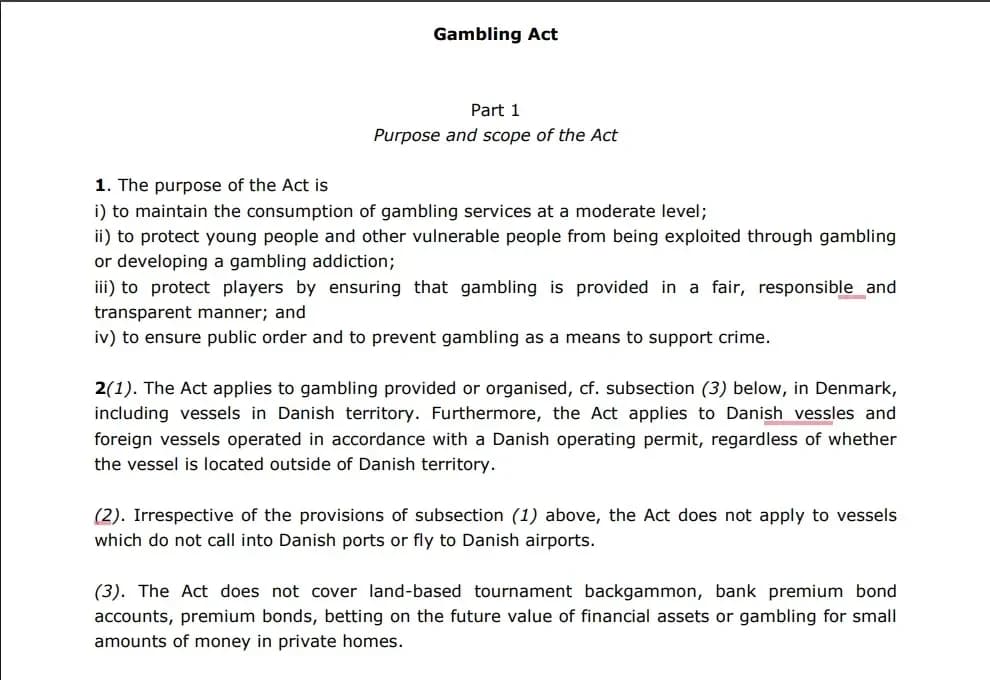
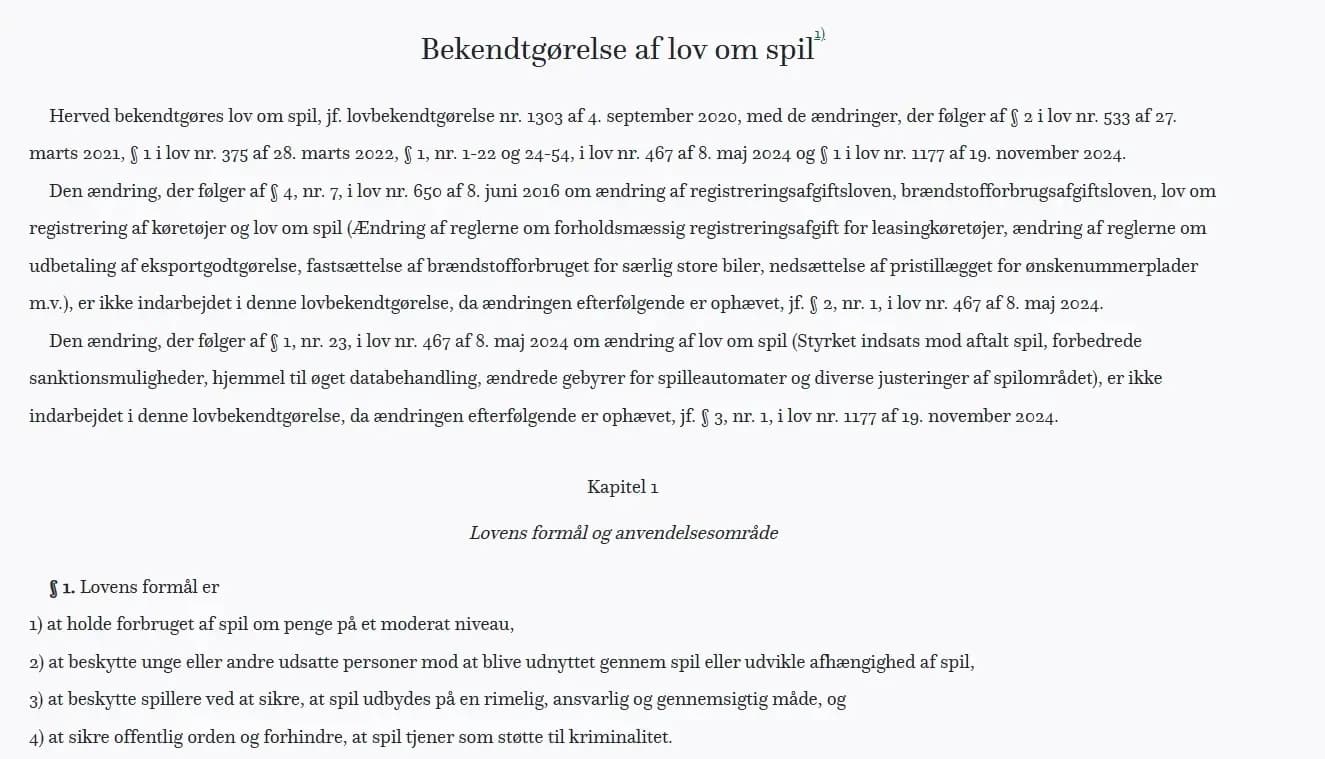
Section 1 of the Act states the purpose includes keeping time and money spent on gambling at a moderate level, protecting young people and vulnerable people, ensuring fair and transparent gambling, maintaining public order, and preventing gambling from supporting crime.
The Act defines several core regulatory objectives:
| Objective | Implementation |
|---|---|
| Fair and transparent gambling | Technical certification and ongoing monitoring |
| Protection of vulnerable groups | ROFUS integration and responsible gambling controls |
| Prevention of excessive gambling | System-level spending controls and self-exclusion |
| Anti-crime measures | AML supervision and compliance monitoring |
Legal Reference Guide
Operators seeking Danish market entry should reference the full Consolidation Act No. 1182 alongside Executive Orders 1303, 1304, and 1305 of 2012, which provide detailed implementation guidelines for licensing procedures, technical requirements, and ongoing compliance obligations.
Pre-2012 Gambling Landscape
Prior to the 2012 reform, Denmark operated primarily through state-owned operators like Dansk Tipstjeneste (now Danske Spil) which held exclusive rights across most gambling sectors. The liberalization process was gradual, with initial discussions beginning in 2009 and stakeholder consultations running through 2010-2011 before implementation.
Institutional Structure and Administrative Authority
Spillemyndigheden operates as an executive agency under the Ministry of Taxation, maintaining operational independence while receiving policy direction from the supervising ministry. Established in 2000, the authority adopted its current licensing-focused mandate when the licensing model was introduced in its current form in 2012.
2000
Year of establishment
2012
Current licensing model introduced
Odense
Headquarters location
72 38 79 13
Contact phone number
The authority's headquarters are located at Lerchesgade 35, 5000 Odense C, with operational oversight spanning the entire Danish territory. Administrative contact is maintained through spillemyndigheden.dk and dedicated communication channels.
Organizational Divisions and Functional Specialization
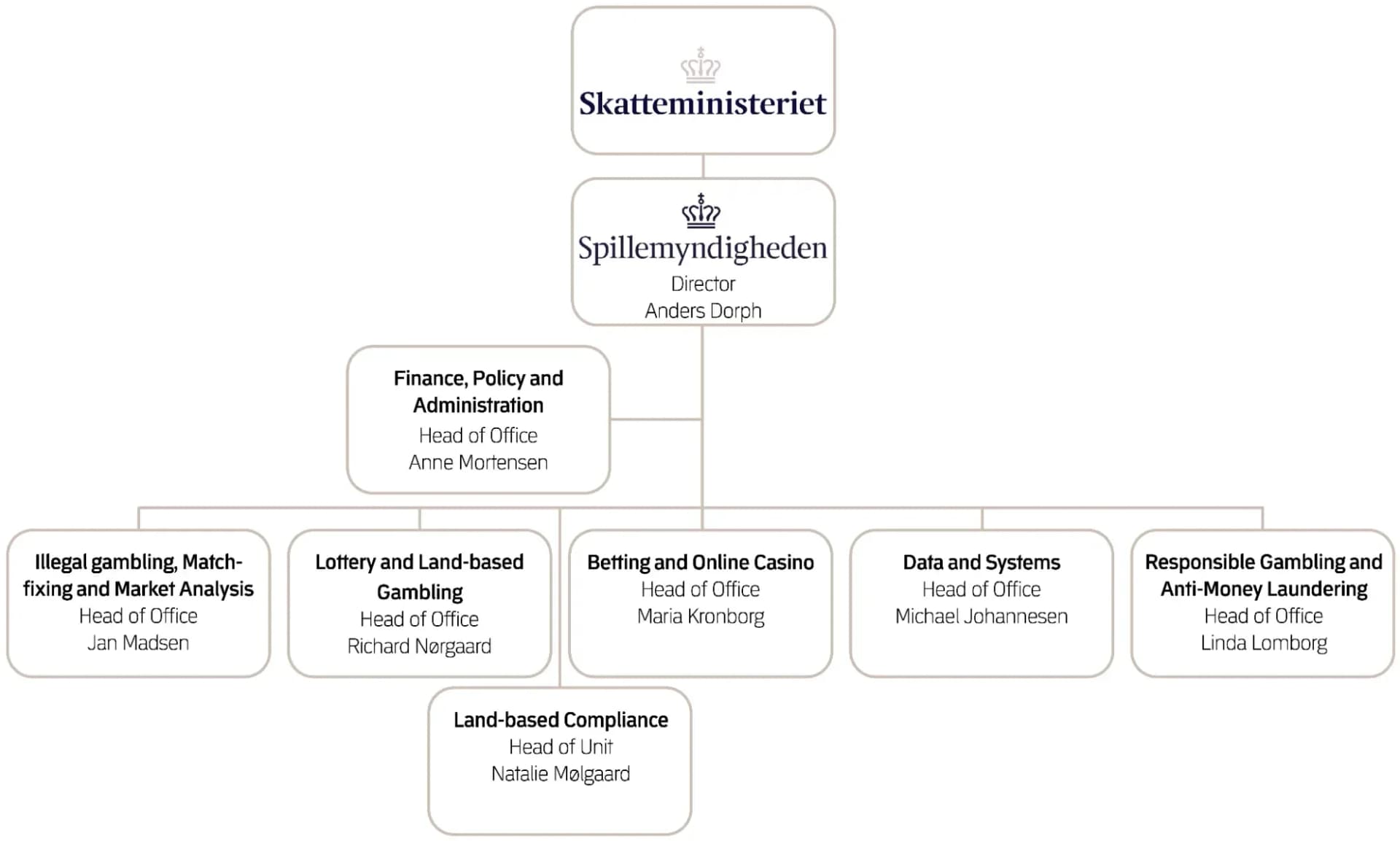
The Danish Gambling Authority structures its operations through specialized departments, each addressing distinct regulatory domains. This function-based approach ensures comprehensive coverage of gambling oversight responsibilities.
Illegal Gambling, Match-Fixing and Market Analysis
Identifies illegal operators, monitors market risks, and analyzes gambling trends
Lottery and Land-based Gambling
Supervises lottery activities and physical gambling operations
Betting and Online Casino
Oversees licensed operators in remote gambling segments
Data and Systems
Manages technical infrastructure, including SAFE and system-level monitoring
Responsible Gambling and Anti-Money Laundering
Focuses on player protection measures and AML compliance
Land-based Compliance Unit
Conducts inspections and ensures compliance in physical gambling venues
This organizational structure reflects Denmark's comprehensive approach to market oversight, where regulatory functions are distributed across specialized units while maintaining centralized coordination.
DKK 67,600
Supplier application fee for 2026
616
Illegal gambling sites blocked since 2012
178
Websites blocked in June 2025 court ruling
Licensing Framework and Market Access Controls
Market entry in Denmark depends entirely on authorization from Spillemyndigheden, with operators required to obtain relevant licenses before offering gambling products to Danish consumers. The licensing system encompasses multiple gambling categories while preserving monopoly control in designated sectors.
Scope of Regulated Activities
The Danish regulatory framework covers a broad spectrum of gambling activities, each subject to specific licensing requirements and ongoing supervision:
| Activity Category | Regulatory Treatment | Spillemyndigheden Role |
|---|---|---|
| Lotteries | Monopoly-based operations | Sector supervision under Danish gambling legislation |
| Betting | Licensed online and land-based | Issues licenses, monitors compliance, supervises operators |
| Online casino | Digital games under Danish authorization | Handles licensing, technical reporting, certification, ongoing supervision |
| Gaming machines | Machines in approved premises | Supervises operation, compliance, legal use |
| Land-based casinos | Physical casino operations | Supervises licensed casinos, conducts inspections |
| Public poker tournaments | Tournaments under regulated conditions | Applies authorization and supervision requirements |
Supplier Licensing and Technical Requirements
Denmark extends regulatory control beyond front-facing operators to include game suppliers and technical service providers. Supplier licenses remain valid for up to five years, with the application fee for 2026 set at DKK 67,600.
This comprehensive licensing approach creates multiple regulatory touchpoints:
Licensing Structure
- Revenue-restricted licenses for lower-risk activities
- Turnover-restricted licenses with specific operational limits
- Supplier licensing framework covering game providers and technical services
- Ongoing regulatory relationship requiring continuous compliance
Licensed entities remain subject to supervision, reporting, certification, and compliance checks throughout the license period, establishing Denmark's regulation as a continuous oversight model rather than one-time authorization.
Warning
Supplier licenses require renewal every five years with updated technical certifications and compliance documentation. The renewal process typically begins 12 months before expiry, allowing time for any required system updates or additional certifications.
Technical Infrastructure: SAFE System and Data Controls
A defining characteristic of Danish gambling regulation is its emphasis on technical reporting and real-time data access. The SAFE (data warehouse) system represents the cornerstone of this approach, requiring operators to provide continuous access to gambling data through secure transmission protocols.
SAFE Integration and Tamper Token Security
Licensed online gambling operators must continuously transfer and save gambling data to SAFE using the Tamper Token security system. This requirement extends to gambling operations under monopoly rules, ensuring comprehensive data coverage across the regulated market.
Technical Requirements
The official technical specifications reference SAFE, TamperToken, ROFUS, notification obligations, reporting of game data, and standard record validation as mandatory components of the regulatory framework.
This system-level verification approach distinguishes Denmark from document-based compliance models, making technical reporting and certification central elements of the licensing regime.
Warning
Failure to maintain continuous SAFE data transmission can result in immediate license suspension. Operators must implement redundant transmission systems and maintain 24/7 monitoring to ensure uninterrupted regulatory reporting compliance.
ROFUS and Player Protection Integration
The ROFUS register of self-excluded persons forms an integral component of Denmark's responsible gambling infrastructure. Operators must check whether individuals are registered in ROFUS, with online casino and betting platforms required to perform ROFUS service calls at registration and login.
The technical integration of responsible gambling controls reflects the Danish Gambling Act's stated objectives, where operator assessments and licensing decisions explicitly consider compliance with player protection requirements.
Technical Compliance Timeline
New licensees typically require 3-6 months for full SAFE system integration, including Tamper Token implementation and ROFUS connectivity testing. Operators should begin technical preparation during the licensing application phase to ensure smooth market entry.
Supervision Methods and Compliance Monitoring
Spillemyndigheden employs distinct supervision methodologies tailored to different gambling segments, recognizing the varying risk profiles and operational characteristics of online versus land-based activities.
Online Gambling Oversight
For online casino and online betting operations, supervision relies primarily on data submitted by license holders, annual reports, and notifications received from citizens or other license holders. This data-driven approach leverages the comprehensive information flow through SAFE and related technical systems.
Pros
- Real-time data visibility through SAFE system
- Automated compliance monitoring reduces inspection frequency
- Comprehensive player protection through ROFUS integration
- Streamlined reporting reduces administrative burden
Cons
- High technical integration costs for operators
- Complex system requirements may deter smaller providers
- Continuous monitoring creates ongoing compliance pressure
- Technical failures can immediately impact operations
Land-based Inspection Protocols
Physical gambling operations face a different supervisory approach, with on-site visits forming the primary oversight method. These inspections cover:
- Arcades and gaming machine locations
- Land-based casinos
- Retail outlets with gambling offerings
- Licensed gambling venues
Inspection Methodology
Both announced and unannounced inspections may be conducted, with inspection projects targeting specific areas where compliance issues are suspected or known to exist.
This dual supervision model recognizes the distinct operational characteristics and risk profiles of digital versus physical gambling environments while maintaining comprehensive regulatory coverage.
Enforcement Mechanisms and Inter-Agency Cooperation
Denmark's enforcement framework operates through coordination between telecommunications providers, and law enforcement agencies alongside Spillemyndigheden's direct regulatory powers.
Direct Regulatory Enforcement
The Danish Gambling Authority possesses several immediate enforcement tools for addressing compliance violations:
Administrative Measures
Issuing orders to correct violations, imposing operational prohibitions, and issuing formal reprimands
Documentation Requirements
Requiring additional documentation or certification from operators
Escalated Enforcement
Referring serious matters to police, cooperating with other public authorities, and initiating legal proceedings
Website Blocking and Market Protection
Illegal gambling enforcement in Denmark operates through court-ordered website blocking mechanisms. Spillemyndigheden identifies websites offering gambling without required Danish licenses while targeting the Danish market, initiating a structured blocking process.
In June 2025, the court at Frederiksberg ruled in favor of the Danish Gambling Authority, ordering Danish internet service providers to block 178 illegal gambling websites. According to Spillemyndigheden, the authority had achieved blocking of 616 illegal gambling sites since 2012.
Warning
The enforcement chain typically involves initial operator contact requesting cessation of illegal activities, followed by telecommunications provider notification and court assessment for blocking orders.
Cross-Agency Regulatory Coordination
The Danish Gambling Authority operates within a broader institutional ecosystem, maintaining cooperative relationships with multiple public authorities:
Ministry of Taxation – coordinates regulatory policy and administers gambling-related taxation, including operator registration and gambling duty obligations.
Consumer Ombudsman – supervises marketing practices under Danish consumer protection rules, ensuring gambling operator compliance with advertising standards.
Law enforcement authorities – provides cooperation in cases involving gambling legislation violations and illegal market activity.
This multi-agency cooperation strengthens overall regulatory effectiveness by integrating gambling oversight with taxation, consumer protection, and criminal enforcement frameworks.
Denmark's multi-agency approach creates a regulatory ecosystem where gambling oversight, taxation, consumer protection, and financial crime prevention operate as integrated components rather than separate jurisdictions.
Anti-Money Laundering Integration and Financial Oversight
Spillemyndigheden maintains comprehensive supervision over anti-money laundering compliance within the gambling sector, reflecting Denmark's integration of AML requirements into core gambling regulation.
AML Compliance Requirements
Licensed operators must implement comprehensive AML frameworks encompassing:
| Requirement | Implementation |
|---|---|
| AML procedures | Documented policies and operational protocols |
| Transaction monitoring | Ongoing surveillance of financial activities |
| Suspicious activity reporting | Mandatory reporting of identified risks |
| Internal compliance systems | Dedicated compliance infrastructure and personnel |
The authority conducts targeted AML inspections and maintains the power to issue corrective orders or refer serious violations to police authorities, ensuring AML supervision integration within Denmark's broader regulatory framework.
Financial Transparency and Reporting
Denmark's emphasis on financial transparency extends beyond traditional AML requirements to encompass comprehensive transaction reporting and audit capabilities through the SAFE system and related technical infrastructure.
This approach provides regulators with unprecedented visibility into gambling operations while supporting both consumer protection and financial crime prevention objectives.
Market Implications and Regulatory Evolution
Denmark's gambling regulatory model demonstrates how modern jurisdictions can maintain protective oversight while enabling controlled market access. The combination of licensing liberalization with monopoly preservation reflects a pragmatic approach to balancing commercial interests with public policy objectives.
"The Danish framework creates a controlled environment where only authorized operators can operate under clearly defined conditions, while technical systems and regulatory oversight ensure that gambling activity remains transparent and traceable."
The technical sophistication of Denmark's oversight mechanisms, particularly the SAFE data warehouse and ROFUS integration, sets standards for real-time regulatory visibility that other jurisdictions increasingly examine as potential models for enhanced oversight.
From an industry perspective, Denmark represents a high-compliance jurisdiction where market access requires substantial technical integration and ongoing regulatory engagement. The comprehensive nature of Danish oversight creates operational complexity for licensees while providing extensive consumer protection and market integrity safeguards.
The evolution of Danish gambling regulation since 2012 illustrates how established gambling markets can modernize regulatory frameworks while preserving core policy objectives around consumer protection and market integrity. As other EU jurisdictions consider regulatory updates, Denmark's experience provides valuable insights into the practical implementation of mixed licensing models and technically integrated oversight systems.
Denmark combines licensing with monopoly preservation and requires continuous data reporting through SAFE, creating a more technically integrated oversight model than many EU jurisdictions.
ROFUS integration is built into the Danish Gambling Act's responsible gambling requirements, making self-exclusion checks a legal compliance obligation rather than voluntary practice.
The blocking process involves court assessment, providing due process protections, though operators targeting Denmark without licenses face regulatory presumption of illegality.
According to We-Right Blog.
Legal Disclaimer
This content reflects a general overview of regulatory frameworks based on publicly available information. It does not constitute legal advice or a legal opinion. iGamingWriter.blog disclaims any liability arising from reliance on this material.