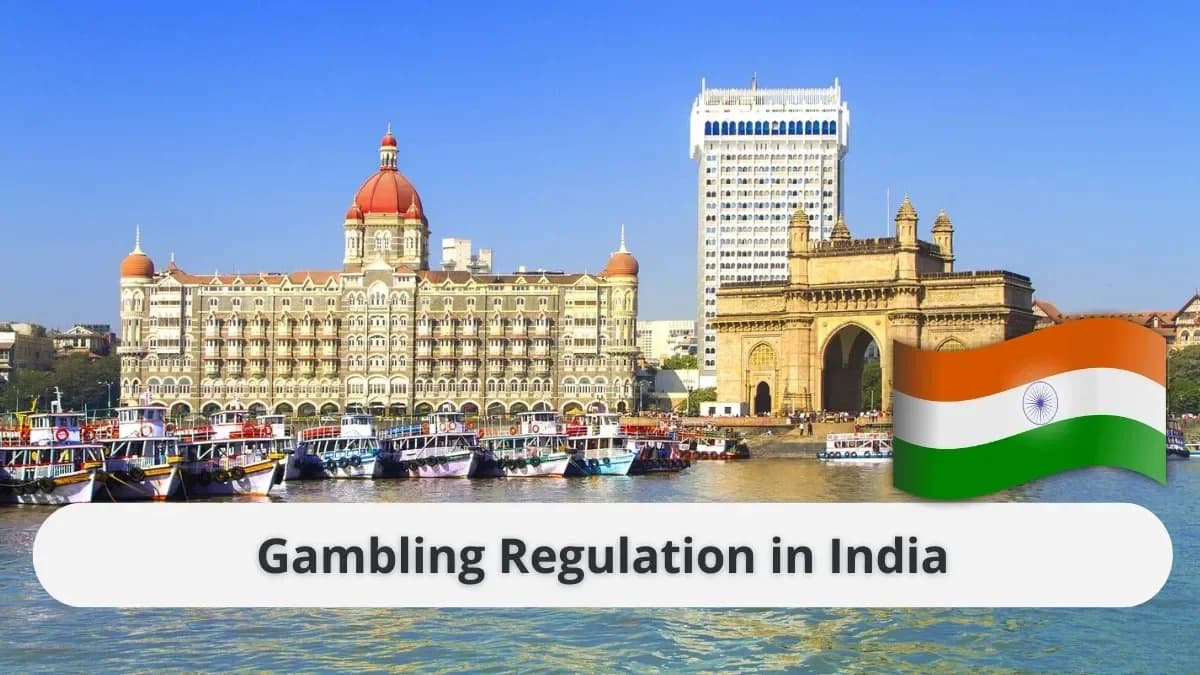
India's gambling regulatory landscape presents a unique paradox in the global gaming industry – a massive market operating without any centralised oversight authority. Unlike jurisdictions with dedicated gaming commissions, India's approach fragments regulatory control across 28 states and 8 union territories, creating a complex patchwork that challenges operators and compliance teams seeking unified guidance.
The regulatory foundation rests on colonial-era legislation, constitutional design principles, and an evolving body of judicial precedent that collectively shapes how gambling activities are permitted, restricted, or prohibited across different regions. This decentralised model fundamentally differentiates India from most gaming markets worldwide, where operators typically engage with a single national regulator.
Constitutional Architecture Drives Regulatory Fragmentation
India's regulatory structure stems directly from the Constitution of India, which allocates gambling and betting to the State List. This constitutional provision grants each state exclusive authority to legislate on gambling within its borders, preventing the central government from imposing a uniform national gambling regulatory regime without constitutional amendments.
This allocation explains why gambling laws vary dramatically between states – some jurisdictions like Goa, Sikkim, and Daman permit casino licensing under state-specific legislation, while others maintain comprehensive prohibitions. The constitutional framework ensures that regulatory approaches reflect local policy preferences rather than national standards.
The absence of federal oversight authority is not a regulatory oversight but a deliberate constitutional choice that prioritises state autonomy over centralised market supervision. This design principle has profound implications for operators seeking to understand compliance requirements across multiple Indian jurisdictions.
Important
The constitutional allocation of gambling powers to states means any national regulatory framework would require constitutional amendments, making centralised oversight politically and legally complex to implement.
The Public Gambling Act 1867: Colonial Legacy as Modern Foundation

The Public Gambling Act 1867 remains the cornerstone of India's gambling regulation despite being enacted more than 150 years ago during British colonial rule. This legislation adopts a prohibitive enforcement-based approach, focusing on suppressing gambling activity through criminal sanctions rather than establishing regulatory or licensing frameworks.
The Act criminalises operating or managing public gambling houses and provides the legal foundation for most state-level gambling prohibitions. However, its colonial-era design creates significant gaps when applied to modern gambling formats, particularly digital and online activities that were inconceivable when the legislation was drafted.
Key Limitations of the 1867 Framework
The Act's restrictive scope presents several challenges for contemporary gambling regulation:
- No distinction between traditional and digital gambling, requiring judicial interpretation for online activities
- Absence of licensing provisions, offering no pathway for regulated gambling operations
- Limited consumer safeguards, as the law focuses on prohibition rather than protection
- No regulatory authority established, leaving enforcement to police powers and criminal courts
Rather than replacing this outdated foundation with modern legislation, India has relied on state-level adaptations and judicial interpretation to address regulatory gaps. This approach creates legal uncertainty, particularly for operators offering innovative gambling products that don't fit neatly within 19th-century legal categories.
Colonial Law Legacy
The Public Gambling Act 1867's restrictive scope creates significant gaps when applied to modern gambling formats, particularly digital and online activities that were inconceivable when the legislation was drafted during British colonial rule.
State-Level Regulatory Variations
Individual Indian states exercise substantial discretion in implementing gambling controls within their territories. State governments may include Home Departments, Finance Departments, or specially designated authorities as regulators, depending on local administrative structures.
Permitted Gaming Jurisdictions
Casino licensing operates only in selected states under specific legislative frameworks:
- Goa permits both land-based and offshore casino operations
- Sikkim allows regulated casino gaming and has attempted online gaming regulation
- Daman provides limited casino licensing opportunities
These jurisdictions demonstrate how state autonomy allows for regulatory experimentation while maintaining overall restrictive national approaches.
Enforcement Variations
State-level differences extend beyond licensing to enforcement approaches:
- Some states focus heavily on policing and criminal sanctions
- Others adopt more permissive stances toward skill-based gaming
- Enforcement styles vary significantly in terms of raids, seizures, and prosecutions
This enforcement diversity creates operational complexity for multi-state operators, who must navigate different compliance expectations and legal risks across jurisdictions.
28
Indian States with Gambling Authority
8
Union Territories
1,867
Year of Foundational Gambling Law
3
States Permitting Casino Operations
150+
Years Since Colonial Gambling Act
Judicial Interpretation as De Facto Regulation
Government Operations: Profile of Indian Gaming
In the absence of a central regulator, the Supreme Court of India and High Courts have become the primary interpretive authorities in gambling matters. Through landmark rulings, courts have established the crucial legal distinction between games of skill and games of chance, fundamentally shaping how gambling activities are classified under Indian law.
The Skill vs Chance Framework
Indian courts consistently hold that games where skill predominates over chance do not constitute gambling under Indian law. This judicial doctrine creates a regulatory pathway for skill-based gaming platforms while maintaining restrictions on pure chance activities.
The judicial distinction between skill and chance has become more influential than administrative regulation in determining what gambling activities can operate lawfully in India.
This court-developed framework has profound practical implications:
- Games of chance are generally treated as gambling and subject to prohibition
- Games of skill may be lawfully offered, subject to state-level enforcement approaches
- Legal certainty derives primarily from court rulings rather than administrative licensing
Many online platforms structure their offerings around skill-based formats to align with judicial precedent, effectively using court decisions as their primary regulatory guidance.
Federal Ministries and Indirect Oversight
Tax Policy: A Profile of the Indian Gaming Industry
While India lacks a dedicated gambling regulator, several central ministries play indirect roles in shaping the regulatory environment. The Ministry of Home Affairs and Ministry of Electronics and Information Technology influence gambling operations through broader policy frameworks affecting financial systems, taxation, and digital platforms.
These ministries don't directly regulate gambling but create compliance environments that impact how gaming operators function across state boundaries. Their policies on payment processing, data protection, and corporate governance create additional compliance layers for gambling businesses.
Online Gambling's Regulatory Vacuum
India operates without a dedicated legal framework for online gambling, creating particular challenges for digital operators. While land-based gambling is addressed through legacy legislation and state laws, digital gambling activities remain largely unregulated at the federal level.
This regulatory vacuum has produced:
- Inconsistent state responses to online platforms
- Legal uncertainty for operators offering internet-based products
- Reliance on judicial interpretation rather than statutory regulation
Some states have attempted to restrict online gambling through local legislation or executive notifications, while others maintain more permissive approaches toward skill-based online games. This fragmentation means digital gambling legality often depends more on jurisdiction than product design.
Warning
Online gambling operators in India face significant legal uncertainty due to the absence of dedicated federal frameworks and inconsistent state-level approaches.
Enforcement Through Criminal Law Mechanisms
Enforcement of gambling law in India operates through general criminal law mechanisms rather than specialised regulatory supervision. There is no dedicated gambling enforcement agency or regulatory inspectorate, with primary enforcement conducted by:
- State police authorities
- Criminal courts
- Local administrative authorities acting under state law
Penalties under the Public Gambling Act 1867 and corresponding state laws typically include fines, imprisonment, and seizure of gambling instruments and proceeds. This enforcement model prioritises criminal liability over regulatory compliance, unlike jurisdictions that rely on administrative sanctions, licence suspensions, or regulatory settlements.
The Licensing Reality for Operators
India does not issue a national gambling licence, creating confusion for operators familiar with unified licensing systems. Any references to "Indian gambling licences" typically concern narrow state-level permissions or court-recognised activities rather than comprehensive regulatory authorisation.
Practical Basis for Lawful Operations
For operators seeking to understand compliance requirements, lawful gambling activity in India depends on:
- State lottery activities operating under specific state lottery authorisations
- Horse racing and betting permitted at recognised venues under state permissions
- Skill-based gaming formats operating based on judicial recognition rather than licences
- Casino operations in permitted states under state-specific legislation
Delete this incomplete fragmentxposure and regulatory certainty vary significantly by state, making geographic compliance strategy essential for multi-jurisdictional operators.
| Operation Type | Legal Basis | Regulatory Authority |
|---|---|---|
| State lottery activities | State lottery authorisations | State governments |
| Horse racing and betting | Recognised venue permissions | State permissions |
| Skill-based gaming | Judicial recognition | Court precedent |
| Casino operations | State-specific legislation | Goa, Sikkim, Daman |
| Online gambling | No unified framework | Varies by state |
| Regulatory Element | Description |
|---|---|
| Primary federal law | Public Gambling Act 1867, criminalises public gambling while allowing state legislation |
| Central gambling regulator | None – no nationwide gambling regulatory authority exists |
| State governments | Constitutional authority to regulate or prohibit gambling within territories |
| State-level regulators | Home Departments, Finance Departments, or specially designated authorities |
| Casino licensing | Permitted only in Goa, Sikkim, Daman under state-specific legislation |
| Online gambling regulation | No unified national framework – governed by state laws and court rulings |
| Skill-based gaming oversight | Governed primarily through judicial interpretation rather than statute |
| Enforcement authorities | State police and local enforcement bodies |
| Role of courts | Supreme Court and High Courts define legality and interpretation |
Comparison with Regulated Markets
India's gambling framework differs fundamentally from regulated jurisdictions such as the UK or EU member states. Rather than operating through central regulators and comprehensive licensing regimes, India relies on prohibition, criminal law, and state discretion.
Key structural differences include:
- Absence of national gambling authority
- Lack of unified licensing frameworks
- Limited use of regulatory supervision tools
- Emphasis on criminal enforcement over administrative oversight
This places India among high-uncertainty gambling jurisdictions, particularly challenging for international operators accustomed to regulator-led systems with clear compliance pathways. The contrast is evident when comparing with markets like Finland's recently ended online gambling monopoly, where operators dealt with centralised regulation.
28
Indian States with Gambling Authority
1,867
Year of Foundational Gambling Law
3
States Permitting Casino Operations
Pros
- State autonomy allows regulatory experimentation
- Preserves local policy preferences and cultural values
- Creates opportunities for skill-based gaming platforms
- Judicial framework provides some legal certainty
Cons
- Creates operational complexity for multi-state operators
- Legal uncertainty particularly for digital platforms
- No unified licensing pathways available
- Enforcement varies dramatically between jurisdictions
Political Sensitivity and Policy Caution
Gambling remains politically sensitive in India, often associated with social harm and public morality concerns. This sensitivity has resulted in limited appetite for national-level regulatory reform and cautious experimentation at state levels.
Rather than introducing comprehensive gambling authorities, India has maintained restrictive, decentralised systems that prioritise state autonomy and judicial control over market-oriented regulation. This approach reflects deep-seated cultural and political considerations that influence regulatory development.
Market Implications for B2B Stakeholders
India's fragmented regulatory model creates unique challenges and opportunities for iGaming industry stakeholders. Operators must develop state-specific compliance strategies rather than relying on unified national approaches. Compliance officers face the complexity of monitoring multiple regulatory environments simultaneously.
Product managers must consider how judicial interpretations of skill versus chance affect game design and marketing strategies. The absence of clear licensing pathways requires creative legal structuring and ongoing regulatory monitoring across multiple jurisdictions.
Payment providers and technology suppliers encounter varying compliance requirements depending on which states their clients serve, creating operational complexity for B2B service providers.
Strategic Considerations for Market Entry
The decentralised nature of Indian gambling regulation demands sophisticated market entry strategies. Operators cannot simply obtain a single licence and operate nationwide – they must evaluate each state's regulatory environment separately and develop jurisdiction-specific compliance approaches.
Success in the Indian market requires understanding not just written law but also enforcement patterns, judicial precedents, and local political sensitivities. The skill-based gaming distinction offers potential opportunities, but operators must carefully structure their products to align with evolving court interpretations.
Legal advisory requirements are particularly complex, as expertise in federal law alone is insufficient – operators need local legal counsel familiar with specific state approaches and enforcement practices. This complexity mirrors challenges seen in other fragmented markets, though India's constitutional framework makes it particularly distinctive from South Africa's provincial licensing system.
Market Entry Strategy
Success in the Indian market requires understanding not just written law but also enforcement patterns, judicial precedents, and local political sensitivities. Operators need local legal counsel familiar with specific state approaches rather than relying solely on federal law expertise.
Regulatory Horizon: Stability and Uncertainty
India's regulatory model reflects constitutional design, historical legislation, and policy caution rather than market-oriented regulation. The constitutional allocation of gambling powers to states makes dramatic centralisation unlikely without significant political consensus.
However, the growing importance of digital gaming and the economic significance of the sector may drive gradual regulatory evolution. States experimenting with skill-based gaming regulation could provide models for broader adoption, while federal involvement in digital governance and financial regulation continues to influence the gambling ecosystem indirectly.
For industry stakeholders, this means long-term strategic planning must account for a persistently fragmented regulatory environment while remaining adaptable to state-level policy changes and evolving judicial interpretation.
Future Regulatory Outlook
The constitutional allocation of gambling powers to states makes dramatic centralisation unlikely without significant political consensus. However, states experimenting with skill-based gaming regulation could provide models for broader adoption across jurisdictions.
Why Decentralisation Persists in Digital Era
India's gambling regulation model demonstrates how constitutional structures can resist technological and economic pressures for centralisation. Despite the borderless nature of digital gambling and the efficiency advantages of unified regulation, India's federal design maintains state-by-state authority over gambling matters.
This persistence reflects deeper principles about local governance and cultural values that transcend purely economic regulatory considerations. The system's complexity imposes costs on operators and creates legal uncertainty, but it also preserves state autonomy and allows for diverse regulatory approaches within a single national framework.
No, India operates without any centralised gambling regulatory authority. The Constitution allocates gambling powers to individual states, creating a fragmented system across 28 states and 8 union territories.
The primary foundation is the Public Gambling Act 1867, a colonial-era law that criminalises public gambling. Individual states then create their own legislation within this framework, leading to significant regulatory variations.
In the absence of a central regulator, the Supreme Court and High Courts have become primary interpretive authorities. They established the crucial distinction between games of skill and games of chance, which fundamentally shapes legal gambling operations.
No national gambling licence exists in India. Any lawful gambling operations depend on state-level permissions, court-recognised activities, or operating within the skill-based gaming framework established by judicial precedent.
The decentralised model reflects constitutional design principles that prioritise state autonomy over centralised control. This approach allows states to reflect local policy preferences and cultural values rather than implementing uniform national standards.
According to We-Right Factory.
Legal Disclaimer
This content reflects a general overview of regulatory frameworks based on publicly available information. It does not constitute legal advice or a legal opinion. iGamingWriter.blog disclaims any liability arising from reliance on this material.