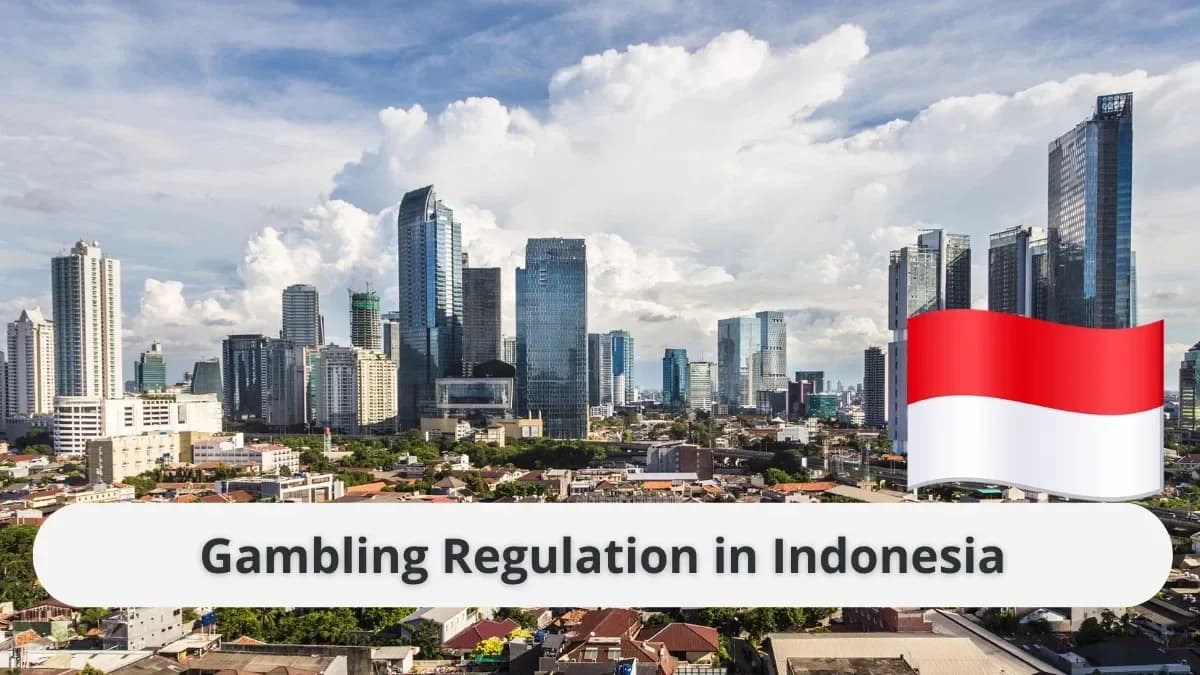
Indonesia stands among the world's strictest jurisdictions regarding gambling, implementing a comprehensive prohibition model that criminalizes all forms of wagering activity rather than establishing regulatory oversight. The archipelago nation relies on criminal law enforcement and digital content blocking to combat gambling operations, rejecting the licensing and supervision approaches adopted by most gaming jurisdictions globally.
Complete Legal Prohibition Framework
Indonesia does not operate a dedicated gambling regulatory authority, instead channeling all gambling-related enforcement through general law enforcement institutions and digital oversight bodies under the Ministry of Communication and Information Technology. This approach reflects a deliberate policy decision to treat gambling as criminal conduct rather than a regulatable economic activity.
The legal foundation for Indonesia's prohibition stance rests on multiple statutory instruments. The Indonesian Penal Code (KUHP) serves as the primary legal instrument governing gambling-related conduct, while Law No. 7 of 1974 on Gambling Control reinforces the state's prohibition-based policy framework.
Under Indonesian law, gambling activities are explicitly prohibited and carry no legal recognition as lawful economic or recreational pursuits. The legal system deliberately excludes gambling from any regulatory or licensing framework, positioning all gambling-related conduct within the criminal law sphere rather than creating specialized sector oversight.
Regulatory Structure
Indonesia deliberately operates without a dedicated gambling regulatory authority, instead channeling all enforcement through general law enforcement institutions and the Ministry of Communication and Information Technology. This reflects a policy decision to treat gambling as criminal conduct rather than regulatable economic activity.
Digital Enforcement Through Information Technology Law
Online gambling operations face additional enforcement mechanisms through the Electronic Information and Transactions Law (Law No. 11 of 2008, as amended by Law No. 19 of 2016). This legislation extends criminal liability into digital environments without creating separate online gambling regulations, instead reinforcing the general prohibition by criminalizing electronic dissemination and facilitation of gambling content.
The law treats online gambling as an extension of offline gambling activities, subject to identical prohibition principles while enabling authorities to deploy additional digital enforcement tools. Key provisions include Article 27(2), which prohibits the distribution, transmission, or making accessible of electronic content related to gambling.
Article 45 establishes criminal penalties for violations of Article 27(2) related to gambling content, creating enforcement mechanisms that can target multiple parties in the gambling ecosystem including operators, administrators, promoters, and technical facilitators.
Warning
Article 27(2) of Indonesia's Electronic Information and Transactions Law criminalizes the distribution, transmission, or making accessible of electronic content related to gambling. This extends liability to operators, administrators, promoters, and technical facilitators across the entire gambling ecosystem.
Criminal Penalties and Civil Consequences
Indonesia's prohibition model carries substantial criminal sanctions for gambling-related offenses. Violations related to online gambling may result in imprisonment of up to six years, while financial penalties can reach IDR 1,000,000,000. These sanctions apply across multiple parties involved in gambling processes, with liability determined by individual roles and participation levels.
Beyond criminal consequences, Indonesian civil law renders gambling activities legally void. Gambling-related agreements carry no legal standing and generate no enforceable rights or obligations under the country's legal framework.
From a contract law perspective, gambling-related agreements are void ab initio (Latin legal term - acceptable in legal writing), meaning they remain legally invalid from inception. Indonesian courts do not recognize claims arising from gambling transactions regardless of parties' consent or performance, eliminating civil protection mechanisms and preventing use of civil courts to enforce gambling-related claims or recover losses.
6 years
Maximum imprisonment for online gambling violations
IDR 1,000,000,000
Maximum financial penalty
Enforcement Mechanisms and Digital Blocking
Despite clear legal prohibitions, Indonesia's gambling enforcement primarily relies on administrative and technical measures rather than traditional criminal prosecution alone. Authorities employ website blocking, payment channel monitoring, and cooperation with digital service providers to limit access to online gambling platforms.
These disruption-focused measures operate without establishing formal regulatory regimes, designed to impede gambling operations through technical barriers. However, the cross-border nature of online gambling and widespread use of offshore platforms limit the effectiveness of conventional criminal prosecution approaches.
Indonesia frames gambling enforcement as public order maintenance and cyber law enforcement rather than sectoral supervision, reflecting the prohibition model's fundamental approach to treating gambling as harmful activity rather than regulatable commerce.
Civil Contract Void Status
Indonesian civil law renders all gambling-related agreements void ab initio (legally invalid from inception). Courts do not recognize claims arising from gambling transactions regardless of parties' consent, eliminating civil protection mechanisms and preventing recovery of gambling-related losses.
Policy Rationale Behind Total Prohibition
Electronic Information and Transactions Law
Indonesia's prohibition-based gambling model stems from viewing gambling as constituting social and legal harm rather than activity suitable for controlled market regulation. Academic legal analysis confirms Indonesian law intentionally positions gambling outside permissible private or commercial activities.
By adopting complete prohibition, the state avoids creating legal certainty, contractual protection, or institutional oversight for gambling-related conduct. This framework reinforces principles that gambling creates no lawful rights, obligations, or protections under Indonesian law, maintaining consistency with the country's broader approach to activities deemed socially harmful.
The prohibition model extends across all gambling forms regardless of delivery mechanism, whether conducted offline or through digital platforms, ensuring comprehensive coverage without creating regulatory exceptions or licensed operator categories. Unlike jurisdictions such as Austria's centralized monopoly model, Indonesia operates through complete prohibition rather than controlled market frameworks.
Cross-Border Enforcement Challenges
Despite clear legal prohibitions, enforcement primarily relies on administrative and technical measures including website blocking and payment channel monitoring. The cross-border nature of online gambling and widespread use of offshore platforms limit the effectiveness of conventional criminal prosecution approaches.
Regional Implications for Offshore Operators
Indonesia's strict prohibition model creates significant compliance challenges for international gaming operators targeting regional markets. This sentence is incomplete and cuts off mid-thought players but entire gambling ecosystems including technical facilitators and payment processors extends liability risks beyond traditional operator boundaries.
The Ministry of Communication and Information Technology's active website blocking program and payment channel monitoring creates ongoing operational disruptions for offshore platforms, while the substantial criminal penalties for violations create personal liability risks for executives and technical staff involved in Indonesian-facing operations.
Cross-border enforcement cooperation and the country's aggressive digital blocking measures signal continued escalation of prohibition enforcement, potentially influencing neighboring jurisdictions' regulatory approaches and creating broader regional compliance considerations for international operators evaluating Southeast Asian market expansion strategies.
| Category | Information |
|---|---|
| Official name | No dedicated gambling regulatory authority |
| Regulatory model | Complete prohibition |
| Legal basis | Criminal Code (KUHP); Gambling Control Law; Electronic Information and Transactions Law |
| Year of establishment | Not applicable |
| Jurisdiction | Republic of Indonesia |
| Supervising bodies | Law enforcement authorities; Ministry of Communication and Information Technology |
| Licensing authority | None |
| Regulatory scope | Criminal enforcement, website blocking, digital supervision |
Compliance Risk Assessment
International gaming operators face significant compliance challenges as Indonesia's prohibition model extends liability beyond traditional operator boundaries to include technical facilitators and payment processors. The Ministry's active blocking program and substantial criminal penalties create personal liability risks for executives and technical staff.
No, Indonesia deliberately operates without a dedicated gambling regulatory authority. All gambling-related enforcement is channeled through general law enforcement institutions and the Ministry of Communication and Information Technology.
Violations related to online gambling may result in imprisonment of up to six years and financial penalties reaching IDR 1,000,000,000. These sanctions apply across multiple parties involved in gambling processes, including operators, administrators, and technical facilitators.
No, gambling-related agreements are void ab initio under Indonesian law, meaning they are legally invalid from inception. Courts do not recognize claims arising from gambling transactions regardless of parties' consent or performance.
Indonesia employs website blocking, payment channel monitoring, and cooperation with digital service providers to limit access to online gambling platforms. The Electronic Information and Transactions Law criminalizes distribution of gambling-related electronic content.
Offshore operators face significant compliance challenges including active website blocking, payment disruptions, and personal liability risks for executives and technical staff. The prohibition model extends liability to technical facilitators and payment processors beyond traditional operator boundaries.
According to We-Right Factory.
Legal Disclaimer
This content reflects a general overview of regulatory frameworks based on publicly available information. It does not constitute legal advice or a legal opinion. iGamingWriter.blog disclaims any liability arising from reliance on this material.