Indonesia stands as one of the world's most restrictive jurisdictions for gambling operations, maintaining a complete prohibition framework that criminalizes all forms of gambling activity. Unlike regulated markets that establish licensing authorities and oversight mechanisms, Indonesia deliberately excludes gambling from any form of legal recognition, treating it exclusively as a criminal matter under national law.
No Regulatory Authority, Only Criminal Enforcement
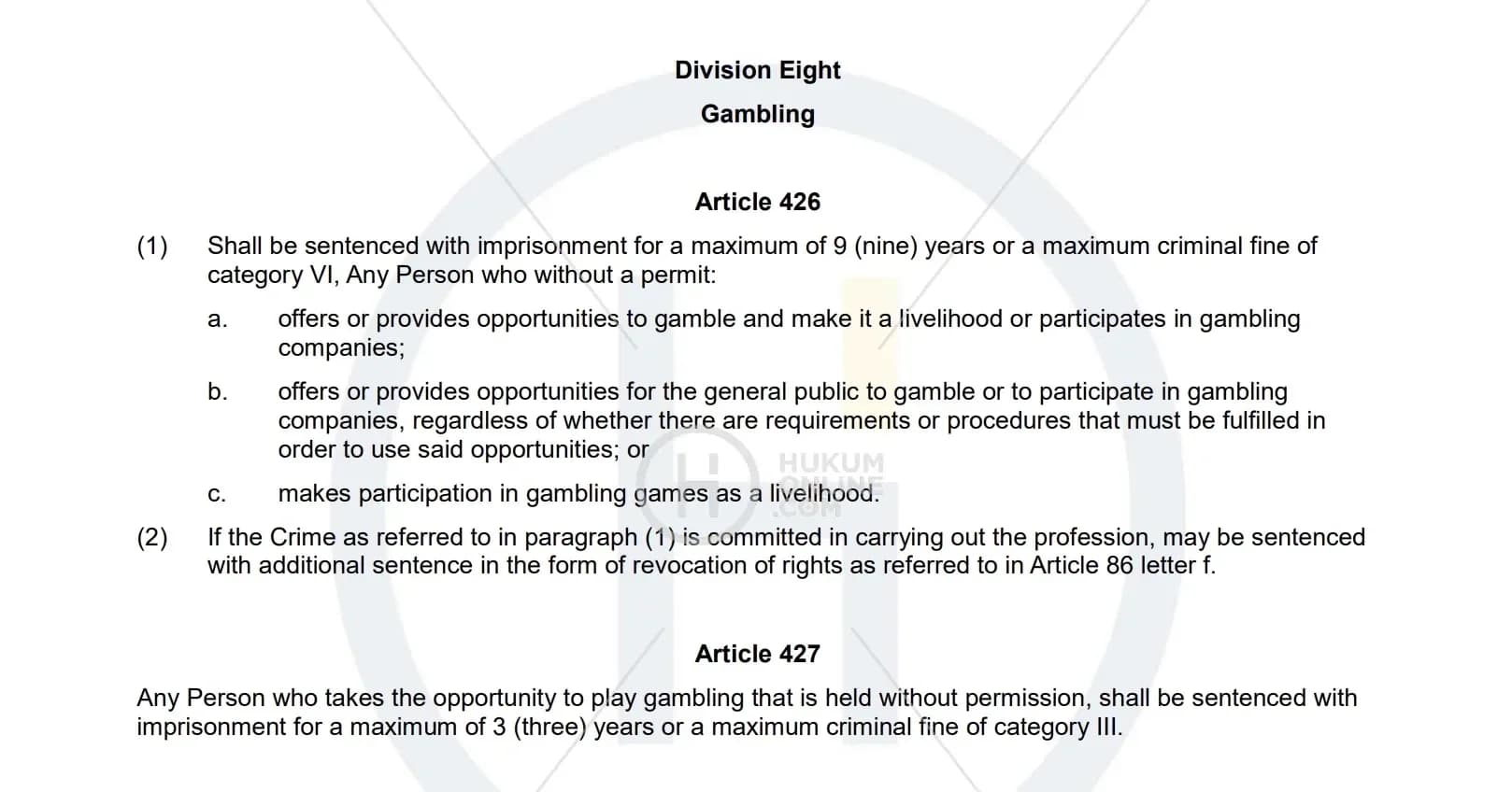
Indonesia does not operate a dedicated gambling regulatory authority, instead relying on general law enforcement institutions and digital oversight bodies to implement its prohibition-based model. The Ministry of Communication and Information Technology serves as one of the primary supervising bodies, focusing on digital enforcement rather than market regulation.
This approach fundamentally differs from jurisdictions that regulate gambling as an economic activity. Indonesia's legal framework deliberately avoids creating any licensing system, supervisory mechanisms, or regulatory protections for gambling-related conduct. All gambling-related oversight operates through prohibition and enforcement mechanisms designed to prevent, restrict, and criminalize such activities.
Key Regulatory Information
Unlike other jurisdictions that establish licensing frameworks, Indonesia deliberately excludes gambling from any form of legal recognition. The Ministry of Communication and Information Technology serves as the primary supervising body for digital enforcement rather than market regulation.
Legal Foundation of Indonesia's Gambling Ban
The prohibition framework rests on several key legislative pillars that establish comprehensive criminal liability. The Indonesian Penal Code (KUHP) serves as the primary legal instrument governing gambling-related conduct, while Law No. 7 of 1974 on Gambling Control reinforces the state's prohibition-based policy approach.
These provisions establish that gambling in Indonesia is explicitly prohibited under national law and is not recognized as a lawful economic or recreational activity. The Indonesian legal system deliberately positions gambling outside any regulatory framework, treating all gambling-related conduct as criminal rather than commercial activity.
The criminal nature of gambling offenses applies universally across all forms of gambling, regardless of whether activities occur offline or through digital platforms. This comprehensive approach ensures no gambling activity exists within a legal gray area – all forms face identical criminal treatment under Indonesian law.
Warning
All gambling activities in Indonesia are treated as criminal offenses under the Indonesian Penal Code (KUHP) and Law No. 7 of 1974. No licensing system or regulatory protections exist for any gambling-related conduct, making all such activities illegal regardless of format or participation level.
Digital Enforcement Through Electronic Information Law
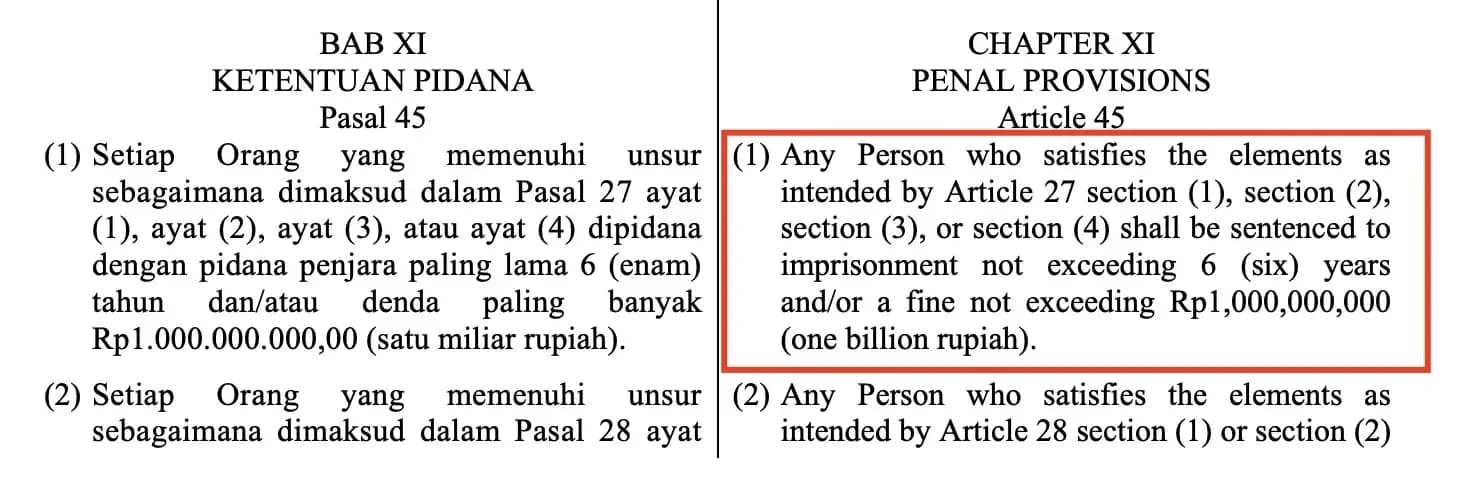
Online gambling faces additional enforcement mechanisms through the Electronic Information and Transactions Law (Law No. 11 of 2008, as amended by Law No. 19 of 2016). This legislation extends criminal liability into digital environments without creating a separate regulatory regime for online gambling.
Article 27(2) specifically prohibits the distribution, transmission, or making accessible of electronic content related to gambling. The provision allows authorities to target not only players but also operators, administrators, promoters, and technical facilitators involved in online gambling activities.
Article 45 establishes criminal penalties for violations of Article 27(2), creating enforceable sanctions for digital gambling content. This framework confirms that online gambling receives identical prohibition treatment as offline gambling, while providing additional enforcement tools for digital environments.
The law treats online gambling as an extension of offline gambling prohibition, applying the same fundamental principles while enabling authorities to pursue digital enforcement mechanisms including website blocking and payment channel monitoring.
Digital Content Prohibition
Article 27(2) of the Electronic Information and Transactions Law specifically targets the distribution, transmission, or making accessible of electronic content related to gambling. This provision creates liability for operators, administrators, promoters, and technical facilitators involved in online gambling activities.
Criminal Penalties and Financial Sanctions
Indonesia imposes clearly defined criminal penalties for gambling-related offenses, particularly in online contexts. Violations related to online gambling may result in imprisonment of up to six years, while financial penalties may reach IDR 1,000,000,000 for serious violations.
These sanctions apply broadly across multiple parties involved in gambling processes, with penalty severity depending on individual roles and levels of participation. The comprehensive penalty structure targets all participants in gambling ecosystems, from operators to technical facilitators.
The criminal framework eliminates any distinction between different types of gambling activities or participant categories. All gambling-related conduct faces potential criminal liability under the unified prohibition model, ensuring consistent enforcement across various gambling formats and involvement levels.
6 years
Maximum imprisonment for online gambling violations
IDR 1,000,000,000
Maximum financial penalty for serious violations
Civil Law Consequences and Contract Invalidity
Electronic Information and Transactions Law
Beyond criminal penalties, Indonesian civil law provides no protection or recognition for gambling-related activities. ==Gambling-related agreements are void ab initio== (or consider: 'void from the beginning' for clarity), meaning they are legally invalid from the outset and generate no enforceable rights or obligations under Indonesian law.
This position reflects the broader prohibition model applied throughout Indonesia's legal system. Courts do not recognize claims arising from gambling transactions, regardless of parties' consent or performance levels. The approach eliminates any civil protection linked to gambling activities and prevents using civil courts to enforce gambling-related claims or recover losses.
From a contract law perspective, the void ab initio principle ensures gambling agreements cannot create any lawful rights, obligations, or protections. This comprehensive approach reinforces that gambling exists entirely outside Indonesia's legal framework, with no pathway for civil enforcement or protection.
Contract Law Impact
Gambling-related agreements are void ab initio under Indonesian civil law, meaning they are legally invalid from the outset. Courts do not recognize claims arising from gambling transactions, and no civil protection exists for gambling-related activities or loss recovery.
Enforcement Challenges and Technical Measures
Despite clear legal prohibitions, enforcement primarily relies on administrative and technical measures rather than traditional criminal prosecution. Authorities employ website blocking, payment channel monitoring, and cooperation with digital service providers to limit access to online gambling platforms.
These measures aim to disrupt gambling operations without establishing formal regulatory oversight. The approach recognizes practical enforcement limitations while maintaining the prohibition framework's integrity.
The cross-border nature of online gambling and widespread use of offshore platforms limit traditional criminal prosecution effectiveness. Consequently, Indonesia frames gambling enforcement as a matter of public order and cyber law enforcement rather than sectoral supervision, acknowledging the challenges inherent in prohibiting globally accessible digital gambling services.
Enforcement Methods
Indonesian authorities primarily use administrative and technical measures including website blocking, payment channel monitoring, and cooperation with digital service providers. This approach addresses practical enforcement limitations while maintaining the prohibition framework's integrity.
Broader Policy Framework and Social Considerations
Indonesia's prohibition-based approach reflects a fundamental policy view that gambling constitutes social and legal harm rather than an activity suitable for controlled market regulation. Academic legal analysis confirms Indonesian law intentionally positions gambling outside permissible private or commercial activities.
By adopting complete prohibition, the state avoids creating legal certainty, contractual protection, or institutional oversight for gambling-related conduct. This framework reinforces that gambling cannot create lawful rights, obligations, or protections under Indonesian law, maintaining consistent policy alignment across all legal domains.
The approach eliminates regulatory complexity while ensuring clear legal boundaries. Rather than managing gambling as a regulated vice, Indonesia treats it as fundamentally incompatible with its legal and social framework.
Cross-Border Regulatory Implications
Indonesia's absolute prohibition model creates significant challenges for international gambling operators and compliance frameworks. Unlike jurisdictions with licensing systems that provide regulatory clarity, Indonesia offers no pathway for legal gambling operations, creating clear exclusion zones for global operators.
The comprehensive digital enforcement mechanisms signal Indonesia's commitment to extending prohibition principles into online environments. For operators serving regional markets, Indonesia represents a complete no-go jurisdiction with serious criminal liability risks for any gambling-related activities targeting Indonesian consumers.
This positioning has broader implications for regional gambling regulation, as Indonesia's stance influences neighboring jurisdictions' policy development and creates enforcement coordination challenges across Southeast Asian borders. The country's approach contrasts sharply with jurisdictions like Finland, which ended the EU's last online gambling monopoly.
| Category | Information |
|---|---|
| Official name | No dedicated gambling regulatory authority |
| Regulatory model | Complete prohibition |
| Legal basis | Criminal Code (KUHP); Gambling Control Law; Electronic Information and Transactions Law |
| Year of establishment | Not applicable |
| Jurisdiction | Republic of Indonesia |
| Supervising bodies | Law enforcement authorities; Ministry of Communication and Information Technology |
| Licensing authority | None |
| Regulatory scope | Criminal enforcement, website blocking, digital supervision |
Indonesia represents a complete no-go jurisdiction with serious criminal liability risks for any gambling-related activities targeting Indonesian consumers, creating significant challenges for international gambling operators and regional compliance frameworks.
No, Indonesia does not operate a dedicated gambling regulatory authority. Instead, it relies on general law enforcement institutions and the Ministry of Communication and Information Technology for prohibition-based enforcement.
Online gambling violations can result in imprisonment of up to six years and financial penalties up to IDR 1,000,000,000. These sanctions apply broadly to all participants in gambling ecosystems, from operators to technical facilitators.
No, gambling-related agreements are void ab initio under Indonesian law, meaning they are legally invalid from the outset. Courts do not recognize claims arising from gambling transactions and provide no civil protection for gambling activities.
Indonesia primarily uses administrative and technical measures including website blocking, payment channel monitoring, and cooperation with digital service providers. The Electronic Information and Transactions Law provides additional enforcement tools for digital environments.
No, Indonesia's absolute prohibition model creates serious criminal liability risks for any gambling-related activities targeting Indonesian consumers. The country represents a complete exclusion zone for global gambling operators with no pathway for legal operations.
According to We-Right Factory.
Legal Disclaimer
This content reflects a general overview of regulatory frameworks based on publicly available information. It does not constitute legal advice or a legal opinion. iGamingWriter.blog disclaims any liability arising from reliance on this material.