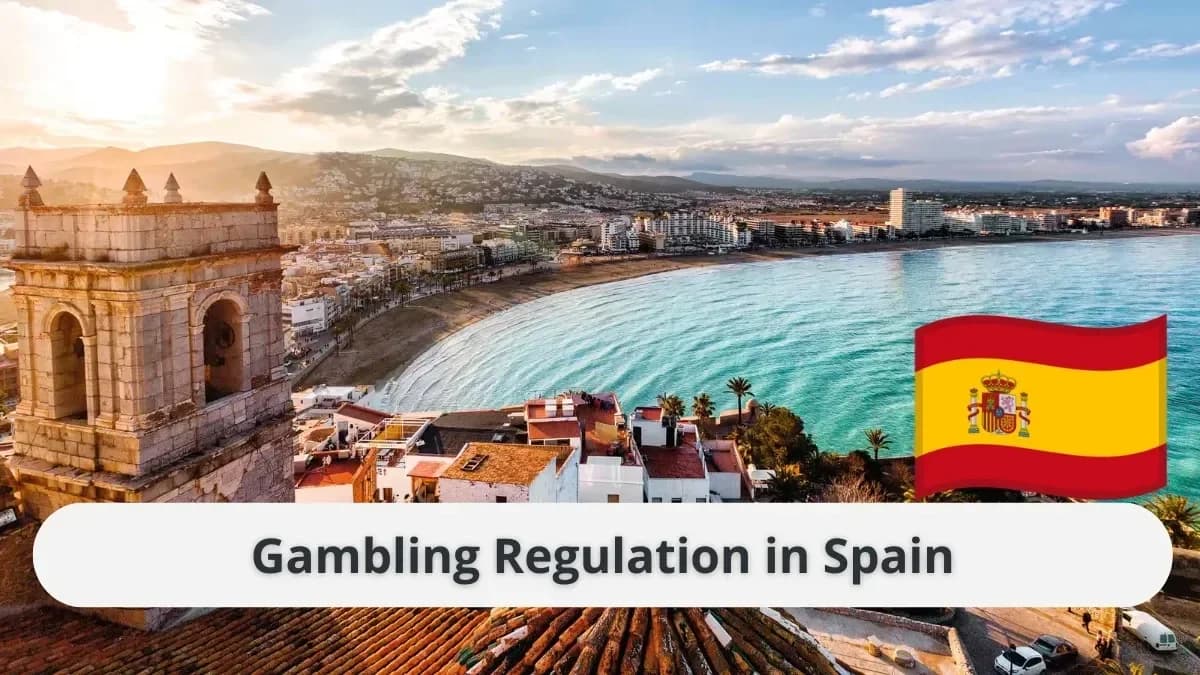
Spain's gambling sector operates under a sophisticated dual regulatory framework that divides oversight responsibilities between national and regional authorities. The Dirección General de Ordenación del Juego (DGOJ) serves as the central authority for online gambling activities, while Spain's Autonomous Communities maintain control over land-based gaming venues.
This regulatory architecture, established in 2011 through Law 13/2011 of May 27, creates distinct jurisdictional boundaries that operators must navigate when entering the Spanish market.
National Regulatory Authority Structure
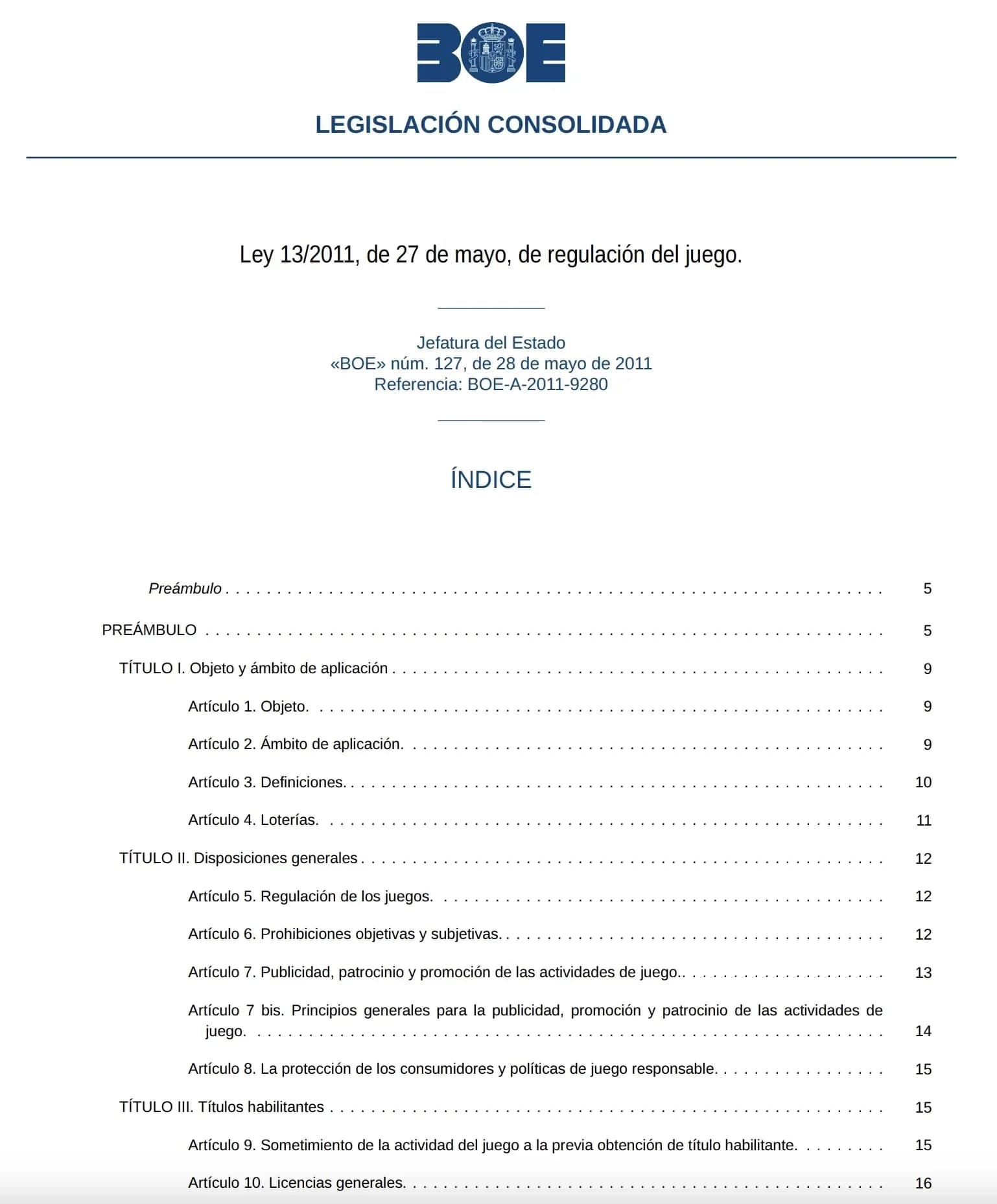
The DGOJ functions as Spain's primary gambling regulator under the Ministry of Consumer Affairs (Ministerio de Consumo). Based at Calle Atocha 3, 28012 Madrid, the authority maintains comprehensive oversight of the country's online gambling sector through its website ordenacionjuego.es and can be contacted at +34 91 571 40 80.
The regulator's mandate encompasses licensing, market supervision, enforcement actions, and player protection mechanisms within Spain's national gambling framework. These powers extend specifically to online casinos, sports betting, poker, bingo, and state-wide gambling activities.
The DGOJ maintains the General Register of Gambling Access Bans (RGIAJ), a critical component of Spain's player protection infrastructure that requires licensed operators to verify player eligibility before permitting participation in gambling activities.
| Item | Details |
|---|---|
| Official name | Dirección General de Ordenación del Juego |
| Legal basis | Law 13/2011 of May 27, regulating gambling |
| Year of establishment | 2011 |
| Jurisdiction | Spain (national level) |
| Supervising ministry | Ministry of Consumer Affairs (Ministerio de Consumo) |
| Regulatory scope | Online gambling, national-level gambling regulation, licensing, supervision, enforcement |
| Headquarters | Madrid, Spain |
| Address | Calle Atocha 3, 28012 Madrid |
| Official website | ordenacionjuego.es |
| Phone number | +34 91 571 40 80 |
| Registers maintained | RGIAJ – General Register of Gambling Access Bans |
| Supervisory powers | Inspections, sanctions, enforcement measures |
DGOJ Contact Information
The Dirección General de Ordenación del Juego operates from Calle Atocha 3, 28012 Madrid and can be reached at +34 91 571 40 80. Operators can access regulatory information through their official website ordenacionjuego.es.
Dual Regulatory Framework Implementation
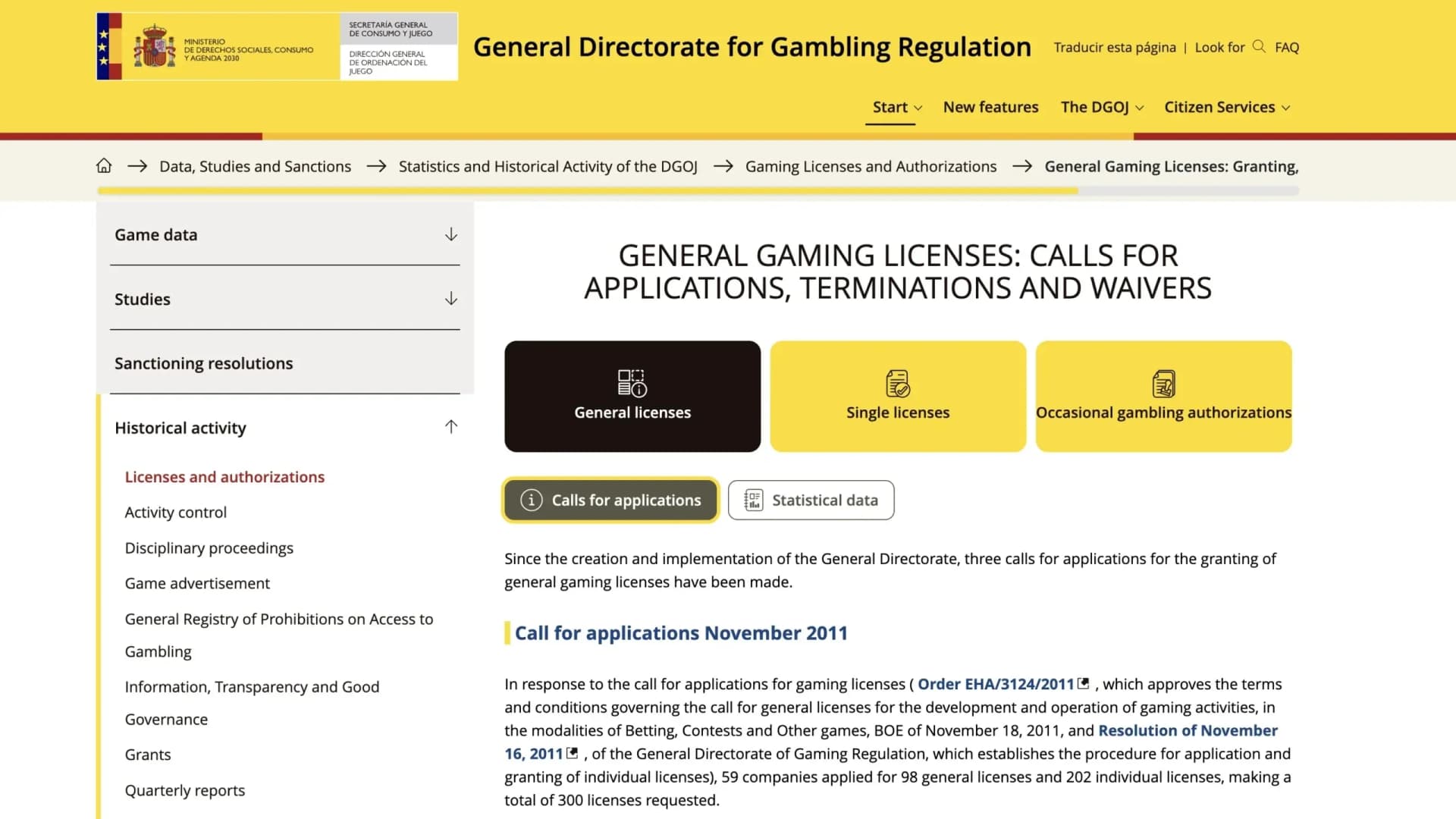
Spain applies a dual regulatory model that creates clear jurisdictional divisions between different gambling sectors. Online gambling and state-wide gambling activities fall under national jurisdiction and are supervised by the DGOJ, while land-based gambling activities such as physical casinos and gaming halls are regulated by Spain's Autonomous Communities.
This structure allows Spain to maintain centralized oversight of online gambling while preserving regional control over land-based gambling operations. The approach reflects Spain's constitutional framework and ensures regional governments retain authority over local gambling activities.
The regulatory separation has practical implications for operators seeking to establish comprehensive gaming operations across Spain. Companies must obtain national authorization for online services while simultaneously securing regional permits for any land-based venues.
2,011
Year Spain's dual regulatory framework was established
10 years
Duration of general gambling licenses
6 months
Maximum processing time for license applications
18 months
Minimum waiting period between new application calls
Authorized Gambling Activities Under National Jurisdiction
Sports Betting Operations
Sports betting represents one of the core regulated gambling activities under Spanish national law. The regulatory framework distinguishes between several distinct betting models, each governed by specific operational requirements.
Fixed-odds sports betting allows players to wager against operators with potential winnings calculated using pre-validated odds. Pari-mutuel (pool) sports betting distributes prizes among winning participants based on total betting pools. Horse racing betting is offered in both fixed-odds and pari-mutuel formats, providing operators with flexibility in product offerings.
Exchange betting permits operators to function as intermediaries between participants while guaranteeing wagered amounts. All sports betting products must comply with approved betting programs, technical system requirements, and monitoring obligations established by the regulator.
Online Casino Gaming
Online casino games are permitted under national regulation exclusively for licensed operators. Authorized online casino games include roulette, blackjack, baccarat, slots and other machine-based casino games, plus additional casino-style games expressly approved by the regulator.
Each game must comply with technical and functional requirements, including certified random number generators, approved software systems, and secure data transmission protocols. Games that have not been authorized or homologated cannot be legally offered within Spanish territory.
Warning
Only games that have been specifically authorized and homologated by the DGOJ can be legally offered within Spanish territory. Operators offering unauthorized casino games face regulatory sanctions and potential license revocation.
Online Poker Formats
Online poker operates as a regulated gambling activity available in different formats for appropriately licensed operators. Tournament poker allows multiple players to compete for prize pools, while cash game poker enables players to wager against each other at real-time tables.
Poker platforms must comply with player identification rules, liquidity controls, technical certification standards, and regulatory monitoring requirements. Despite being treated as peer-to-peer gambling activities, poker operations remain fully subject to national supervision and enforcement.
Online Bingo Regulation
Online bingo is expressly regulated as a distinct gambling category under national law. Spanish regulation defines bingo as games where participants acquire cards with numbers or symbols, numbers are drawn randomly, and prizes are awarded based on predefined winning patterns.
Online bingo platforms must ensure transparent game mechanics, certified random draws, and compliance with responsible gambling measures. The product is subject to the same licensing, technical, and supervisory standards as other forms of gambling.
National Lottery Reservation System
Lotteries occupy a unique regulatory position within Spain's gambling framework. The organization, management, and commercialization of non-occasional national lotteries are legally reserved for specific public operators.
At the national level, lottery activities may only be conducted by Sociedad Estatal Loterías y Apuestas del Estado (SELAE) and Organización Nacional de Ciegos Españoles (ONCE). These entities are the only operators authorized to run state-wide lottery games on a non-occasional basis.
Private operators cannot obtain licenses for national lotteries outside this reserved framework. However, Autonomous Communities may authorize lottery product sales within their territories. Certain regions, such as Catalonia, operate their own lottery systems under regional competences, reflecting the broader Spanish market's regulatory complexity that shapes licensing approaches across different jurisdictions.
Lottery Market Restrictions
Private operators cannot obtain licenses for national lotteries under Spanish law. Only Sociedad Estatal Loterías y Apuestas del Estado (SELAE) and Organización Nacional de Ciegos Españoles (ONCE) are authorized to conduct state-wide lottery operations on a non-occasional basis.
National Licensing Framework
Spain operates a license-based gambling regulation model requiring prior authorization for all non-occasional gambling activities. The licensing process is administered exclusively by the DGOJ and applies to online gambling activities offered across Spanish territory.
License Categories
The regulatory framework establishes three distinct authorization types based on activity scope and duration.
General licenses allow operators to organize, market, and operate broad categories of gambling activities at the national level. These categories include Betting, Contests, and Other Games. General licenses are granted for ten-year periods and may be renewed for equivalent duration. Holding a valid general license is a prerequisite for applying for product-specific authorizations.
Single licenses authorize operation of specific gambling products within existing general license scope. Only operators holding general licenses may apply for single licenses. These authorizations are granted for minimum one-year and maximum five-year periods with renewal possibilities. The termination or loss of a general license automatically results in the loss of all associated single licenses.
Occasional gambling authorizations apply to limited-scope or temporary gambling activities under specific conditions without replacing the general licensing regime for non-occasional operations.
Licensing Procedures
Gambling licenses are granted through public calls for applications published in the Official State Gazette (Boletín Oficial del Estado). Procedures are governed by principles of publicity, competition, equality, transparency, objectivity, and non-discrimination.
Licensing procedures may be initiated at interested party requests. New application calls may be requested provided at least 18 months have elapsed since previous calls for the same gambling category. The DGOJ has up to six months to decide whether to initiate new procedures unless doing so would conflict with public interest.
The standard administrative procedure duration is 6 months from application submission. Only operators holding valid national licenses may legally offer online gambling services in Spain.
How to Apply for Spanish Gambling License
Monitor Official Gazette
Watch for public calls for applications published in the Official State Gazette (Boletín Oficial del Estado)
Request New Application Call
If no recent calls exist, request initiation of new procedures (must wait 18 months since previous call)
Submit Complete Application
Prepare and submit all required documentation within the specified timeframe
Await Regulatory Decision
DGOJ has up to 6 months to process and decide on license applications
Supervisory Powers and Enforcement Mechanisms
Law 13/2011 of May 27, regulating gambling
Regulatory supervision forms a core element of Spain's national gambling framework. The DGOJ monitors licensed operators and ensures compliance with applicable gambling legislation and license conditions through comprehensive oversight mechanisms.
Supervisory and enforcement measures include regulatory inspections and compliance audits, continuous monitoring of gambling platforms and technical infrastructure, oversight of advertising activities and commercial communications, and initiation of administrative sanctioning proceedings.
The DGOJ's authority extends beyond formal inspections to include requests for operational data, technical documentation, and gaming system access to verify ongoing compliance. This encompasses checks of player identification mechanisms, exclusion register consultations, technical system integrity and certification, and gambling transaction traceability.
Spanish gambling law establishes a graduated administrative sanctions system allowing the regulator to impose fines, suspend gambling activities, or revoke licenses based on breach seriousness, scope, and recurrence. Sanctioning measures are applied within formal administrative procedures subject to publication and legal safeguards.
Compliance Best Practices
Operators should maintain comprehensive documentation of all gambling transactions, player identification processes, and technical system operations. The DGOJ can request access to this information during regulatory inspections and compliance audits.
Illegal Gambling and Market Protection
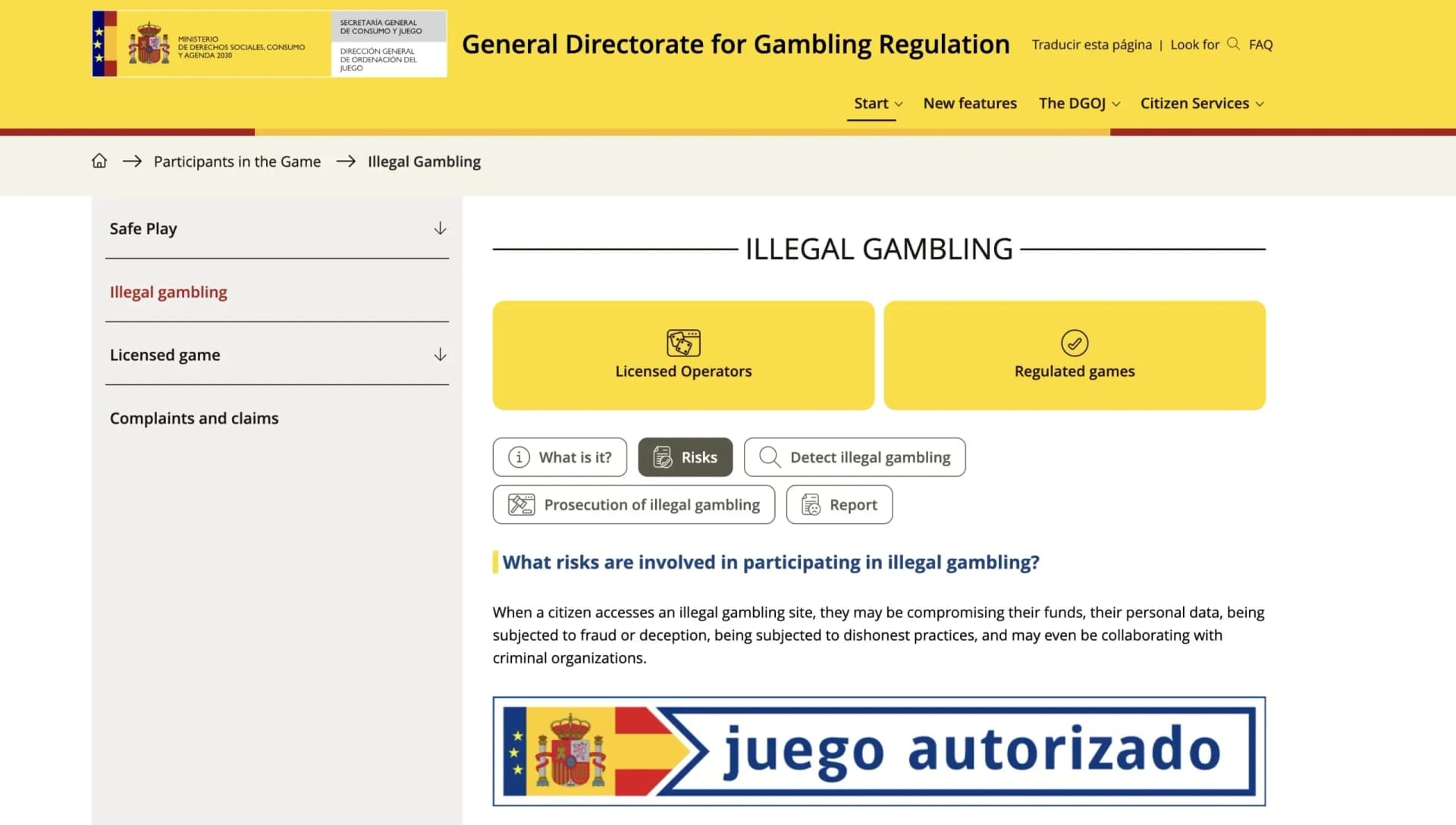
Illegal gambling in Spain encompasses any gambling activity offered without valid authorization issued under Spanish law. At the national level, only operators holding licenses granted in Spain may legally offer online gambling services in accordance with Law 13/2011. Licenses issued in other jurisdictions are not recognized for gambling service provision within Spain. Spanish territory.
National gambling regulation requires that only regulated games expressly authorized by law may be offered, online gambling activities with state-wide scope must hold valid national licenses, occasional gambling activities require prior authorization, and state-level lotteries are legally reserved for designated public operators.
Player Protection and Responsible Gaming Framework
Player protection forms an integral component of Spain's national gambling regulation model. Spanish law imposes mandatory responsible gambling and consumer protection measures on licensed operators, emphasizing prevention and early detection of risky gambling behavior.
The General Register of Gambling Access Bans (RGIAJ) managed by the DGOJ serves as a core protection tool. This national register allows individual self-exclusion from gambling activities and requires licensed operators to verify player access before permitting participation. Compliance with RGIAJ checks is mandatory for all licensed operators.
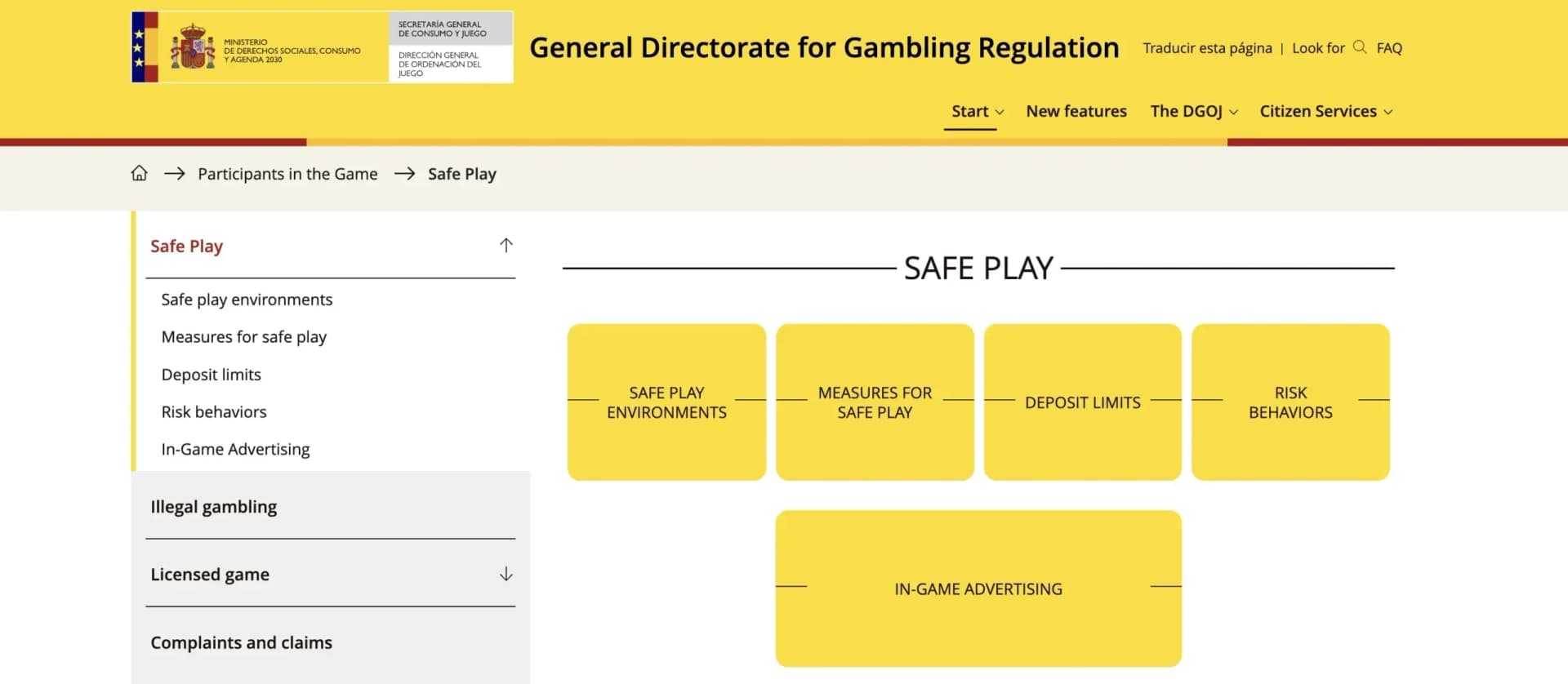
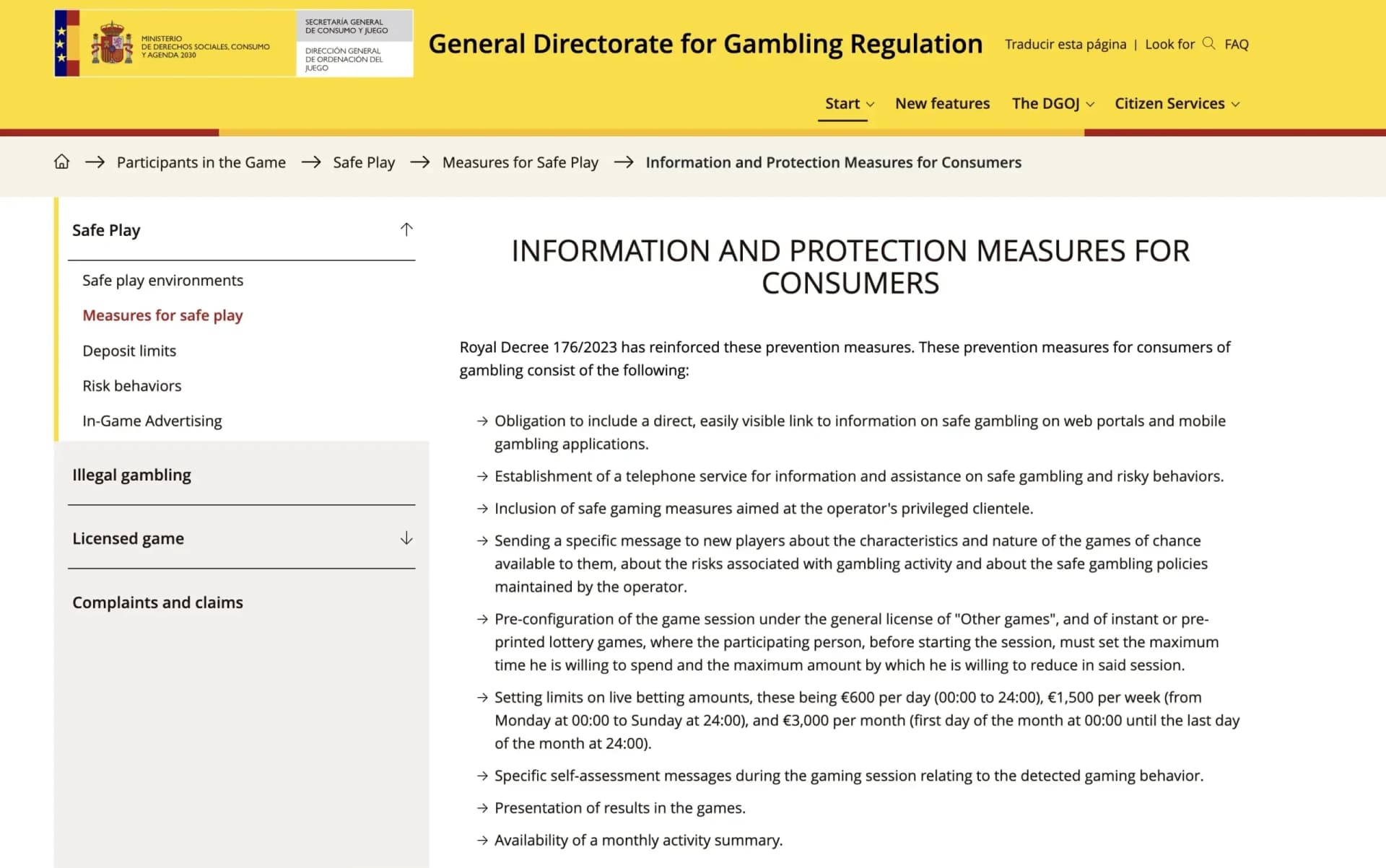
Spain has strengthened its player protection framework through safe play environments developed under Royal Decree 176/2023. These environments prevent development of risky, problematic, or compulsive gambling behaviors while minimizing potential negative effects associated with gambling activity.
Licensed operators must implement active safe play measures including clear and accessible safe gambling information, consumer information and assistance channels, preventive tools for reducing gambling-related risks, and additional protection mechanisms for vulnerable players or at-risk groups.
Advertising, sponsorship, and commercial communications are regulated separately under Royal Decree 958/2020, establishing strict conditions for service promotion and requiring responsible gambling and consumer protection message integration into commercial communications.
RGIAJ Compliance Requirement
All licensed operators must verify player eligibility through the General Register of Gambling Access Bans (RGIAJ) before permitting participation in gambling activities. This verification is mandatory and failure to comply can result in regulatory sanctions.
Regional Authority Jurisdiction
While online gambling operates under national oversight, land-based gambling falls under Autonomous Community authority. Each region establishes its own licensing rules, taxation schemes, and operational requirements for physical gambling venues.
This regulatory separation reflects Spain's constitutional structure and ensures regional governments retain control over local gambling activities while online gambling remains subject to unified national oversight. The distinction creates specific compliance obligations for operators seeking to establish both online and land-based gaming operations.
Strategic Implications for Market Participants
Spain's regulatory architecture creates a complex compliance landscape requiring operators to navigate multiple jurisdictional frameworks. The dual model necessitates distinct authorization processes for online and land-based operations while maintaining consistent national standards for digital gambling services.
The reservation of lottery operations to designated public entities limits private sector participation in this segment, while the comprehensive licensing framework for other gambling activities provides clear pathways for authorized market entry.
Spain's emphasis on player protection through mandatory registers, safe play environments, and advertising controls positions consumer safeguarding as a fundamental regulatory requirement rather than optional enhancement. The graduated enforcement framework provides regulators with flexible tools for addressing compliance failures while maintaining market integrity through consistent supervisory oversight.
Spain's emphasis on player protection through mandatory registers, safe play environments, and advertising controls positions consumer safeguarding as a fundamental regulatory requirement rather than optional enhancement.
Spain offers three license types: General licenses for broad gambling categories (10-year duration), Single licenses for specific products within general license scope (1-5 year duration), and Occasional gambling authorizations for temporary activities. General licenses are prerequisites for single license applications.
No, licenses issued in other EU jurisdictions are not recognized for gambling service provision within Spanish territory. Only operators holding valid national licenses granted by the DGOJ under Spanish law may legally offer online gambling services in Spain.
Land-based gambling venues such as physical casinos and gaming halls are regulated by Spain's Autonomous Communities, not the national DGOJ authority. Each region establishes its own licensing rules, taxation schemes, and operational requirements for physical gambling venues.
The General Register of Gambling Access Bans (RGIAJ) is Spain's national self-exclusion database managed by the DGOJ. Licensed operators must verify player eligibility through this register before permitting gambling participation, making compliance mandatory for all authorized gambling activities.
The standard administrative procedure duration is 6 months from application submission. However, operators can only apply during public calls published in the Official State Gazette, and new application calls require at least 18 months between procedures for the same gambling category.
According to We-Right Factory.
Legal Disclaimer
This content reflects a general overview of regulatory frameworks based on publicly available information. It does not constitute legal advice or a legal opinion. iGamingWriter.blog disclaims any liability arising from reliance on this material.