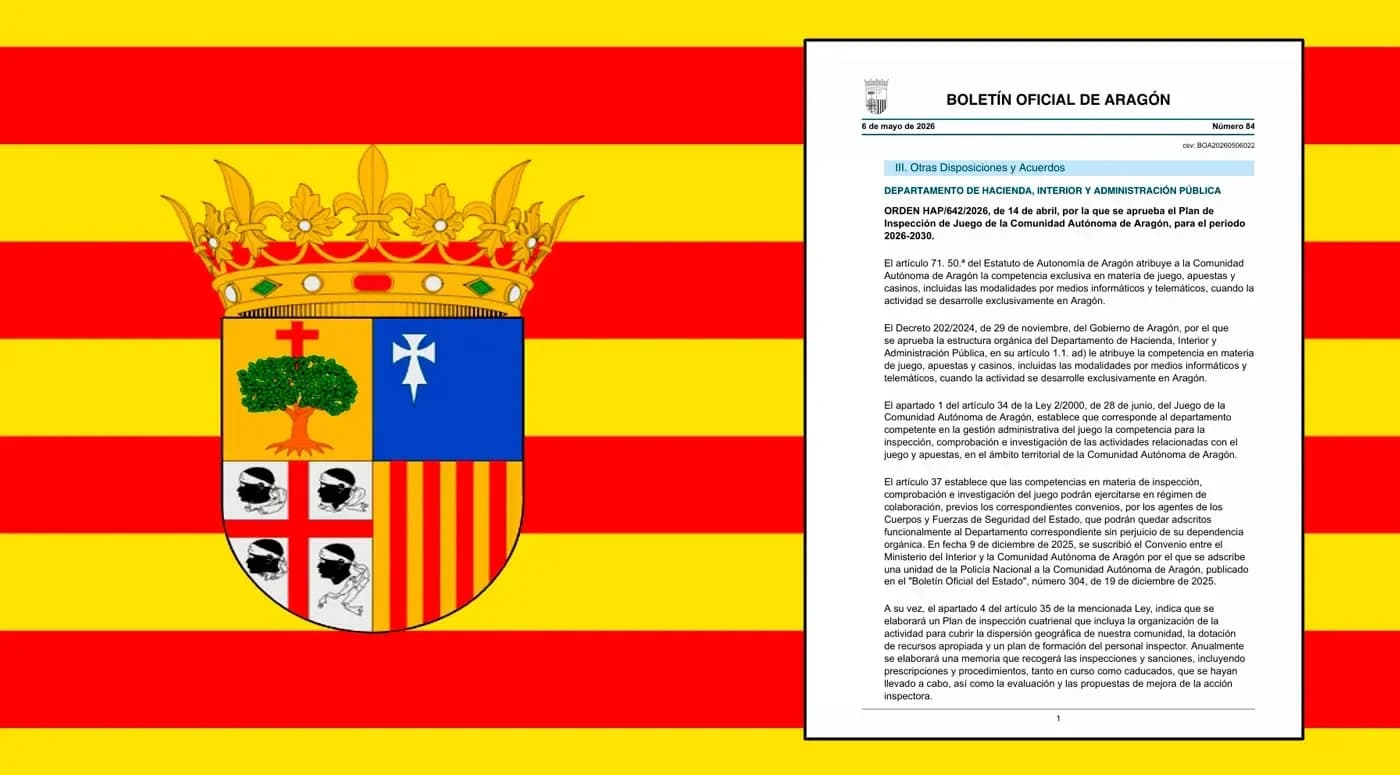
The This is a proper noun (official name) and should remain in Spanish has submitted its draft General Gaming Regulation to the This is a proper noun (official name) and should remain in Spanish through the TRIS notification system, triggering a mandatory standstill period that runs until 15 September this year. During this window, the text cannot be definitively approved while EU authorities and member states assess its compatibility with the internal market. The regulation introduces sweeping restrictions on machine authorisations, territorial expansion, and commercial practices — setting the sector on a course toward near-zero growth.
Ownership Changes Become a Regulatory Flashpoint
One of the most operationally disruptive provisions concerns changes of ownership in hospitality establishments. Under the new rules, a change of proprietor automatically triggers the extinction of any existing machine installation authorisation. A new owner may subrogate to the rights OR succeed to the rights and obligations of the previous holder, but this decision must be communicated within 1 month and is tacitly confirmed only after 3 months of continued activity.
The stakes are high if a new owner explicitly rejects maintaining the machines: not only is the authorisation extinguished, but the premises are barred from hosting any B1 machines for a period of 12 months. That effectively constitutes a temporal commercial blockade on an entire location — a risk operators and investors in the hospitality-gaming space must price carefully into any acquisition or transfer in Aragón's gaming sector.
The table below summarizes the key timelines and consequences linked to a change of venue ownership under Aragon's new regulation. These deadlines carry direct operational and commercial significance for investors and operators in the hospitality sector.
| Event | Deadline | Consequence |
|---|---|---|
| Notice of subrogation or succession | 1 month from the change of ownership | Tacit confirmation after 3 months of activity |
| Express refusal by the new owner to retain the machines | Immediately after refusal | 12-month ban on installing B1 machines |
| Tacit confirmation of succession | 3 months of continuous activity | Authorization is deemed valid |
| End of the TRIS standstill period | 15 September of the current year | Regulation may be finally approved |
Warning
The 12-month re-licensing block applies to the physical premises, not just the operator — meaning even a well-capitalised incoming owner cannot circumvent it by applying for a fresh authorisation. Investors conducting M&A in Aragón's hospitality-gaming sector must verify whether a target venue has experienced any recent ownership rejection before closing a deal, as a dormant blockade period may already be running.
A Hard Cap and New Technical Burdens
The regulation establishes that the Aragón executive will not grant more than 5,600 exploitation authorisations for B1 gaming machine positions in hospitality premises. Combined with reductions in the maximum number of units permitted per establishment, this cap signals a deliberate policy of sectoral consolidation rather than growth.
On the technical side, machines will be required to interact with users prior to each session, prompting affirmative responses to questions about legal age and awareness of addiction risk before accepting any stake. This pre-session friction layer adds both a compliance obligation and a hardware or software reconfiguration challenge for existing deployments.
5,600
Maximum B1 machine exploitation authorisations permitted across Aragón hospitality premises
1 month
Window for a new owner to communicate their decision on subrogation or succession of machine authorisation
3 months
Period after which continued activity constitutes tacit confirmation of authorisation succession
12 months
Commercial re-licensing ban on premises where a new owner explicitly rejects machine authorisations
500 metres
Minimum walking-distance buffer from educational centres or youth leisure facilities for new gaming venues
15 September
End date of the mandatory TRIS standstill period during which the regulation cannot be definitively approved
Territorial and Commercial Restrictions
New openings or expansions of gaming venues face a stricter territorial shield: no installation may be located within a walking distance of 500 metres from educational centres or youth leisure facilities.
Commercially, the regulation broadly prohibits serving free meals or beverages — or those priced below market rates — in gaming establishments. The exception is narrow: only casinos retain this option.
Mapping Compliance Before Expansion
The 500-metre proximity rule is measured by walking distance, not straight-line radius — a distinction that can meaningfully change which sites qualify. Operators planning new venue openings in Aragón should commission a pedestrian-route mapping review of candidate locations now, before the regulation is finalised, to avoid sunk costs on sites that will become non-compliant once the text passes.
Enforcement Architecture
The regulation reinforces sanctions control through the creation of a new regional Sanctions Registry, designed for statistical and administrative consultation. Procedurally, the requirement for a professional ID card is eliminated and responsible declarations are introduced for new openings, streamlining some administrative steps.
What the New Sanctions Registry Changes Practically
The creation of a regional Sanctions Registry for statistical and administrative consultation introduces a formal data layer that did not previously exist at this level. Beyond enforcement tracking, this registry could become a reference point for licensing decisions — meaning an operator's historical sanctions record in Aragón may carry forward into future authorisation reviews, adding a reputational dimension to every compliance failure.
What the Standstill Period Signals for Operators
The TRIS notification process is not merely procedural — it creates a meaningful window during which the European Commission or other member states could issue detailed opinions that could force amendments OR might force amendments. Spanish gaming associations have already challenged EU-level risk detection rules in a parallel regulatory front, underscoring how Brussels-Madrid tensions over sector oversight are intensifying. Whether the Commission raises objections to provisions such as the 12-month re-licensing block — which could be seen as a disproportionate market restriction — remains the key question to watch before September.
The European Commission or EU member states may submit detailed opinions through the TRIS system, effectively requiring Aragon to revisit certain provisions. A full block is not automatic, however; the region will be able to respond to comments or make amendments. Operators should monitor developments closely until 15 September, as this process will determine the final shape of the regulation.
The article does not disclose specific financial figures, but a direct ban on free or subsidized food removes one of the key tools for retaining visitors in gaming venues, except for casinos. Operators should assess what share of footfall this practice generated and model the revenue impact of removing it before the regulation takes effect.
The regulation requires machines to ask users to confirm they are of legal age and aware of addiction risks before each session, but the source does not specify whether transition periods are provided for upgrading existing equipment. Operators with large installed machine estates should urgently assess the technical compatibility of their software and hardware with the new requirement, as this detail is critical for cost planning.
According to AzarPlus.