The Measurement Question at the Heart of Spanish Gambling Policy
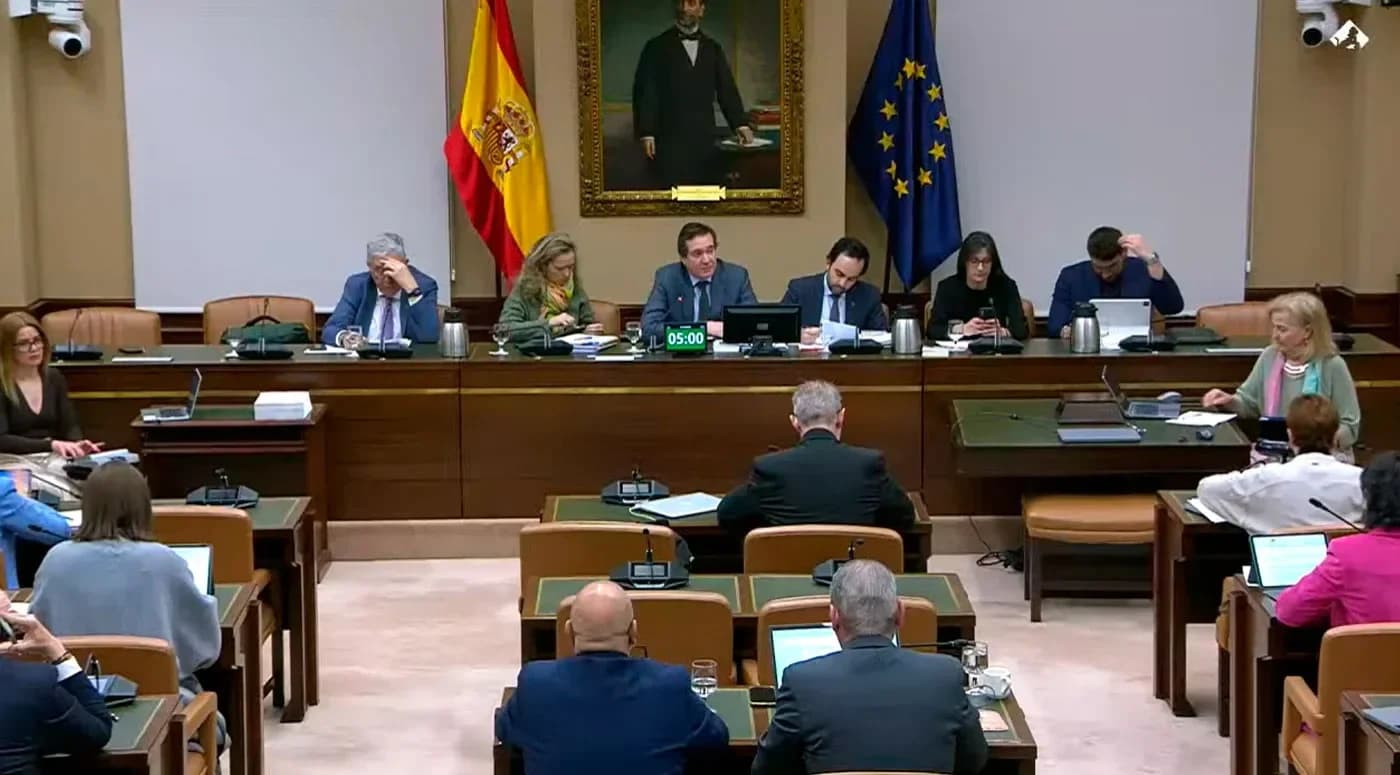
A session of Spain's Comisión Mixta para el Estudio de los Problemas de las Adicciones has thrust a rarely examined question into the political spotlight: are the methodological tools used to measure problem gambling actually fit for purpose as a basis for public policy? The exchange between Popular Party deputy Noelia Castillo and Secretary of State for Health Javier Padilla exposed a fault line that the gambling industry has long been aware of — but which rarely surfaces in formal parliamentary debate.
Castillo's Challenge: Screening Is Not Diagnosis
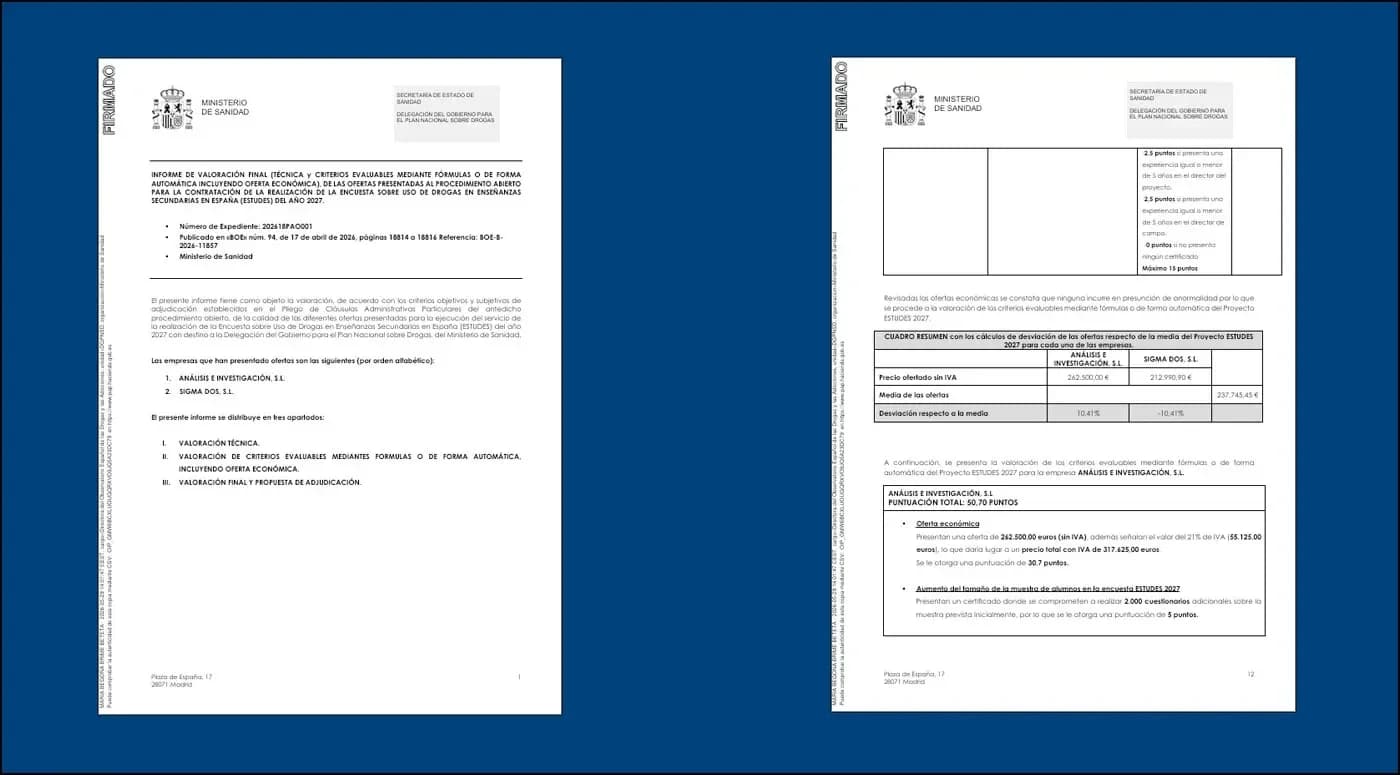
Castillo's core argument was methodological. She contended that ESTUDES — the official government survey on drug use and addictions among young people — is not a diagnostic instrument but a screening one, and that conflating the two carries significant policy consequences.
“ESTUDES is a screening tool and not a diagnostic tool”
— Noelia Castillo, PP Deputy
She pushed further, questioning how a screening tool could legitimately underpin decisions affecting thousands of minors and hundreds of millions in public expenditure. In her view, a flawed instrument produces a flawed diagnosis — and a flawed diagnosis produces flawed policy. She also raised the concern that evaluations risk becoming self-fulfilling, suggesting the government "obtains the results it wants to obtain."
These are not abstract methodological disputes. The gambling sector has watched with mounting unease as ESTUDES and EDADES — the equivalent survey targeting adult populations — have been repeatedly cited to justify regulatory initiatives and institutional campaigns. When survey outputs drive legislation, the validity of those outputs becomes a compliance issue, not just an academic one. Spain's gaming regulator recently awarded over €1 million in research subsidies for gaming disorder prevention, underscoring how survey-driven priorities translate directly into funding decisions.
Padilla's Rebuttal: European Benchmark, Validated Methodology
Padilla defended both surveys without qualification.
“It seems to me rather strange to denigrate the ESTUDES study”
— Javier Padilla, Secretary of State for Health
He went further, characterising ESTUDES as:
“Very probably one of the reference studies at European level on drugs and addictions”
— Javier Padilla, Secretary of State for Health
Padilla defended the survey methodology as validated, embraced by autonomous communities across the political spectrum, and fully operational. He confirmed the government would continue building on it.
On gambling specifically, Padilla noted that since 2020 an indicator has existed for admissions to treatment for behavioural addictions, placing gambling alongside substance addictions in official statistical tracking. He also cited two active adolescent prevention programmes: "Qué te juegas", developed by the Universidad Miguel Hernández de Elche, and "Ludens", from the Universidad de Valencia.
The Moral Panic Framing — and Its Selective Application
One of the session's more striking moments came when Padilla characterised public discourse around digital gaming as a "moral panic" — a sociological and media phenomenon in which risks are amplified beyond their evidential basis. He cited ESTUDES data showing a 26.8% reduction in the video game disorder indicator since 2021, with a roughly 15% reduction compared to pre-pandemic 2019 figures.
Problematic gambling indicators have not risen — they have declined since 2018. Yet the regulatory response has not reflected that trajectory.
The implicit tension is hard to ignore. Padilla rejects the alarmist narrative on video games on the basis of improving data — yet the same logic has not been publicly applied to gambling, where problematic play levels have similarly not increased and have in fact declined since 2018. Spain's congressional debate on financial education to combat youth gambling reflects the same tension between statistical trends and legislative momentum.
26.8%
Reduction in video game disorder indicator since 2021 (ESTUDES data)
~15%
Reduction in video game disorder indicator compared to pre-pandemic 2019 figures
2018
Year from which problematic gambling indicators have declined, not increased
2020
Year Spain introduced an official indicator for treatment admissions related to behavioural addictions, including gambling
What the Debate Signals for Operators and Regulators
The parliamentary exchange matters beyond its immediate political context. The question of whether screening-grade survey instruments should anchor diagnostic-grade policy conclusions is one that operators, compliance teams, and regulatory bodies across Europe increasingly need to address.
If Spain's own government is internally divided on whether its flagship addiction surveys are methodologically appropriate for policy justification, that uncertainty creates real questions about the evidential foundation of recent and forthcoming gambling regulations. The Spanish gaming associations Jdigital and ANEJAD have already filed formal complaints at the European level over risk-detection frameworks, suggesting this methodological debate sits within a broader pattern of industry pushback on evidence standards. Operators should track whether this debate prompts a formal methodological review of ESTUDES and EDADES — and whether that, in turn, affects how Spain's gambling regulator frames future risk-based measures.
The sector's long-standing critique of survey methodology has now found a parliamentary voice. Whether that translates into any recalibration of evidence standards in Spanish gambling policy is the question worth watching.
Compliance Intelligence: Monitoring the Methodological Review
Operators active in Spain should formally track the parliamentary committee's output from the Comisión Mixta para el Estudio de los Problemas de las Adicciones. If a methodological review of ESTUDES or EDADES is commissioned — even informally — it could create an evidentiary gap that delays or reframes forthcoming regulatory measures. Legal and compliance teams should note that two distinct surveys (ESTUDES for youth, EDADES for adults) are both in play, and any challenge to one does not automatically extend to the other. Documenting which specific survey outputs are cited in regulatory justifications will be important if operators later seek to challenge proportionality of measures.
The article does not address whether existing regulations could be retroactively challenged, but a formal methodological review would likely create grounds for operators to question the evidential proportionality of measures already in force. Legal teams should monitor whether any parliamentary committee formalises a review mandate, as that step would be the most actionable trigger for compliance re-assessment.
A screening tool identifies populations at potential risk and flags individuals for further evaluation, while a diagnostic tool determines whether a clinical condition is actually present. According to the article, the PP deputy's argument is that using a screening-grade instrument — ESTUDES — as the evidential foundation for policy creates a category error: population-level risk flags are treated as confirmed prevalence rates, which can inflate the apparent scale of the problem and justify disproportionate regulatory responses.
The article does not disclose whether these programmes impose any obligations on licensed operators or are funded exclusively through public channels. Operators should evaluate whether existing or forthcoming responsible gambling frameworks in Spain create indirect obligations to support or reference such university-developed programmes.
According to AzarPlus.