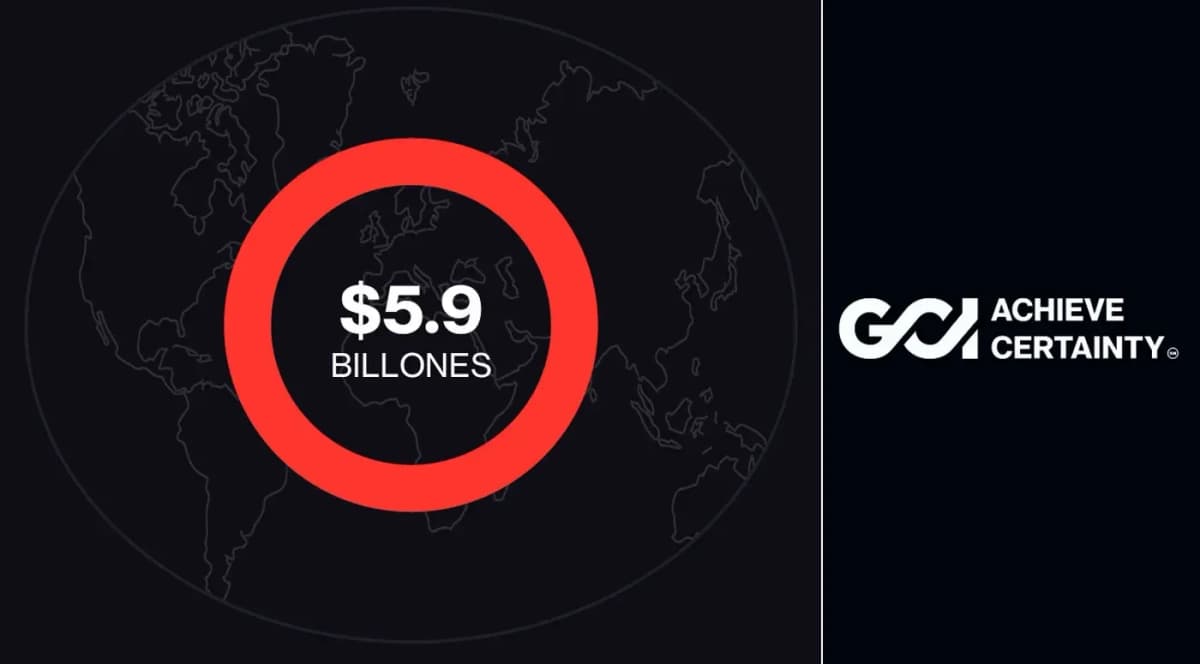
Unregulated online gambling has evolved into the world's third-largest economic force, moving $5.9 trillion in betting volume during 2025 and establishing itself as the primary manifestation of global cybercrime, according to new research from Gaming Compliance International.
The analysis reveals a striking market imbalance: unlicensed operators now control 78% of global betting market in gross gaming revenue, leaving just 22% within regulated frameworks subject to legal oversight and taxation. This positioning places the unregulated sector behind only the United States and China in terms of economic scale.
Three-Tier Market Structure
The current landscape has fragmented into three distinct sectors: regulated, unregulated, and unrecognised. The unrecognised category encompasses products that replicate betting mechanics – including social casinos, sweepstakes, and skin trading – while operating in legal grey areas outside traditional gambling classifications.
This convergence has created what experts term a "white noise market" where consumers cannot distinguish between licensed and clandestine platforms, engaging with all equally in what researchers describe as the "gamification of everything."
Market Classification
The MPEO framework (monitor, police, enforce, and optimise) represents a four-pillar approach requiring coordinated regulatory action across multiple jurisdictions, as traditional single-market enforcement proves ineffective against borderless digital operations.
Illegal Streaming Amplifies Problem
The issue intensifies through illegal sports streaming, where more than 80% of transmissions now incorporate advertising for unregulated betting platforms. This phenomenon further blurs consumer perception between legitimate and illicit operators.
Gaming Compliance International proposes the MPEO framework (monitor, police, enforce, and optimise) as the necessary strategic approach to protect consumers and restore commercial transparency across jurisdictions.
Warning
The "white noise market" phenomenon creates significant liability exposure for legitimate operators, as consumer confusion between licensed and unlicensed platforms can undermine trust in the entire regulated gambling ecosystem.
Regulatory Reckoning Ahead
The scale of unregulated activity fundamentally challenges traditional oversight models. With nearly four-fifths of betting revenue flowing through unlicensed channels, regulators face questions about enforcement capabilities and jurisdictional reach in an increasingly borderless digital environment.
The emergence of unrecognised gambling products further complicates classification efforts, as operators exploit definitional gaps to avoid regulatory scrutiny while offering functionally identical experiences to traditional betting products.
Operators must implement clear licensing badges, transparent responsible gambling tools, and educational campaigns about regulatory protections. The source does not specify marketing strategies, but visible compliance messaging becomes critical when consumers cannot distinguish between licensed and clandestine platforms.
Traditional oversight models struggle with jurisdictional reach across borderless digital environments. With 78% of betting revenue flowing through unlicensed channels, regulators must develop new cross-border cooperation frameworks and technical capabilities beyond current enforcement infrastructure.
The article indicates these products operate in legal grey areas outside traditional gambling classifications, exploiting definitional gaps. Operators should evaluate regulatory requirements in each target jurisdiction, as classification standards vary and enforcement approaches remain inconsistent across markets.
The research highlights an urgent need for coordinated international enforcement as unregulated gambling operations continue to expand beyond traditional regulatory boundaries, threatening both consumer protection and legitimate industry revenues.
According to AzarPlus.