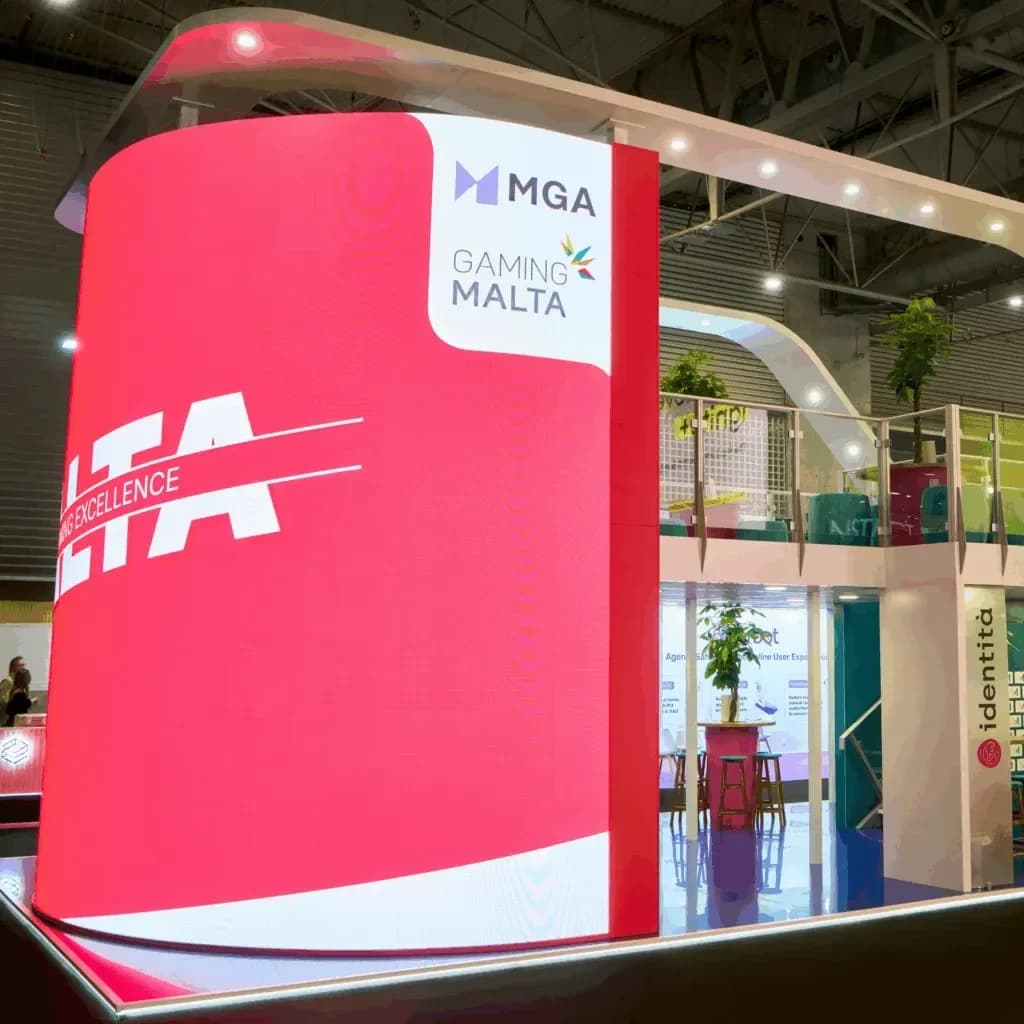
EveryMatrix is heading into ICE with a message centred on proven results rather than product pitches, as the platform provider positions itself around demonstrable operator outcomes rather than theoretical capabilities.
Ivan Rozić, Global Commercial Director at EveryMatrix, emphasises that this "proof over promises" approach isn't new positioning – it's simply the first time the company has accumulated sufficient evidence to support its claims comprehensively.
"We've never had more proof than we do today."
— Ivan Rozić, Global Commercial Director
Revenue Share Alignment Drives Partnership Strategy
The foundation of EveryMatrix's commercial model rests on revenue alignment rather than traditional client-vendor relationships. Rozić reports that 93 per cent of the company's revenues derive from revenue share arrangements, creating direct financial alignment between platform performance and operator success.
"If our partners grow, we grow."
— Ivan Rozić, Global Commercial Director
This structure has fundamentally altered how EveryMatrix approaches sales conversations. Rather than promoting fixed product packages, the company has adopted what Rozić describes as a consultative, platform-led methodology focused on long-term operational outcomes.
The commercial director acknowledges his discomfort with traditional industry terminology like "clients" or "customers," arguing these labels fail to capture the collaborative nature of relationships the company seeks to establish. This philosophical approach extends throughout the sales process, where understanding operator pain points takes precedence over product demonstrations.
93%
of EveryMatrix revenues from revenue share arrangements
Peer Validation Over Sales Presentations
In an increasingly crowded technology landscape, Rozić recognises the challenge operators face distinguishing genuine capability from marketing presentations. His response emphasises the critical role of peer validation and operational references in building credibility.
"Two heads are better than one."
— Ivan Rozić, Global Commercial Director
Trust formation rarely occurs during initial sales meetings, according to Rozić's analysis. Instead, purchasing decisions are shaped through peer conversations and documented operational experience. Potential partners consistently seek validation from existing operators already deployed on the platform.
This emphasis on credible references has informed EveryMatrix's approach to client retention and satisfaction. The company recognises that each successful deployment becomes a potential reference point for future partnerships, creating compound value beyond immediate revenue.
Partnership Validation Strategy
When evaluating platform providers, prioritize peer conversations and documented operational experience over polished sales presentations. Trust formation occurs through validated operator references rather than initial sales meetings, making existing partnerships a critical evaluation factor.
Modular Platform Architecture Meets Market Demand
The industry shift towards modular technology deployment has aligned with EveryMatrix's architectural philosophy. Rather than requiring all-or-nothing platform decisions, the company has developed multiple product lines capable of independent deployment or combined integration.
Rozić points to the diversity within existing partnerships as validation of this approach. Some operators utilise only specific platform components, others implement full turnkey solutions, while many deploy hybrid configurations combining proprietary and third-party elements.
This flexibility has transformed commercial conversations from product sales to solution architecture. Rozić's role has evolved from selling predetermined packages to designing optimal configurations for individual operator requirements.
The company deliberately moved away from rapid, off-the-shelf white-label products several years ago in favour of modular platform solutions. While speed-to-market can attract operators, Rozić argues this often compromises solution depth and long-term sustainability.
Modular vs All-or-Nothing Platforms
Modern platform architecture allows operators to deploy specific components independently or in hybrid configurations. This flexibility transforms commercial conversations from product sales to solution architecture, enabling optimal configurations for individual operator requirements rather than predetermined packages.
Listening-Driven Sales Methodology
Rozić identifies a fundamental issue within supplier-operator conversations: excessive vendor talking time. His guideline suggests that suppliers speaking 80 per cent of conversation time indicates poor sales execution.
"If you're talking 80 per cent of the time, you're not doing a good job."
— Ivan Rozić, Global Commercial Director
The gap between technology providers and operators frequently stems from understanding deficits, compounded by inconsistent industry terminology. Features described differently across providers can create artificial mismatches during evaluation processes.
Effective partnerships require transparent communication from both parties. When operators clearly articulate problems, timelines, and expectations, solution providers can accurately assess partnership viability. This transparency enables definitive capability assessments rather than prolonged evaluation cycles.
Sales Conversation Balance
Effective supplier-operator relationships require strategic communication balance. When vendors dominate 80% of conversation time, it typically indicates poor sales execution and insufficient understanding of operator needs. Transparent communication from both parties enables accurate capability assessments.
AI Innovation Through Operator Feedback
EveryMatrix's development of Bonus Guardian, an AI-driven product, exemplifies the company's operator-driven innovation approach. Rozić emphasises this technology wasn't conceived internally but emerged directly from operator discussions about operational challenges.
By maintaining consistent feedback loops with deployed operators, EveryMatrix has developed technology addressing commercial issues rather than abstract technical possibilities. This methodology ensures product development resources target genuine market needs.
Strategic Acquisition: Goma Gaming Integration
The recent acquisition of Goma Gaming reflects EveryMatrix's continued focus on addressing specific operator requirements, particularly in sportsbook front-end capability and user experience design.
Rozić describes sportsbook front-ends as uniquely complex, requiring deep knowledge combining user experience principles with sportsbook mechanical understanding. This combination represents rare expertise within the market, making Goma an attractive acquisition target.
While templates satisfy the majority of operator requirements, Rozić emphasises that the final 10 per cent often represents the most critical differentiation. Goma's capabilities enable EveryMatrix to move beyond standardised solutions toward bespoke front-end designs aligned with specific operator strategies.
The acquisition provides what Rozić characterises as "a blank canvas" rather than working within predetermined design boundaries.
Future Pipeline and Long-Term Commitments
Following what Rozić describes as a record year in 2025 in new business terms, EveryMatrix's immediate priority focuses on executing existing commitments rather than aggressive expansion. The company currently manages multiple long-term projects with partnership timelines extending as far ahead as 2029.
This extended timeline horizon represents a significant industry shift, according to Rozić's analysis. Operators thinking in multi-year cycles rather than quarterly periods signals increased seriousness and confidence in technology partnerships.
The commercial director describes the current tension between commercial ambition and delivery capacity as optimal positioning – sufficient demand to drive growth without overwhelming operational capabilities. This reflects broader industry moves toward consultative solution architecture over traditional product sales, where providers like SOFTSWISS are also adopting strategic approaches to market expansion.
Extended Partnership Timelines
The industry has shifted toward multi-year partnership commitments, with some extending as far as 2029. This represents increased operator confidence in technology partnerships and signals a move away from quarterly thinking toward sustained strategic planning.
Strategic Implications for Platform Selection
EveryMatrix's consultative methodology and modular architecture represent a broader industry evolution toward flexible, performance-aligned partnerships. The company's revenue-share model creates natural incentives for sustained operator success rather than initial deployment fees.
For operators evaluating platform providers, EveryMatrix's approach suggests several key considerations: the importance of peer validation over sales presentations, the value of modular deployment options, and the benefits of revenue-aligned commercial structures. The company's focus on listening over selling may resonate with operators frustrated by traditional vendor approaches. As partnership timelines extend into multi-year commitments, the emphasis on proven capability over promotional messaging appears increasingly relevant for strategic technology decisions.
| Traditional Approach | EveryMatrix Method |
|---|---|
| Fixed product packages | Consultative solution architecture |
| Client-vendor relationships | Revenue-aligned partnerships |
| Sales presentations focus | Peer validation emphasis |
| All-or-nothing platforms | Modular deployment options |
| Quarterly planning cycles | Multi-year commitments (to 2029) |
EveryMatrix operates on a revenue share model where 93% of their income comes from revenue sharing arrangements. This creates direct financial alignment between platform performance and operator success, fundamentally changing how they approach partnerships.
Modular architecture allows operators to deploy specific platform components independently or combine them with existing systems. This flexibility enables customized solutions rather than all-or-nothing platform decisions, meeting individual operator requirements more precisely.
EveryMatrix develops AI-driven products like Bonus Guardian based directly on operator feedback and operational challenges. Their innovation approach focuses on addressing genuine market needs rather than abstract technical possibilities through consistent operator feedback loops.
The acquisition addresses specific operator requirements in sportsbook front-end capability and user experience design. Goma's expertise enables EveryMatrix to move beyond standardized solutions toward bespoke front-end designs that provide critical operator differentiation.
According to EveryMatrix.