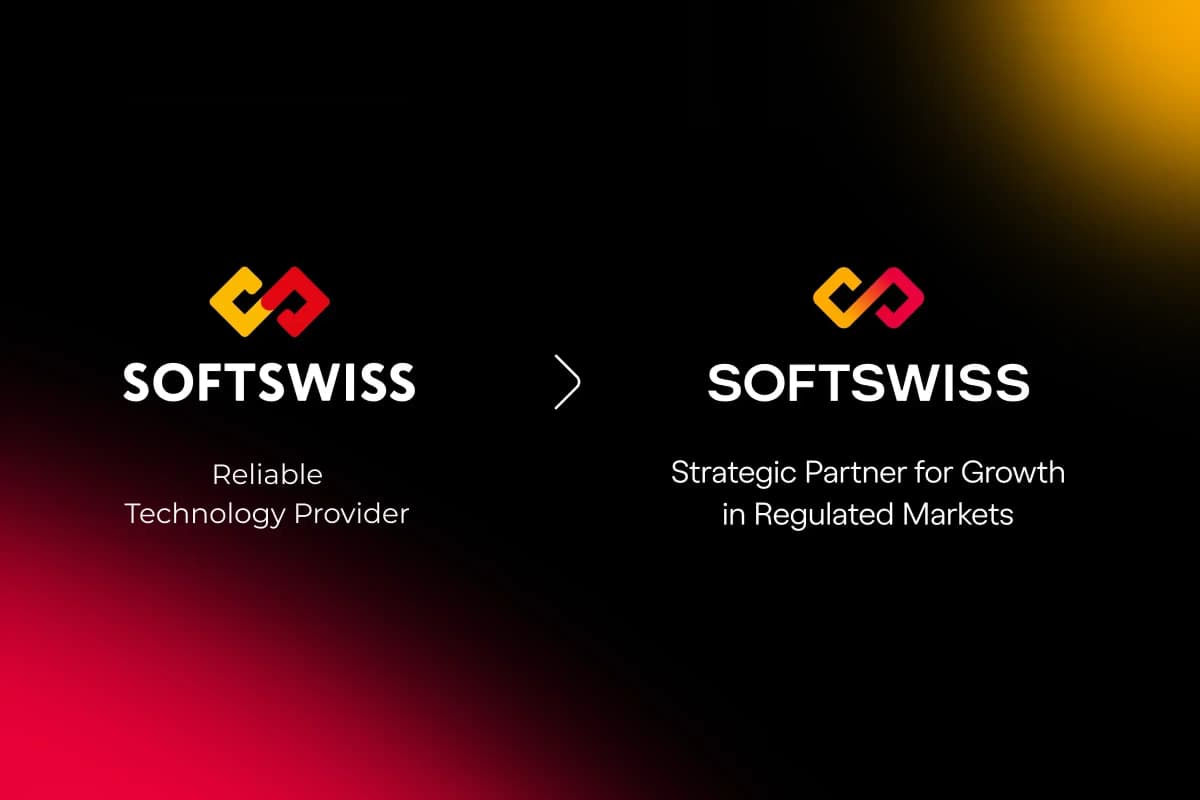
SOFTSWISS has announced a repositioning and visual identity refresh, signalling a deliberate shift from software vendor to what the company now describes as a technology and growth partner. The move is a direct response to structural changes the company has tracked across five years of its iGaming Trends research — and it carries real implications for how operators evaluate long-term vendor relationships.
From Software Vendor to Strategic Technology and Growth Partner
The repositioning is grounded in three structural trends SOFTSWISS identified through its research: increasing market fragmentation driven by local regulation, rising operational complexity for operators, and a broader industry migration away from transactional vendor relationships toward long-term partnerships built on reliability, expertise, and brand trust.
The practical substance of the new positioning rests on SOFTSWISS' existing capabilities rather than an aspirational pivot. The company now holds licences and certifications spanning more than 25 jurisdictions worldwide, supports more than 1,500 brands globally, and has maintained 99.999% uptime across 17 years of operations — a track record that underpins the reliability argument at the core of the refresh.
Brazil as a Proof Point for SOFTSWISS Market Depth
25+
Jurisdictions with licences and certifications
1,500+
Brands supported globally
99.999%
Platform uptime over 17 years of operations
17
Years of continuous operations
The company's work in Brazil offers a concrete illustration of the expanded model in action. SOFTSWISS currently works with more than 60 certified brands in the country, making it one of the most significant footprints any European-rooted B2B provider has established in Latin America's newly regulated market. Membership in ANJL, Brazil's iGaming industry association, reinforces the company's commitment to contributing to regulatory dialogue rather than simply operating within it.
Alongside its Brazilian engagement, SOFTSWISS also holds membership in iGEN, the Malta-based organisation focused on sustainable iGaming development — a signal that the company is actively participating in shaping regulated market frameworks across multiple continents. The SOFTSWISS Prediction Markets product surpassed 50 pipeline projects since launching in April 2026, reflecting how quickly the company is extending its product footprint in parallel with this regulatory expansion.
Evaluating a Vendor's Regulatory Depth in Emerging Markets
Association membership — such as ANJL in Brazil or iGEN in Malta — signals more than market presence. It indicates a vendor is investing in shaping regulatory frameworks, which can translate into earlier compliance readiness and reduced operator risk when rules change. When assessing a platform partner for a newly regulated market, ask whether they hold active membership in the local industry body, not just a technical licence.
AI Leadership as a Structural Decision by SOFTSWISS
One of the more operationally significant announcements within the rebrand is the establishment of a dedicated Chief Artificial Intelligence Officer (CAIO) role. Rather than consolidating AI development under the existing CTO function, SOFTSWISS has deliberately separated the two: the CTO retains focus on software stability, scalability, and performance, while the CAIO drives AI adoption and innovation independently. The intent is to prevent operational conservatism from slowing innovation — or vice versa.
This organisational design mirrors how the company has approached other structural challenges — for instance, the SOFTSWISS AI Hackathon delivered 34 competing teams and €25k in prizes, signalling an institutional commitment to AI development that predates the formal CAIO appointment.
Why Separating CAIO from CTO Matters Structurally
Appointing a dedicated Chief Artificial Intelligence Officer independent of the CTO is an organisational design choice with operational consequences. A CTO role is typically optimised for stability and risk mitigation — the qualities that protect uptime and meet SLA commitments. Placing AI development under that remit risks slowing adoption due to the same conservatism that protects infrastructure. The CAIO model lets innovation move at its own pace without destabilising core platform operations — a distinction relevant to operators who want both reliability and access to emerging AI-driven features.
The Founder's Framing
Ivan Montik, Founder of SOFTSWISS, articulated the rationale directly:
"The role of the technology partner has fundamentally changed over the past few years. As iGaming becomes more regulated and more complex, operators need much more than technology alone. They need a partner that understands regulations, brings operational expertise, and supports sustainable growth over the long term. Over the past 17 years, we've built those capabilities alongside the technology at the core of our business. Our updated positioning doesn't change who we are – it simply reflects the company we've become and the role we already play for our partners."
— Ivan Montik, Founder of SOFTSWISS
Reading the Signal for Operators
When a provider with 17 years of market presence formalises a shift from vendor to growth partner, it reflects how the competitive bar in B2B iGaming is rising — compliance fluency and operational depth are becoming baseline expectations.
The rollout is being implemented throughout 2026 across products, communications, and industry touchpoints. For compliance officers and product managers evaluating platform partners, the CAIO appointment and multi-jurisdictional licensing depth are the most operationally relevant details — they indicate how SOFTSWISS intends to handle the tension between regulatory conservatism and innovation at scale.
The following table summarises the key operational indicators SOFTSWISS has disclosed as part of its repositioning — the metrics most relevant for operators and compliance officers conducting vendor due diligence.
| Indicator | Detail |
|---|---|
| Jurisdictions licensed/certified | 25+ worldwide |
| Brands supported globally | 1,500+ |
| Platform uptime (17-year record) | 99.999% |
| Certified brands in Brazil | 60+ |
| Industry association memberships | ANJL (Brazil), iGEN (Malta) |
| Dedicated AI leadership role | CAIO appointed, separate from CTO |
| Rebrand rollout period | Throughout 2026 |
Operators should look past the visual identity refresh and examine verifiable operational indicators: the number of active jurisdictional licences, documented uptime records, and the depth of certified brand partnerships. In SOFTSWISS's case, the rebrand is accompanied by quantifiable track-record data — over 25 jurisdictions, 1,500+ brands, and 99.999% uptime — which provides a basis for evaluation beyond positioning language.
Compliance officers should request updated certification documentation covering the new jurisdictions and confirm whether the vendor's licences are operator-facing or purely internal. They should also verify whether the vendor participates in local regulatory bodies — such as ANJL in Brazil — which affects how quickly the vendor can interpret and implement rule changes. The source does not detail specific certification timelines, so operators should request this directly before entering new regulated markets with the vendor.
The article states the rollout covers products, communications, and industry touchpoints throughout 2026, but does not specify whether this involves technical changes to existing integrations or is limited to commercial and branding updates. Operators with active contracts should seek clarification directly from SOFTSWISS on whether any product-level changes are included in the rollout schedule.
According to SOFTSWISS.