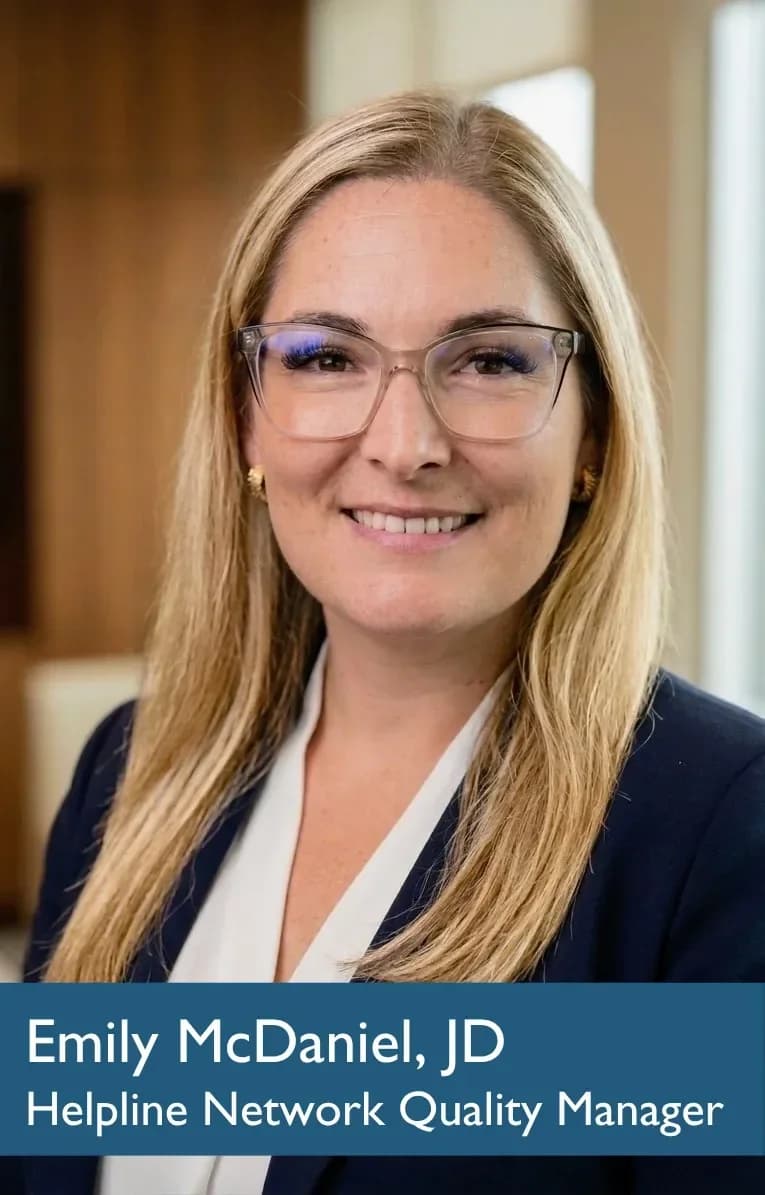
The National Council on Problem Gambling (NCPG) has appointed Emily McDaniel as its new Helpline Network Quality Manager, bringing over a decade of specialized experience in crisis intervention and helpline management to strengthen the organization's support infrastructure.
McDaniel joins NCPG from LaFrontera EMPACT-SPC, where she served as 988 Call Center Manager, supervising a remote team of crisis specialists and facilitating accreditations for major entities including CARF, ICH, AAS, and SAMHSA. Her appointment signals NCPG's commitment to enhancing the quality and consistency of problem gambling support services across its network.
Primary Responsibilities and Network Partnership
In her new role, McDaniel will serve as the National Problem Gambling Helpline's primary partner in supporting contact centres through the accreditation process. Her mandate extends to maintaining and evolving quality standards while leading the development of the Helpline Specialist Training Program.
The position represents a strategic move by NCPG to centralise quality assurance and create more uniform standards across its helpline network, addressing gaps that can emerge when multiple independent centres operate without unified oversight.
NCPG Helpline Network Structure
The National Problem Gambling Helpline operates through a decentralised network of independent contact centres across different geographic regions. Each centre must undergo accreditation processes to maintain service standards, though this distributed model can create inconsistencies without unified oversight mechanisms.
Legal Foundation Informing Crisis Management
McDaniel's background uniquely combines legal training with frontline crisis intervention experience. She earned her Juris Doctorate from the University of New Hampshire School of Law, where she participated in the Criminal Practice Clinic, assisting indigent clients who lacked means for legal representation.
"Earning my Juris Doctorate from the University of New Hampshire School of Law taught me to 'think like a lawyer,' which, in the world of Quality Assurance, essentially means operating with analytical rigor."
— Emily McDaniel, NCPG Helpline Network Quality Manager
Her legal education began in diversion courts, where she recognised that legal solutions alone often prove insufficient for addressing underlying crises. This realisation prompted her transition to frontline crisis intervention, where she witnessed how single conversations could fundamentally alter or save lives.
"My journey actually began in legal advocacy, specifically working within diversion courts. It was there that I realized the law often meets people at their lowest points, but legal solutions alone aren't always enough to address the underlying crisis."
— Emily McDaniel, NCPG Helpline Network Quality Manager
Systems-Level Impact and Remote Workforce Management
McDaniel's most recent role involved managing over 100 remote crisis specialists for 988 Chat and Text services, providing her with direct experience in large-scale helpline operations. Her approach emphasises operational excellence as a pathway to workforce wellness.
"The biggest lesson I learned is that clarity is a form of kindness. When you are managing a large, remote workforce in a high-stress environment, specialists need more than just 'support,' they need clear expectations, consistent feedback loops, and the right tools to do their jobs effectively."
— Emily McDaniel, NCPG Helpline Network Quality Manager
This experience managing distributed teams proves particularly relevant as helpline operations increasingly rely on remote specialists, requiring sophisticated coordination and quality assurance mechanisms to maintain service standards.
100+
Remote crisis specialists managed
4
Major accreditations facilitated
10+
Years of crisis intervention experience
Vision for Network Transformation
McDaniel's strategic vision centres on transforming the helpline network from a collection of independent centres into a unified, high-performance system. Her goal involves eliminating service gaps that can emerge when quality standards vary across geographic regions.
"What excites me most is the opportunity to move the Network beyond a collection of independent centers and into a unified, high-performance system. Throughout my career, I've seen firsthand how easily people can fall through the cracks of a broken system; my goal at NCPG is to ensure that those cracks don't exist."
— Emily McDaniel, NCPG Helpline Network Quality Manager
Her approach treats quality assurance as a form of advocacy, applying the same analytical rigor used in legal practice to ensure quality standards function as guaranteed baselines rather than suggestions.
Personal Interests and Background
Outside her professional responsibilities, McDaniel maintains diverse interests that reflect her New Hampshire roots and current Arizona residence. She describes herself as a specialised foodie with specific dietary preferences, avoiding seafood, mushrooms, and red onions while seeking Phoenix-area restaurants that accommodate her palate.
Her entertainment preferences include live theatre performances, particularly musicals, and comedy sets. She remains a dedicated fan of New Hampshire sports teams, specifically the Patriots and Celtics, and maintains strong opinions about Rob Gronkowski, whom she considers one of the greatest tight ends in football history.
McDaniel's personal life centres around her husband and two rescue dogs, Curtis and Roo, while she enjoys reading historical fiction by the pool under the Arizona sun.
Geographic Transition Impact
McDaniel's relocation from New Hampshire to Arizona reflects the modern reality of remote helpline management. Her ability to maintain connections to East Coast sports teams while adapting to Southwest lifestyle demonstrates the flexibility required for managing distributed crisis intervention teams across multiple time zones and regional cultures.
Strategic Implications for Problem Gambling Support
McDaniel's appointment represents NCPG's recognition that effective crisis intervention requires both emotional intelligence and systematic operational excellence. Her legal background provides analytical frameworks for developing defensible quality standards, while her frontline experience ensures these standards remain practical for daily implementation. Her focus on workforce wellness through operational clarity suggests NCPG recognises that sustainable helpline operations depend on supporting the specialists who provide direct services. This dual focus on caller experience and staff support could serve as a model for other crisis intervention networks facing similar challenges with remote workforce management and quality consistency.
Her Juris Doctorate background brings analytical rigor to quality assurance, treating standards as guaranteed baselines rather than suggestions. This legal framework ensures defensible, systematic approaches to service consistency across the network.
The article indicates that large remote workforces in high-stress environments require clear expectations, consistent feedback loops, and effective tools rather than just general support. Coordination across distributed teams demands sophisticated quality assurance mechanisms.
The source does not specify how much operational independence centres will retain, but the goal involves transforming independent centres into a unified system. Operators should evaluate how standardisation requirements might impact their local service delivery methods.
While the article mentions eliminating service gaps and ensuring consistent quality, specific performance indicators are not disclosed. The success framework appears focused on preventing people from falling through system cracks rather than particular numerical targets.
According to NCPG.