The most played slots of 2026 are a mix of long-running classics (Starburst, Gonzo's Quest, Book of Dead) and high-volatility newcomers built around cluster pays and multiplier mechanics (Gates of Olympus, Sweet Bonanza). What ties them together isn't age or theme – it's tightly tuned math models, fast pacing, and bonus rounds that pay off often enough to keep people spinning.
If you've spent any time browsing casino lobbies this year, you've probably noticed the same dozen or so names keep popping up no matter which site you're on. That's not an accident, and it's not just clever marketing either. There's a whole layer of testing, certification, and math design sitting underneath every single spin, and understanding it changes how you look at "popular" slots entirely. This guide walks through what's actually topping the charts, why those particular games win out, how the numbers behind them are verified, and what to know before you load up your own list of slots 2026 favorites.
What Makes a Slot One of the Most Played Slots of 2026
A slot becomes one of the most played titles of the year through a combination of high volatility, fast bonus-round frequency, mobile-friendly design, and – often – sheer longevity built on a mechanic that never got old.
Popularity in online slots isn't really about flashy graphics anymore, even though that's usually the first thing people notice. Underneath the artwork, three things tend to separate a slot that gets played for a decade from one that fades after a month.
- Volatility. Most of this year's biggest names lean high-variance, meaning payouts are less frequent but considerably larger when they land. Player behavior has shifted noticeably toward chasing big multiplier hits rather than grinding out small, steady wins, and that shift shows up directly in which games dominate the charts.
- Pacing. A slot with a tight 2.5–3 second base game cycle and a bonus round that can trigger within the first few dozen spins keeps engagement high without feeling like a slog. Games that make players wait too long between meaningful events tend to lose them to something else within minutes.
- Mechanical innovation that becomes a template. Gonzo's Quest introduced tumbling reels back in 2011; more than a decade later, that same avalanche mechanic still underpins a huge share of new releases. Book of Dead's expanding symbol bonus spawned an entire subgenre of "Book of" clones.
When a mechanic is good enough, it doesn't just make one slot popular – it reshapes what "popular" looks like for years afterward.
The Most Played Slots 2026 Ranking: Who's Actually on Top
Gates of Olympus, Sweet Bonanza, Starburst, Book of Dead, and Gonzo's Quest currently sit at or near the top of most player-activity rankings, followed closely by Big Bass Splash, Aviator, Wolf Gold, and Reactoonz.
Before jumping into the list, it's worth flagging something: these rankings shift depending on region, platform, and which tracking source you check, since no single company monitors every casino worldwide. What follows is a composite picture pulled from multiple independent slot-tracking sources, cross-checked for consistency.
| Rank | Slot | Studio | RTP | Volatility | What It's Known For |
|---|---|---|---|---|---|
| 1 | Gates of Olympus | Pragmatic Play | ~96.5% | High | Tumble mechanic with up to 500x multipliers per drop |
| 2 | Sweet Bonanza | Pragmatic Play | ~96.5% | High | Cluster pays, candy theme, similar cascading engine |
| 3 | Starburst | NetEnt | 96.09% | Low | Expanding wilds, near-instant respins, released 2012 |
| 4 | Book of Dead | Play'n GO | 94.25% | High | Single-symbol expanding bonus round |
| 5 | Gonzo's Quest | NetEnt | 95.97% | Medium | Originated the avalanche/tumbling reel mechanic |
| 6 | Big Bass Splash | Pragmatic Play | ~96% | Medium-High | Fishing theme, retriggering free spins |
| 7 | Aviator | Spribe | ~97% | N/A (crash game) | Cash-out-before-it-flies format, not a traditional slot |
| 8 | Wolf Gold | Pragmatic Play | 96.01% | Medium | Money Re-Spin feature with progressive jackpot |
| 9 | Reactoonz | Play'n GO | 96.51% | High | 7x7 cluster grid with Gargantoon wild mechanic |
| 10 | Money Train 3 | Relax Gaming | 96.10% | Very High | Collector-crew bonus round with a 100,000x max win ceiling |
A quick read of that table tells its own story: six of the nine games use some form of cascading, tumbling, or cluster-pay mechanic, and three of the nine were released more than a decade ago. In slots 2026, novelty clearly isn't the deciding factor – proven math and reliable pacing are doing the heavy lifting.
Below, each of these titles gets its own closer look – provider background, what's actually happening under the hood, and why it's earned its spot on the slots 2026 leaderboard.
Gates of Olympus: The Pay-Anywhere Slot That Reset the Genre
Gates of Olympus is a Greek mythology-themed slot from Pragmatic Play, released in February 2021, built around a "Pay Anywhere" cluster mechanic and randomly appearing multipliers worth up to 500x – a formula that's kept it near the top of every slots 2026 popularity list.
Gates of Olympus was developed by Pragmatic Play, one of the largest B2B content providers in the industry, and it's set on a 6×5 grid where a win only requires landing eight or more matching symbols anywhere on screen – no paylines involved. According to Pragmatic Play's official game page, players land 8–30 matching symbols on the tumbling reels to win, with random multiplier symbols carrying values up to 500x boosting those payouts further, and four or more scatter symbols trigger a free spins round where multiplier values keep accumulating across the round.

What's kept it relevant heading into 2026 isn't just the original – it's the way Pragmatic Play has continually expanded the format around it (Gates of Olympus 1000, Super Scatter, and the newest entry, Fortune of Olympus, which moves to a 7×7 cluster-pay grid). This kind of franchise-building, where a studio keeps releasing variants on a proven mechanic rather than starting from zero, has become one of the defining patterns of slots 2026, and Gates of Olympus is the template most others are following.
Before looking at the numbers, here's a quick breakdown of what actually happens on the reels.
| Feature | Detail |
|---|---|
| Grid | 6 reels × 5 rows, Pay Anywhere (no fixed paylines) |
| Win trigger | 8+ matching symbols anywhere on screen |
| RTP | 96.50% |
| Volatility | High |
| Multiplier range | 2x–500x, randomly appearing on any tumble |
| Free spins trigger | 4+ scatter symbols, 15 free spins |
| Max win | 5,000x stake |
| Bet range | $0.20–$100 |
The takeaway from this table is straightforward: nearly every mechanical element in Gates of Olympus is designed to stack – tumbles feed into multiplier drops, multiplier drops feed into the free spins round, and the free spins round is where those multipliers compound into the game's headline 5,000x ceiling.
To put the strengths and trade-offs in context:
Pros
- High multiplier ceiling (up to 500x per symbol)
- Pay Anywhere mechanic removes payline confusion
- Simple, fast-paced rules that suit mobile play
- Strong franchise support (multiple spin-off versions)
Cons
- High volatility means long dry stretches between big hits
- Free spins can trigger infrequently in the base game
- Bonus buy pricing (100x stake) requires a sizable bankroll
- Max win is rare in practice, not a realistic session target
In short, Gates of Olympus earns its place in slots 2026 rankings by being aggressively simple on the surface while rewarding patient, high-volatility play underneath – a combination that's proven to travel well across markets and devices.
Sweet Bonanza: The Candy-Themed Sibling With Its Own Fanbase
Sweet Bonanza is Pragmatic Play's 2019 fruit-and-candy slot that runs on the same Pay Anywhere and tumble engine as Gates of Olympus, distinguished mainly by its Multiplier Bomb free spins feature and slightly softer, more approachable visual theme.
Released in 2019 by Pragmatic Play, Sweet Bonanza plays on a 6×5 grid where landing eight or more matching fruit or candy symbols anywhere on screen triggers a payout, and winning symbols tumble away to make room for new ones. According to Pragmatic Play's official listing, four to six scatter symbols trigger the bonus game with 10 free spins, and during that round multiplier symbols worth 2x–100x can land and combine at the end of each tumbling sequence for bigger wins.

Its continued popularity into 2026 comes down to two things: it's genuinely one of the more beginner-friendly high-volatility slots on the market, and Pragmatic Play has built an entire sub-franchise around it – Sweet Bonanza 1000, Sweet Bonanza Super Scatter, Sweet Bonanza CandyLand as a live game show, and a Dice variant. That kind of cross-format presence means the Sweet Bonanza brand shows up constantly across different game categories, reinforcing its visibility well beyond a single slot title.
Here's how its core mechanics stack up before diving into the numbers:
| Feature | Detail |
|---|---|
| Grid | 6 reels × 5 rows, Pay Anywhere |
| Win trigger | 8+ matching symbols anywhere on screen |
| RTP | Up to 96.51% (varies by casino configuration) |
| Volatility | High |
| Multiplier range | 2x–100x (Multiplier Bombs, free spins only) |
| Free spins trigger | 4–6 scatter symbols, 10 free spins |
| Max win | 21,100x stake |
| Bet range | $0.20–$125 |
The clear pattern here is that Sweet Bonanza concentrates almost all of its multiplier potential inside the bonus round, rather than scattering it through the base game – which is part of why its free spins feel dramatically different in pace from ordinary spins.
Weighing it up in practical terms:
Pros
- Colorful, approachable theme that appeals to newer players
- Ante Bet option to boost bonus frequency
- Multiple spin-off formats keep the brand fresh
- Reliable, well-tested tumble mechanic
Cons
- RTP can vary between 94.62% and 96.51% depending on the operator
- Base game rarely pays above 50x on its own
- Bonus Buy is restricted or unavailable in some regulated markets (including the UK)
- Long stretches with no bonus round are common at high volatility
Sweet Bonanza's staying power in slots 2026 comes from consistency more than innovation – it does the cascading, high-volatility formula reliably well, and its expanding family of spin-offs keeps it circulating through casino lobbies in multiple forms at once.
Starburst: The 2012 Classic That Refuses to Fade
Starburst is NetEnt's 2012 space-themed slot built around expanding wilds and a pay-both-ways mechanic, and despite being well over a decade old, it remains one of the most-played titles on the market thanks to its low volatility, high hit frequency, and constant use in casino welcome offers.
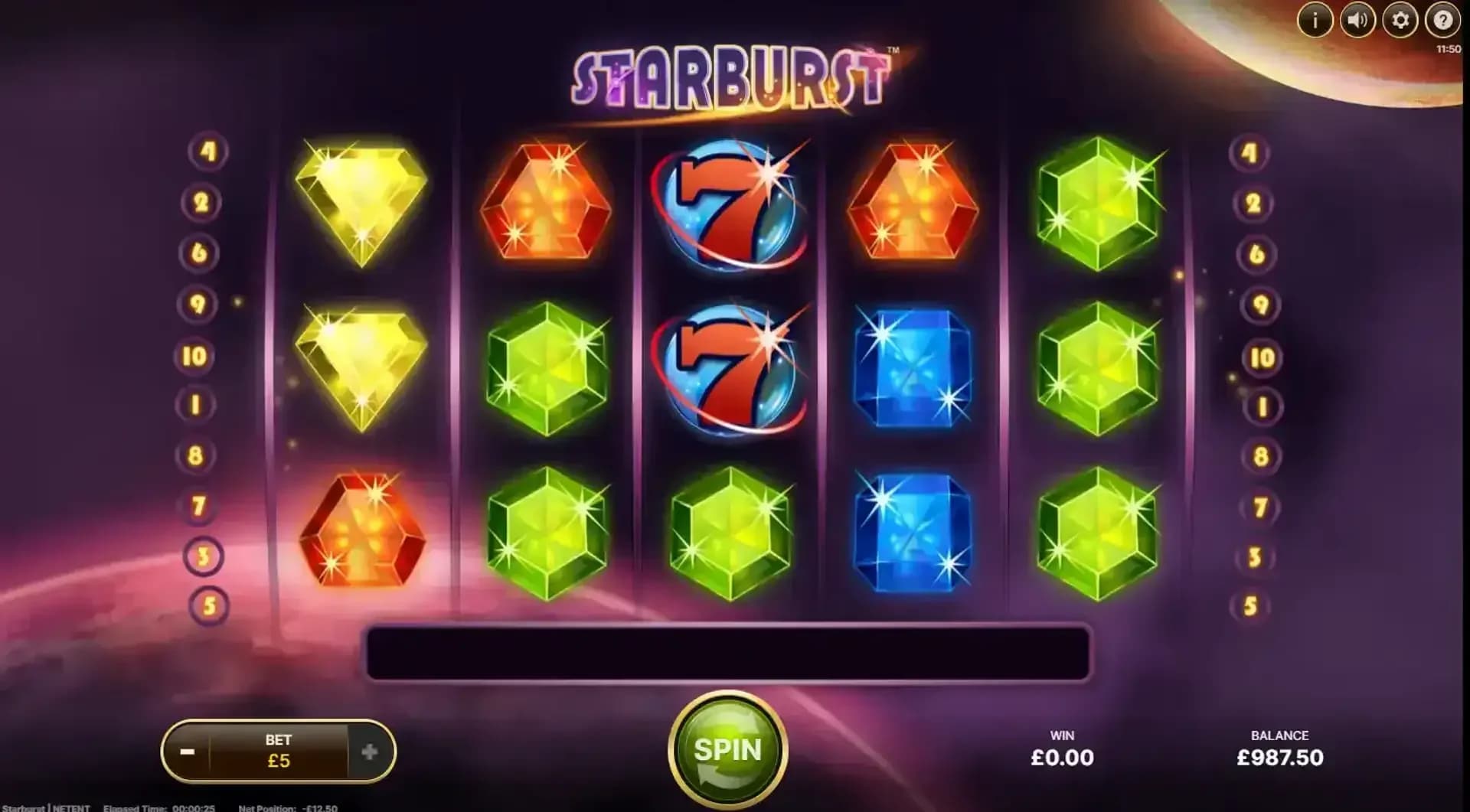
Developed by NetEnt, Starburst runs on a 5-reel, 3-row grid with 10 fixed paylines. Per NetEnt's official game page, the game released on 23 January 2012 with a 96.08% RTP, low volatility, and a 23% hit frequency, and its signature feature is the Starburst Wild – when the colorful jewel-studded star symbol lands on reels 2, 3, or 4, it expands to cover the whole reel, substitutes for other symbols, and triggers a respin, with up to three expanding wilds possible in sequence.
Starburst's continued dominance heading into 2026 has less to do with fresh design and more to do with sheer institutional inertia: it's become the default slot that casino operators attach to welcome bonuses and free spin offers, which means an enormous share of new players encounter it as their very first slot. That first-touch familiarity, combined with genuinely relaxed, low-stress gameplay, has kept it circulating at a scale most newer titles simply can't match.
Here's the feature snapshot before getting into the trade-offs:
| Feature | Detail |
|---|---|
| Grid | 5 reels × 3 rows, 10 fixed paylines (pay both ways) |
| RTP | 96.09% (varies by operator configuration in some markets) |
| Volatility | Low |
| Hit frequency | ~22.6% |
| Special mechanic | Expanding Starburst Wild + respin, up to 3 in a row |
| Max win | Up to 500x stake |
| Bet range | $0.10–$100 |
What that table shows is a game engineered around frequency rather than magnitude – Starburst simply isn't trying to compete on maximum win size, and it doesn't need to, because its entire design philosophy is built around steady, low-stress engagement.
Here's how that trade-off plays out in practice:
Pros
- Very approachable for beginners; frequent small wins
- Pay-both-ways mechanic effectively doubles win chances
- Long track record and near-universal casino availability
- Low volatility keeps sessions running longer on a fixed budget
Cons
- Modest max win compared to modern high-volatility titles
- No traditional free spins bonus round
- Feature set is genuinely simple – little depth for experienced players
- RTP can be adjusted lower by some operators depending on jurisdiction
Starburst's place in slots 2026 is less about competing with newer mechanics and more about being the reliable, low-friction entry point that keeps bringing new players into the ecosystem – a role no amount of flashy multipliers has managed to replace.
Book of Dead: The Slot That Defined an Entire Genre
Book of Dead is Play'n GO's 2016 Egyptian-adventure slot starring explorer Rich Wilde, famous for its single expanding symbol bonus round, and it remains the benchmark against which every other "Book" slot in the industry is measured.
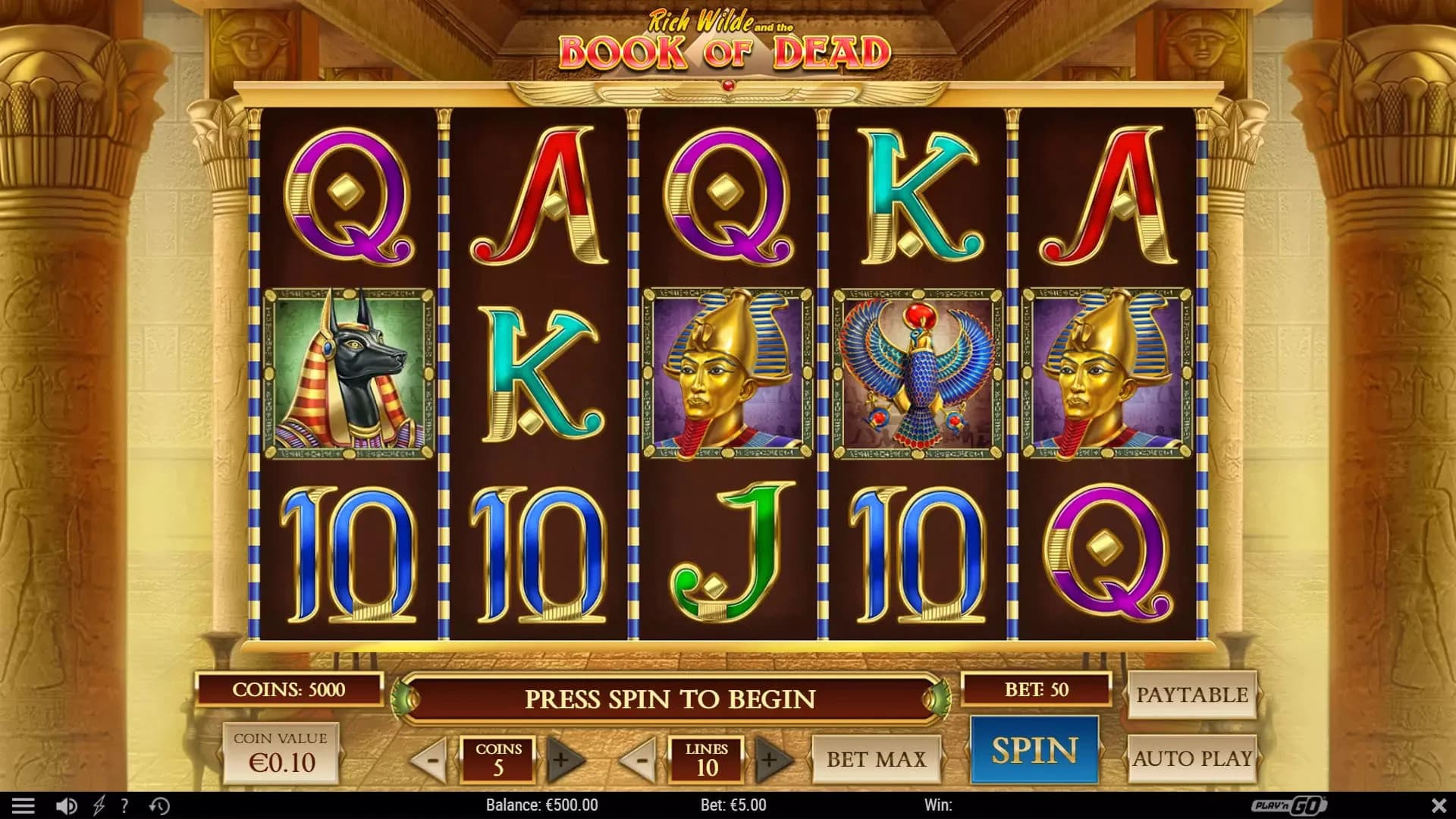
Created by Play'n GO, Book of Dead runs on a 5-reel, 3-row grid with 10 fixed paylines. Its default RTP sits at 96.21%, though Play'n GO's operator-configurable RTP ranges mean some casinos run the game at lower settings, commonly 94.25%. The game's defining mechanic is its expanding symbol bonus: landing three or more Book scatter symbols triggers 10 free spins, and before those spins begin, one symbol is randomly selected to become the round's Expanding Symbol – any time it appears during a free spin, even once, it expands to fill the entire reel.
Book of Dead's relevance in 2026 comes largely from its role as a genre originator. It wasn't the first "explorer in ancient ruins" slot, but it's the one that made the format a genuine category, spawning an entire wave of imitators across the industry (Book of Ra, Book of Cleopatra, Book of Sun, and dozens more). A decade on, it's still frequently the highest-performing title in Play'n GO's catalog and a fixture of welcome bonus offers across regulated markets, which keeps new players discovering it constantly.
Here's a breakdown of what's actually happening mechanically:
| Feature | Detail |
|---|---|
| Grid | 5 reels × 3 rows, 10 fixed paylines |
| RTP | 96.21% (operator-configurable, commonly 94.25% or lower) |
| Volatility | High |
| Free spins trigger | 3+ Book scatter symbols, 10 free spins |
| Special mechanic | Randomly-selected Expanding Symbol active for the entire bonus round |
| Max win | 5,000x stake |
| Bet range | $0.10–$100 |
The core insight from this table is that almost the entire win potential of Book of Dead is compressed into a single mechanic – a full-reel expansion during the bonus round – which is precisely what makes the free spins feature feel so high-stakes compared to the relatively quiet base game.
Weighed out in full:
Pros
- Iconic, genre-defining bonus round with genuine suspense
- Simple 10-line structure that's easy to learn
- Consistent presence in welcome bonus offers
- Massive brand recognition across the industry
Cons
- High volatility means the base game can feel slow between hits
- RTP is frequently configured lower than the 96.21% default
- No retrigger mechanic in the base free spins round
- Visually and mechanically similar to many of its own imitators
Book of Dead's staying power in slots 2026 isn't about doing anything radically new anymore – it's that the format it pioneered still works exactly as well today as it did in 2016, and nothing built since has managed to meaningfully improve on the core formula.
Gonzo's Quest: The Slot That Invented the Mechanic Everyone Else Uses
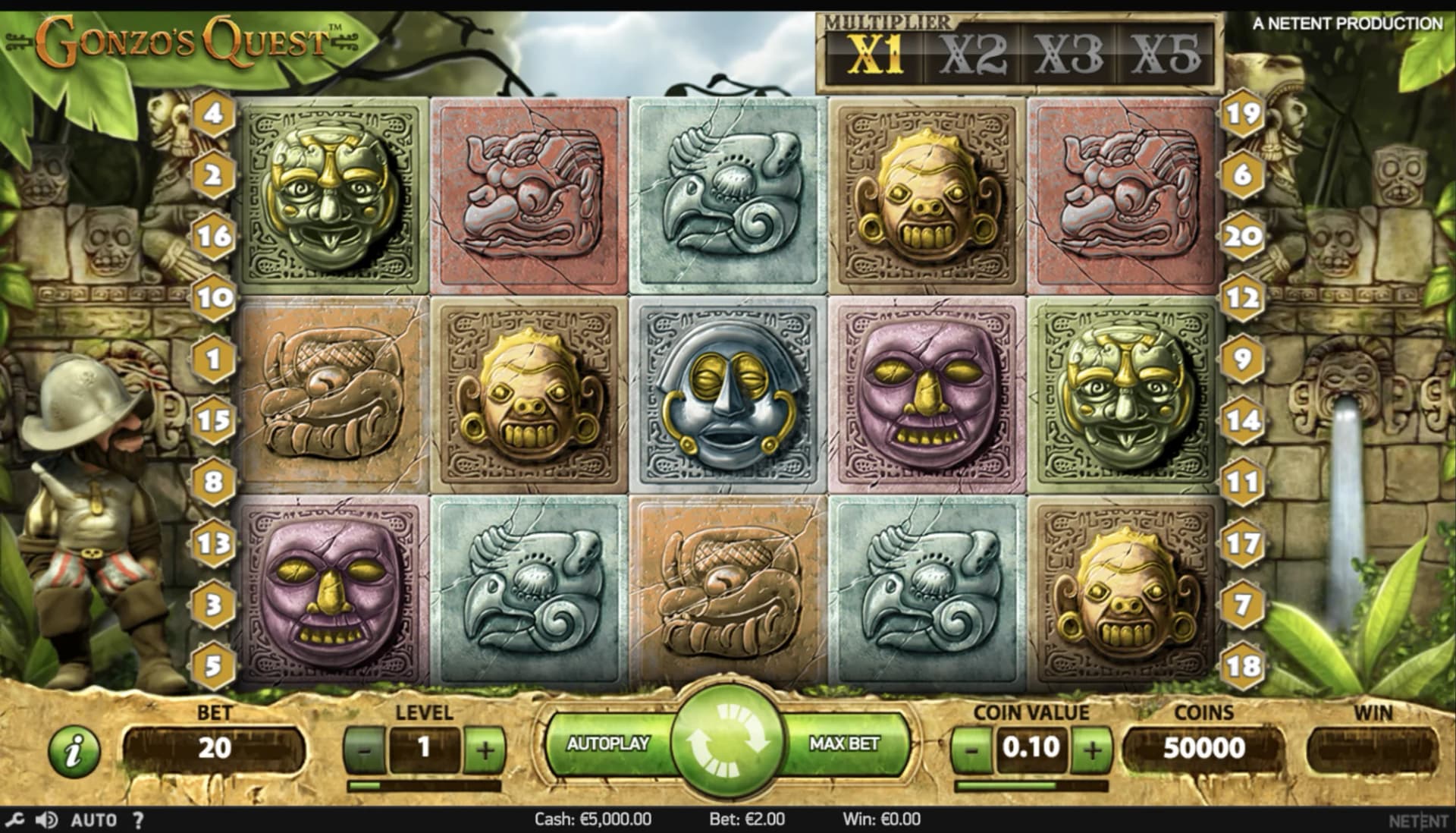
Gonzo's Quest is NetEnt's 2011 Aztec-themed slot that introduced the Avalanche mechanic – falling, exploding symbols replacing traditional spinning reels – a system so influential that nearly every cascading or tumbling slot released since owes something to it.
Developed by NetEnt, Gonzo's Quest plays out on a 5-reel, 3-row grid where symbols fall into place rather than spin, and winning combinations explode to make room for new symbols cascading down from above. According to NetEnt's official game page, each Avalanche action increases the Win Multiplier by 1, up to a maximum of 5x in the base game, and landing the golden Free Fall scatter symbol enough times triggers a bonus round where multipliers can climb even higher.
Its continued relevance heading into 2026 is almost entirely historical, and that's not a knock – Gonzo's Quest is the game that proved cascading reels could work commercially, and the character himself (a cartoonish conquistador who moonwalks after big wins) became one of the earliest examples of a slot mascot with genuine brand recognition. NetEnt has kept the franchise alive with Gonzo's Quest Megaways and, more recently, Gonzo's Quest II: Return to El Dorado, which expands the reel structure dramatically while keeping the core avalanche DNA intact.
Here's the mechanical rundown:
| Feature | Detail |
|---|---|
| Grid | 5 reels × 3 rows, 20 fixed paylines |
| RTP | 95.97% |
| Volatility | Medium to High |
| Special mechanic | Avalanche (cascading symbols), Win Multiplier up to 5x in base game |
| Free spins trigger | 3 Free Fall scatter symbols |
| Free spins multiplier | Up to 15x |
| Max win | 2,500x stake |
| Bet range | $0.20–$50 |
What stands out here is that the multiplier ceiling roughly triples between the base game and the bonus round (5x versus 15x), which is exactly the kind of escalation structure that later cascading slots – including several higher up this list – borrowed and expanded on.
In terms of trade-offs:
Pros
- Historically significant mechanic still holds up today
- Strong, memorable character and visual identity
- Reliable medium-high volatility suited to longer sessions
- Wild substitutes for scatter, improving bonus odds
Cons
- Lower max win ceiling than most modern high-volatility slots
- Dated graphics compared to 2020s-era releases
- No ante bet or bonus buy option
- Free spins round isn't retriggerable in the original version
Gonzo's Quest earns its slots 2026 ranking less through raw payout potential and more through legacy – it's the foundational title that every tumbling-reel slot on this list, in one way or another, is built on top of.
Big Bass Splash: The Fishing Franchise That Won't Stop Reeling Them In
Big Bass Splash is a 2022 release from Reel Kingdom in partnership with Pragmatic Play, part of the sprawling Big Bass series, and it's built around a money-collecting free spins feature that's become one of the most widely copied bonus structures in the industry.

Developed by Reel Kingdom (a studio operating under Pragmatic Play's umbrella), Big Bass Splash runs on a 5-reel, 3-row grid with 10 fixed paylines. According to Pragmatic Play's official game listing, landing three, four, or five scatter symbols triggers the bonus game with 10, 15, or 20 free spins, where money symbols worth up to 5,000x are collected whenever they land alongside the wild fisherman symbol, and every fourth wild collected retriggers the feature with an additional 10 free spins and an escalating multiplier – 2x, then 3x, then 10x.
Its popularity in 2026 comes from being part of one of the most expansive slot franchises currently running – Big Bass Bonanza, Bigger Bass Bonanza, Big Bass Splash, Bigger Bass Splash, and multiple "1000" variants have all launched off the same core money-collect formula. That sheer breadth of related titles keeps the fishing theme in constant rotation across casino lobbies, and the underlying mechanic – collecting cash values during a retriggering free spins round – has proven durable enough to survive dozens of reskins without losing its appeal.
Here's a breakdown of the mechanics:
| Feature | Detail |
|---|---|
| Grid | 5 reels × 3 rows, 10 fixed paylines |
| RTP | 96.71% |
| Volatility | High |
| Free spins trigger | 3–5 scatter symbols, 10–20 free spins |
| Special mechanic | Wild fisherman collects money symbol values; retriggers every 4th wild |
| Multiplier escalation | 2x → 3x → 10x across retriggers |
| Max win | 5,000x stake |
| Bet range | $0.10–$250 |
The structure here reveals a clear design intent: the retrigger-and-multiply loop is built to reward sustained engagement inside a single bonus round, rather than relying on random multiplier drops the way cluster-pay slots do.
Here's how it balances out for players:
Pros
- Above-average base RTP at 96.71%
- Retrigger mechanic rewards sustained free spins play
- Widely available across regulated markets
- Escalating multiplier adds real tension to bonus rounds
Cons
- Bonus round can feel repetitive across the wider Big Bass series
- Base game rarely delivers meaningful wins on its own
- Franchise oversaturation – dozens of near-identical entries
- Bonus buy pricing (100x) is steep for casual bankrolls
Big Bass Splash's place in slots 2026 is a direct result of franchise scale – no single title in the series is doing anything wildly original anymore, but the format's reliability keeps it printing consistent player numbers across an enormous catalog of variants.
Aviator: The Crash Game That Broke the Slot Mold Entirely
Aviator is a 2019 crash game from Spribe – not a traditional slot at all – where players bet on a rising multiplier tied to a plane's flight and must cash out before it "crashes," and its runaway popularity has made it one of the most-played titles in the entire casino category regardless of format.
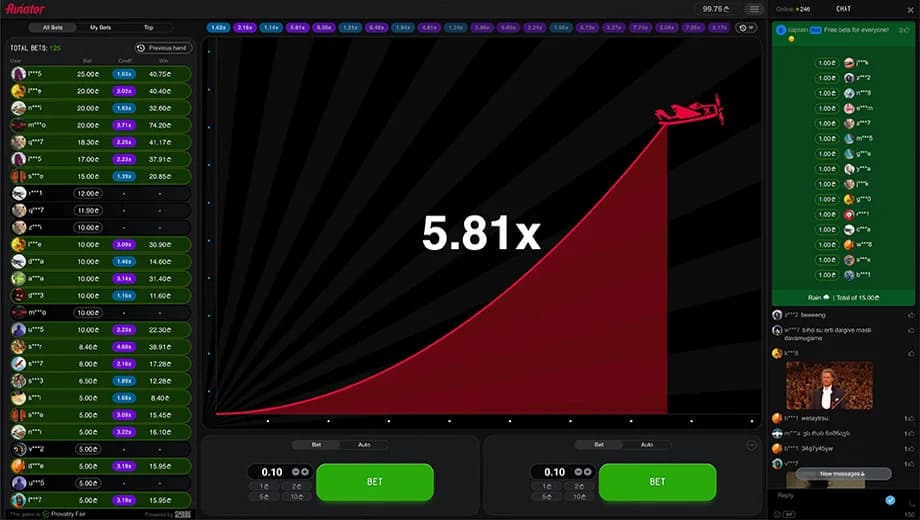
Developed by the Georgian studio Spribe, Aviator uses a provably fair cryptographic system rather than a conventional slot RNG. Each round, a server seed and client seed are hashed together to determine the crash point before betting even opens, and players can independently verify that result using the game's built-in fairness-checking tools. According to multiple independent sources tracking the game, Aviator carries a 97% RTP, and rounds typically last between 8 and 30 seconds – short enough to keep the pace extremely fast.
Aviator's relevance heading into 2026 comes from something genuinely different in this list: it's a social, multiplayer format rather than a solitary spin-and-wait experience. Players can see other users' live bets and cash-outs in the same round, place two simultaneous bets with different cash-out targets, and use auto-cashout settings to remove some of the split-second pressure. That social layer, combined with a genuinely simple core loop, has made it especially dominant in markets like India and Brazil, and its influence has pushed a wave of "crash game" clones from other studios trying to replicate the format.
Here's the mechanical snapshot, understanding that Aviator doesn't follow standard slot structure:
| Feature | Detail |
|---|---|
| Format | Crash game (rising multiplier, not reel-based) |
| RTP | 97% |
| Round length | 8–30 seconds |
| Fairness system | Provably fair (SHA-256 hash of server + client seed) |
| Bet structure | Up to two simultaneous bets per round, with independent cash-out targets |
| Max multiplier | Can exceed 100x in rare rounds |
| Social features | Live bet feed, in-game chat |
What this table makes clear is that Aviator's entire risk profile is player-controlled in a way slots aren't – the game doesn't have a fixed max win or bonus structure; the only variable is how long you're willing to let the multiplier climb before cashing out.
Weighing the format honestly:
Pros
- Genuinely transparent, verifiable fairness system
- Extremely fast round pace suits quick sessions
- Social/multiplayer element adds a layer most slots lack
- Competitive 97% RTP relative to most slots
Cons
- No bonus features, wilds, or free spins – pure multiplier risk
- Easy to chase losses given how short each round is
- Numerous scam "predictor" tools falsely claim to forecast crash points
- Requires split-second decision-making, which some players find stressful
Aviator's inclusion in most slots 2026 popularity rankings is a sign of how blurry the category boundary has become – it isn't a slot in any traditional sense, but its RNG-driven, single-round, high-frequency structure has made it a direct competitor for the same player attention.
Wolf Gold: The Wild West Classic With Three Progressive Jackpots
Wolf Gold is Pragmatic Play's 2017 American wilderness-themed slot, still widely played thanks to its Money Respin feature and three built-in progressive jackpots – Mini, Major, and Mega – that give every spin a small shot at a life-changing hit.

Released by Pragmatic Play in April 2017, Wolf Gold runs on a 5-reel, 3-row grid with 25 fixed paylines. According to Pragmatic Play's official game page, landing six or more money symbols in the base game triggers the Money Respin feature with three respins; each new money symbol that lands resets the respin counter to three, and if all 15 grid positions eventually fill with money symbols, the game awards its Mega Jackpot worth 1,000x the stake.
Wolf Gold's continued presence in slots 2026 rankings comes down to a formula that's aged unusually well: a hold-and-respin jackpot mechanic that's simple to understand, paired with a free spins round where three middle reels merge into a single Giant symbol. It was also one of the earlier Pragmatic Play titles to popularize the "money symbol collection" structure that would later evolve into the far more elaborate systems seen in Big Bass Splash and its many siblings – making Wolf Gold something of a missing link between older jackpot slots and today's cash-collect mechanics.
Here's the breakdown:
| Feature | Detail |
|---|---|
| Grid | 5 reels × 3 rows, 25 fixed paylines |
| RTP | 96.01% |
| Volatility | Medium |
| Money Respin trigger | 6+ money symbols, 3 respins (resets on each new symbol) |
| Jackpots | Mini (30x), Major (100x), Mega (1,000x, full grid) |
| Free spins | 3+ scatters, reels 2–4 merge into a Giant symbol |
| Max win | 2,500x stake |
| Bet range | $0.25–$125 |
The standout detail in that table is the built-in progressive-style jackpot structure inside a fixed-RTP slot – Wolf Gold blends the "chase a big jackpot" appeal of dedicated progressive games with the predictable math of a standard video slot.
Here's the honest trade-off breakdown:
Pros
- Three-tier jackpot system adds genuine excitement to every spin
- Medium volatility keeps bankrolls more stable than high-variance peers
- Straightforward hold-and-respin mechanic, easy to understand
- Strong, consistent availability across almost every casino
Cons
- Free spins round isn't retriggerable, capping bonus potential
- Lower max win ceiling than most 2020s-era releases
- Visually and mechanically dated next to newer Pragmatic Play titles
- Mega Jackpot (full-grid fill) is extremely rare in practice
Wolf Gold's slots 2026 relevance is really about balance – it isn't the highest-volatility or highest-paying title on this list, but its blend of accessible jackpots and steady medium-variance pacing keeps a specific, loyal audience coming back.
Reactoonz: The Cluster-Pay Puzzle Slot Built for Streamers
Reactoonz is Play'n GO's 2017 sci-fi slot set on an unusual 7×7 grid with no traditional paylines at all, built around a charge-meter system that culminates in the giant three-eyed Gargantoon wild – a format that's become a favorite among Twitch and streaming audiences for its visual chaos.
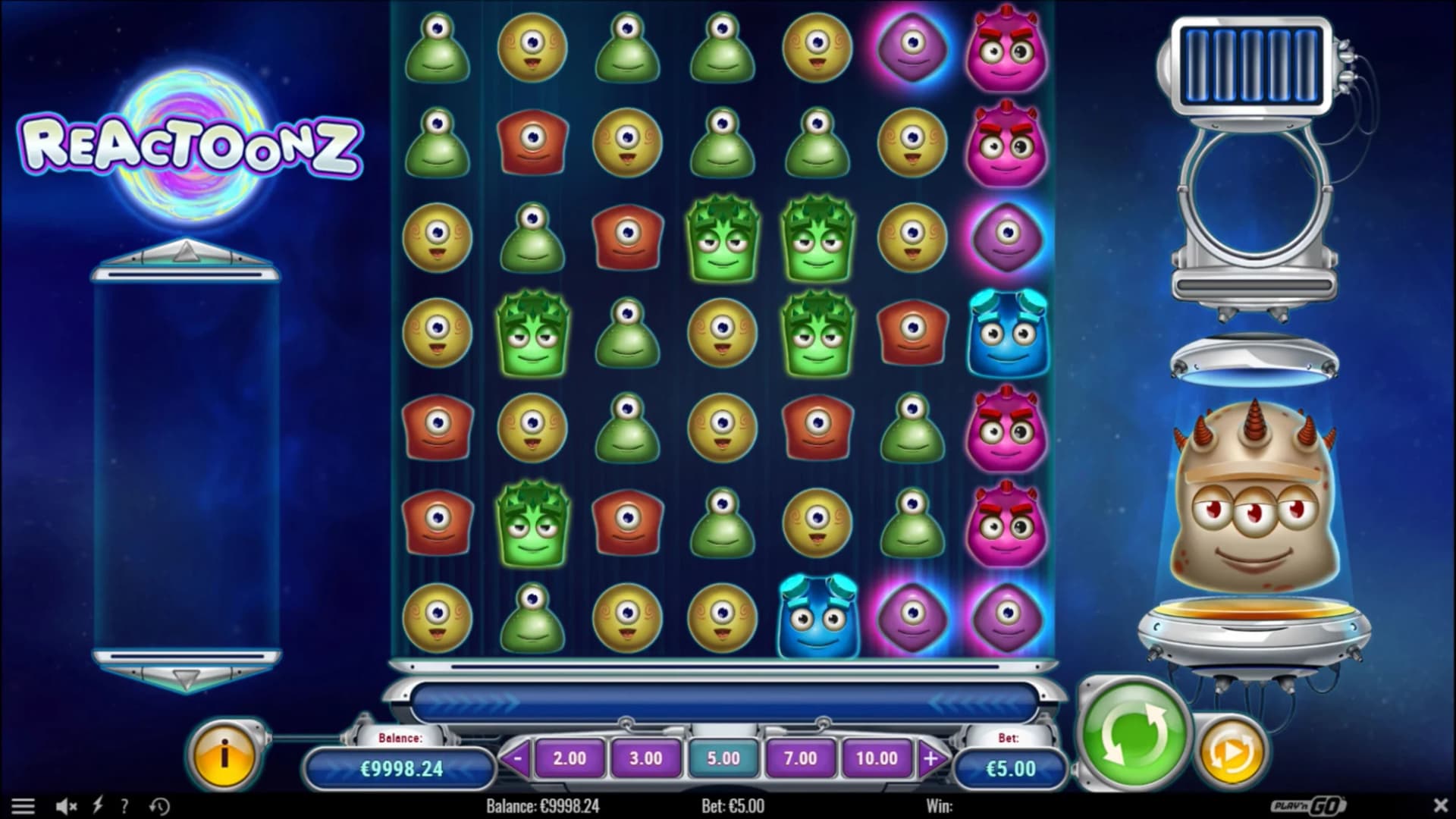
Developed by Play'n GO, Reactoonz abandons reels and paylines entirely in favor of a 7×7 cluster-pay grid, where wins form whenever five or more matching alien symbols connect horizontally or vertically. According to Play'n GO's game data, the default RTP sits at 96.51% with high volatility, and every winning cluster feeds a five-stage Quantum Leap meter; each completed stage unlocks a random Quantum feature (Incision, Implosion, Demolition, or Alteration), and filling all five stages releases Gargantoon himself as a giant 3×3 wild that splits apart across the grid for one final, often massive, cascade.
Reactoonz's popularity heading into 2026 owes a lot to its visual unpredictability – because so much of the action happens through the escalating Quantum features rather than a conventional free spins round, sessions can look wildly different from one to the next, which has made it a particularly popular choice for streamers looking for dramatic, screen-filling moments. Play'n GO has since expanded the format into Reactoonz 2, Gigantoonz, Dr Toonz, and Reactoonz 100, each keeping the core cluster-and-charge structure while pushing the win ceiling higher.
Here's the technical breakdown:
| Feature | Detail |
|---|---|
| Grid | 7 columns × 7 rows, cluster pays (no paylines) |
| Win trigger | 5+ matching symbols connected horizontally/vertically |
| RTP | 96.51% (operator-configurable, sometimes lower) |
| Volatility | High |
| Charge system | Quantum Leap meter, 5 stages, unlocks random features |
| Finale feature | Gargantoon – 3×3 wild that splits into smaller wilds |
| Max win | 4,570x stake |
| Bet range | $0.20–$100 |
The key thing this table reveals is that Reactoonz has no traditional free spins bonus at all – every major win opportunity flows through the same charge-and-release system, which is a genuinely different structure from every other slot on this list.
Here's how that unusual design holds up in practice:
Pros
- Genuinely unique grid-based format with no direct copies
- Gargantoon finale delivers some of the most dramatic visuals in slots
- Strong 96.51% default RTP
- Popular, streamer-friendly unpredictability
Cons
- Steep learning curve for players used to traditional paylines
- No free spins bonus – some players miss that structure
- High volatility means long stretches with minimal action
- Meter progress can reset entirely on a cold session
Reactoonz earns its place in slots 2026 rankings by refusing to follow the standard slot template at all – and in an industry where so many releases share the same underlying tumble-and-multiply DNA, that genuine structural difference is exactly what's kept it relevant nearly a decade after launch.
Money Train 3: The Collector-Crew Slot That Redefined High Volatility
Money Train 3 is Relax Gaming's 2022 sci-fi heist sequel, played on a 5×4 grid with 40 fixed paylines, and it's stayed at the top of slots 2026 rankings thanks to a 100,000x max win ceiling and a bonus round built around a "crew" of collector characters that interact with each other in unpredictable ways.
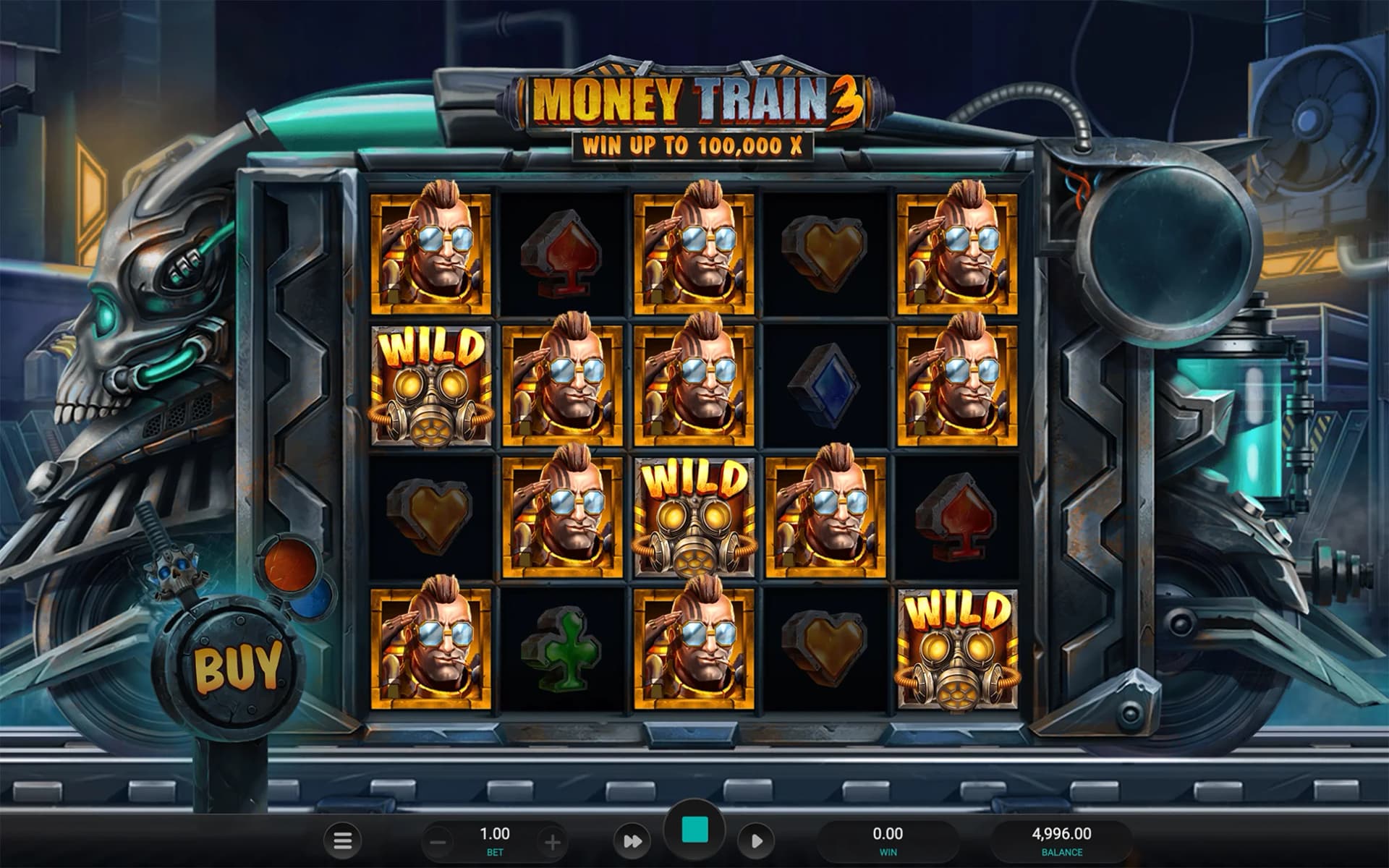
Developed by Relax Gaming, Money Train 3 pushes the studio's Wild West-turned-futuristic franchise to its most technically ambitious point yet. The base game plays out on a 5-reel, 4-row grid with 40 fixed paylines, and a Respin Feature can trigger on any non-winning spin, locking a randomly selected symbol in place for another shot. The real draw, though, is the Money Cart Bonus Round: landing three bonus scatter symbols sends the reels into a persistent-symbol feature populated by named characters – Necromancer, Sniper, Collector, Collector-Payer, and newer additions like the Persistent Shapeshifter and Absorber – each of which interacts with cash values and multipliers already sitting on the grid in a different way.
What's kept it circulating in slots 2026 lobbies is the sheer unpredictability of that bonus round. Unlike a straightforward multiplier-doubling mechanic, Money Train 3's characters can combine, steal from, or amplify each other's values in sequence, which means two bonus rounds with identical starting symbols can end in wildly different payouts. That variance, combined with a legitimately verified 100,000x ceiling, has made it a mainstay among high-volatility feature hunters since its 2022 release.
Before getting into the trade-offs, here's how the mechanics break down.
| Feature | Detail |
|---|---|
| Grid | 5 reels × 4 rows, 40 fixed paylines |
| RTP | 96.10% (up to 96.50% via Bonus Buy) |
| Volatility | Very High |
| Base game feature | Random Respin – a symbol locks and respins on any non-winning spin |
| Bonus trigger | 3+ bonus scatter symbols → Money Cart Bonus Round |
| Bonus characters | Necromancer, Sniper, Collector, Collector-Payer, Persistent Shapeshifter, Absorber |
| Bonus Buy options | 20x (1 spin), 50x (2 spin), 100x (standard), 500x (persistent symbol) |
| Max win | 100,000x stake |
| Bet range | $0.10–$10 |
The number worth sitting with here: the gap between the 100x standard Bonus Buy and the 500x persistent version is the clearest signal of how much weight Relax Gaming puts on a single starting persistent symbol – paying five times more for one guaranteed character shows just how much the bonus round's outcome hinges on which characters appear first.
Pros
- Genuinely enormous 100,000x max win ceiling, independently verified as achievable
- Character-interaction system creates real bonus-to-bonus variance
- Four-tier Bonus Buy menu gives players real entry-point flexibility
- Strong franchise pedigree – regarded as one of the genre's benchmark titles
Cons
- Very high volatility means long, quiet stretches are the norm, not the exception
- Low $10 max bet limits how aggressively high rollers can chase the ceiling
- RTP ranges as low as 94% exist at some operators, well below the 96.10% default
- Learning the full cast of bonus characters takes real time for new players
Money Train 3's slots 2026 relevance comes down to a simple fact: it's the collector-slot genre's reference point, the title other studios' cash-collect and character-bonus systems are still measured against – and unlike a lot of high-volatility releases, its win potential has actually been demonstrated in the wild rather than staying purely theoretical.
RNG, RTP, and Volatility: The Numbers Behind Every Spin
Every certified slot runs on a Random Number Generator that's independently tested for statistical randomness, an RTP figure representing theoretical long-term payback, and a volatility rating describing how payouts are distributed – and none of these numbers are set by the casino you're playing at.
This is the part most players skip past, but it's genuinely the backbone of the entire industry, so it's worth slowing down on.
Random Number Generator (RNG) is the software (or, in land-based machines, sometimes hardware) responsible for producing the outcome of every spin. Regulators like the UK Gambling Commission require that RNG output be "acceptably random" – statistically indistinguishable from true randomness and computationally infeasible to predict without full knowledge of the algorithm and seed. Adaptive behavior – where a game secretly adjusts odds based on prior results or how much money has been taken in – is explicitly banned under UK technical standards.
Return to Player (RTP) is the theoretical percentage of all wagered money a game pays back over a very large number of spins – think millions, not hundreds. A 96% RTP doesn't mean you'll get 96% of your money back in a single session; it's a long-run average calculated through simulation testing before the game is ever released to real players. Regulators set minimum thresholds too: Malta's Gaming Authority currently requires a minimum average RTP for RNG-driven games licensed under its framework, though the exact figure has shifted over the past few years as the regulator adjusted its policy to match land-based requirements.
Volatility (or variance) describes how payouts are distributed rather than how much is paid out overall. A low-volatility slot like Starburst pays smaller amounts more frequently. A high-volatility slot like Book of Dead pays less often but with considerably bigger spikes. Neither is "better" – they just suit different play styles, and this is honestly the single biggest factor in whether a game feels fun to a given player.
Here's how the three concepts relate to each other:
| Concept | What it controls |
|---|---|
| RNG | Fairness and unpredictability of each individual outcome |
| RTP | Long-term payback percentage across millions of spins |
| Volatility | How payouts are shaped and spaced out over time |
Together, these three numbers are essentially the DNA of any slot – and every legitimately licensed title has all three independently verified before it ever reaches a lobby.
How Slots Actually Get Certified Before You Ever See Them
Before a slot goes live, it passes through independent testing laboratories that verify the RNG, confirm the actual RTP matches the advertised figure through millions of simulated spins, and check that the game behaves exactly as its rules describe – and licensees must submit that report to the relevant regulator before release.
This process is a lot more rigorous than most players assume. Testing houses run what's called simulation or output testing – essentially setting a game to auto-play for an enormous number of rounds to confirm the real-world RTP lands within an acceptable range of the theoretical figure published in the game's help screen. The exact number of simulated spins required scales with the game's volatility; a high-variance title needs a much larger sample to produce statistically reliable results than a low-variance one.
Independent labs like Gaming Laboratories International (GLI) publish standardized technical documents that regulators around the world use as a baseline – GLI-11 covers land-based gaming devices, while GLI-19 covers interactive/online gaming systems. Regulators aren't required to adopt these standards wholesale, but a huge number of jurisdictions use them as a starting point rather than writing entirely new technical frameworks from scratch.
Once testing is complete, the operator or software supplier has to submit the test report to their regulator – in the UK, for example, that means uploading results to the Gambling Commission's licensee register before the game is allowed to go live. Any meaningful update to the game's math, RNG, or platform afterward can trigger a requirement for retesting, which is why you'll sometimes see a slot briefly pulled from a lobby when a provider tweaks something behind the scenes.
Slot Mechanics Explained: Why 2026's Games All Feel Similar
Most of the biggest titles in slots 2026 rely on one of three core mechanics – tumbling/cascading reels, expanding symbols, or cluster pays – because these systems create multiple win events per spin without requiring extra paylines, which keeps the pace fast and the perceived win frequency high.

Tumbling reels (sometimes called avalanche or cascading reels) remove winning symbols after a payout and drop new ones into the gaps, allowing a single spin to generate several consecutive wins. This mechanic, pioneered commercially in the early 2010s, is now the backbone of the vast majority of new high-volatility releases.
Expanding symbols work differently – a single symbol, usually revealed during a bonus round, grows to fill an entire reel or a large portion of the grid, instantly multiplying the number of winning combinations on that spin. This is the mechanic that made Book of Dead's bonus round so iconic, and it's been recreated in dozens of similarly themed slots since.
Cluster pays abandon traditional paylines entirely. Instead of matching symbols along a fixed line, wins are formed by groups of matching symbols touching each other anywhere on the grid. This system pairs naturally with tumbling reels, since removing a winning cluster and dropping new symbols in creates a cascading chain reaction that can, in rare cases, chew through the majority of a grid in one sequence.
What's notable is that none of these mechanics are brand new for 2026 – they're refinements of ideas that are, in some cases, well over a decade old. The innovation this year has mostly been in stacking these mechanics together (a cluster-pay game with tumbling reels and an expanding wild feature, for instance) rather than inventing something from scratch.
Mobile vs. Desktop: Where Are People Actually Playing Slots 2026?
The overwhelming majority of slot activity in 2026 happens on mobile devices, which has directly shaped game design toward vertical-friendly layouts, shorter loading times, and simplified UI that still fits a small screen without cutting features.
This shift has been building for years, but it's essentially complete at this point. Game studios now build mobile-first almost by default, and it shows in a few concrete ways worth knowing about if you're comparing titles:
- Reduced file sizes. Newer releases are often optimized to under 50MB so they load quickly on mobile data connections rather than only on Wi-Fi
- Touch-optimized bonus buy and autoplay menus. Interfaces are built around thumb reach rather than mouse precision
- Portrait-mode support. Many 2026 releases now default to a vertical layout rather than forcing landscape orientation
- Faster spin cycles balanced against regulatory minimums. Regulators in several jurisdictions now mandate a minimum time between game cycles (2.5 seconds in the UK, for instance) specifically to prevent mobile play from becoming too rapid-fire
The takeaway here is that mobile isn't just where people play anymore – it's actively shaping how games are designed from the ground up, which is part of why so many of 2026's top titles share a similar look and feel regardless of which studio built them.
Responsible Play: What Every Slots 2026 Player Should Know
Every legitimately licensed operator is required to provide deposit limits, session reminders, and self-exclusion tools, and independent organizations like GamCare and GAMSTOP offer free, confidential support completely separate from any casino operator.
It's easy to treat this section as an afterthought, but it genuinely shouldn't be, especially given how fast-paced and high-volatility a lot of this year's most popular titles are. A few tools are worth knowing about regardless of how often or how little you play:
- Deposit, wager, and session limits – set directly through your account settings on any licensed operator, these cap how much you can spend or how long you can play in a given period
- Self-exclusion schemes – in the UK, GAMSTOP allows a single registration to block access across every UK-licensed gambling site simultaneously, for a minimum of six months
- Blocking software – tools like Gamban work at the device level, blocking access to gambling sites and apps regardless of which country they're licensed in
- Free confidential support – organizations such as GamCare operate 24/7 helplines staffed by trained advisers, entirely independent of any casino operator's own responsible gambling team
None of these tools require you to already have a problem before using them – plenty of players set deposit limits simply as a budgeting habit. The point of all this regulatory infrastructure, ultimately, is the same reason RNG testing and RTP certification exist in the first place: to make sure the numbers behind slots 2026 – and every year before it – actually mean what they say they mean.
Final Take on What's Driving Slots 2026
There's a reason the same handful of names keep showing up at the top of every list this year, and it isn't marketing budgets. It's math that's been stress-tested for over a decade, mechanics that reward fast, frequent engagement, and a regulatory backbone that makes sure the numbers on the screen are actually real. Whether you're drawn to a brand-new cluster-pay release or you're still loyal to a 2012 classic, the games topping the charts in slots 2026 all share the same foundation: verified fairness, transparent math, and pacing built for how people actually play today.
Frequently Asked Questions About Slots 2026
Gates of Olympus by Pragmatic Play currently sits at or near the top of most player-activity rankings, followed closely by Sweet Bonanza and Starburst.
Starburst remains dominant because casino operators consistently use it for welcome bonuses and free spin offers, giving it near-universal first-touch exposure to new players, backed by a low-volatility, high hit-frequency design.
Most top-ranked slots in 2026 sit between 94% and 97% RTP, with Aviator at roughly 97%, Big Bass Splash at 96.71%, and Book of Dead as low as 94.25% depending on operator configuration.
No – Aviator is a crash game built around a rising multiplier rather than reels or paylines, but it's commonly grouped with slots in casino lobbies due to its similar RNG-driven, single-round structure.
Six of the nine most played slots in 2026 use some form of cascading, tumbling, or cluster-pay mechanic, a design lineage that traces back to Gonzo's Quest's 2011 Avalanche system.
Independent testing laboratories run millions of simulated spins to confirm a slot's real-world RTP matches its advertised figure, then submit that report to the relevant gambling regulator before the game can go live.
RTP is the theoretical long-term payback percentage across millions of spins, while volatility describes how those payouts are distributed – frequent and small versus rare and large – and the two are read together, not interchangeably.