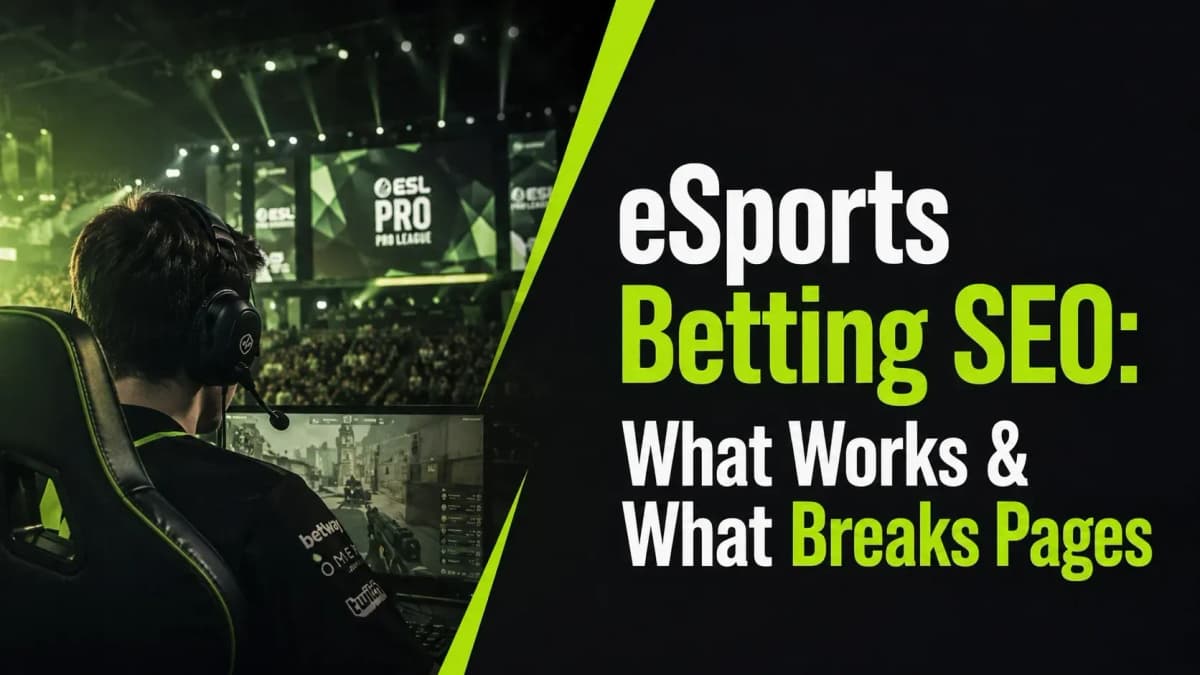
The packed arena in Seoul tells the story: fans wave glow sticks and chant player names as they would at a concert, but the stars sit behind screens with keyboards, not on grass with footballs. This scene captures why eSports betting SEO demands completely different strategies from traditional sportsbooks – and why most operators are getting it wrong.
The eSports Betting Revenue Reality
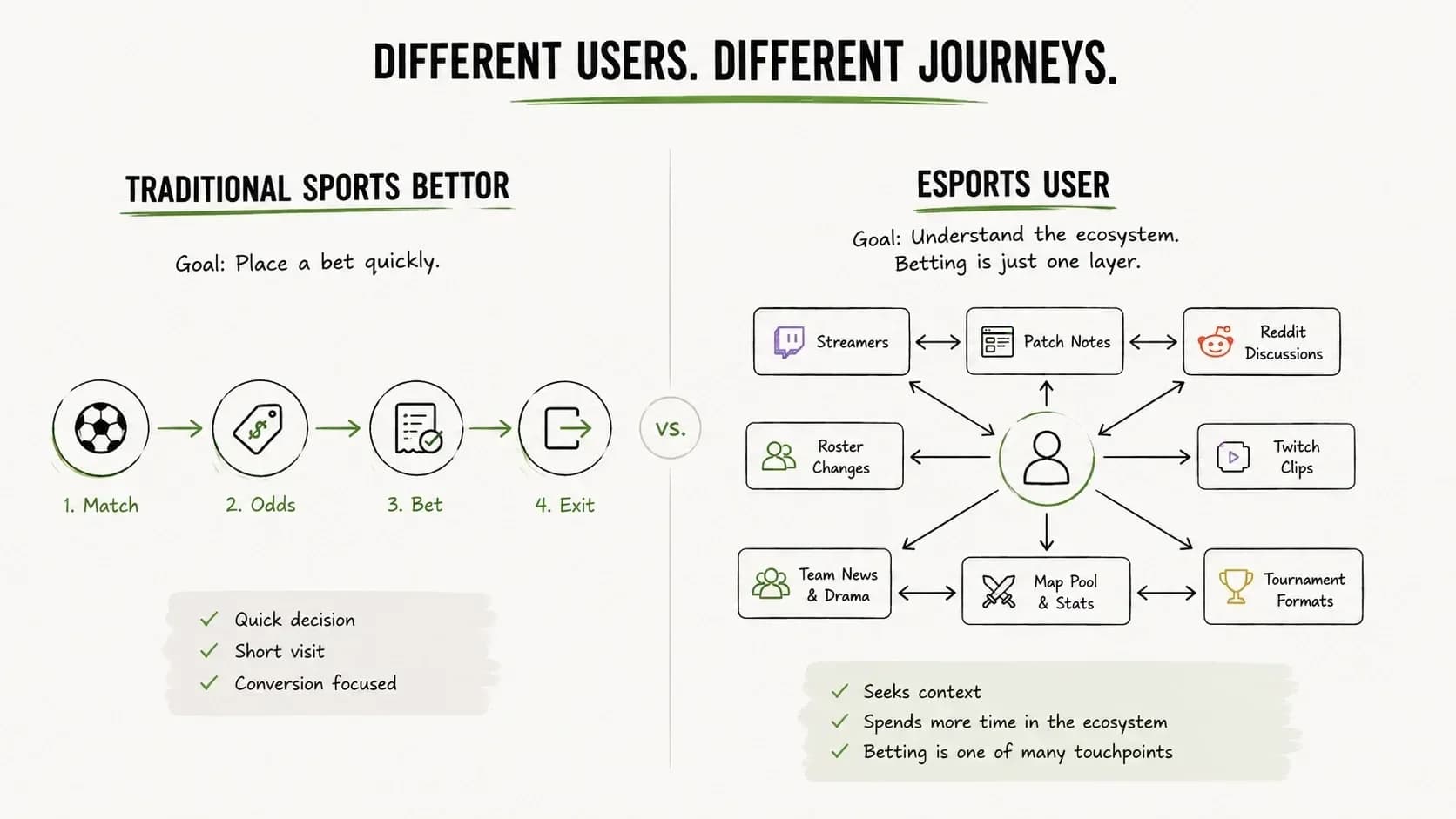
The numbers driving industry attention are undeniable. The global eSports industry generates $5.34 billion in revenue, with viewership reaching approximately 640 million users. Notably, 56% of viewers consume content on mobile devices, creating unique technical demands for betting platforms.
$5.34 billion
Global eSports industry revenue
640 million
Total eSports viewership
56%
Viewers on mobile devices
"ESports fans tend to be much younger than traditional sports bettors. The average eSports bettor is around 24 years old – that is a sharp contrast to sports like baseball, where audiences often skew 50 and above."
— Marek Suchar, Oddin.gg
According to a SQ Magazine study, 52% of eSports fans in the United States are aged 18-34, with an average age of 26. Gen Z comprises 43% of the global eSports betting content audience, fundamentally altering how operators should approach content strategy and SEO.
Why Traditional Betting Templates Fail
The engagement metrics reveal why standard sportsbook approaches miss the mark. Twitch logged one trillion minutes watched, representing a 78% increase from 2019. This audience demonstrates extraordinary brand recall – 90% of viewers can recall at least one non-gaming sponsor.
When Puma partnered with Cloud9 in 2019, social media reaction exceeded traditional sports partnerships by 700%, according to Nielsen research. This level of engagement stems from how eSports audiences consume content: they follow streamers, patches, roster changes, map pools, team drama, Reddit discussions, Twitch clips, and tournament formats. Betting represents just one layer of this ecosystem.
The Age Gap Changes Everything
Speaking to SBC News at the SBC Summit 2025, Marek Suchar, co-founder and managing director of Oddin.gg, emphasised how the 24-year-old average eSports bettor creates longer potential customer lifecycles compared to traditional sports demographics. This younger audience lives on social media platforms like Twitter and YouTube, expecting fast, digital communication styles.
The cultural knowledge gap proves critical. Understanding that "GG" means "good game" represents basic fluency, but most sportsbook templates ignore these linguistic requirements entirely.
Warning
Most eSports audiences don't behave like traditional sportsbook users. They behave much closer to gaming communities, requiring content that serves multiple consumption patterns simultaneously.
Structural Problems in Current eSports Betting Pages
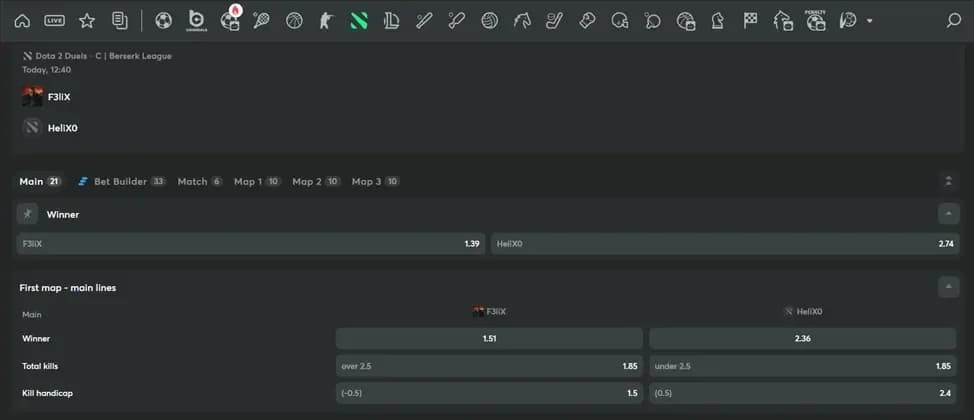
Traditional sportsbook hierarchy leads with market breadth – 40 options on a single match, sorted by type. This approach assumes users understand the sport and format. eSports bettors often don't. A "map winner" market on a CS2 page means nothing to someone unfamiliar with match structures.
Navigation Hierarchy Mismatches
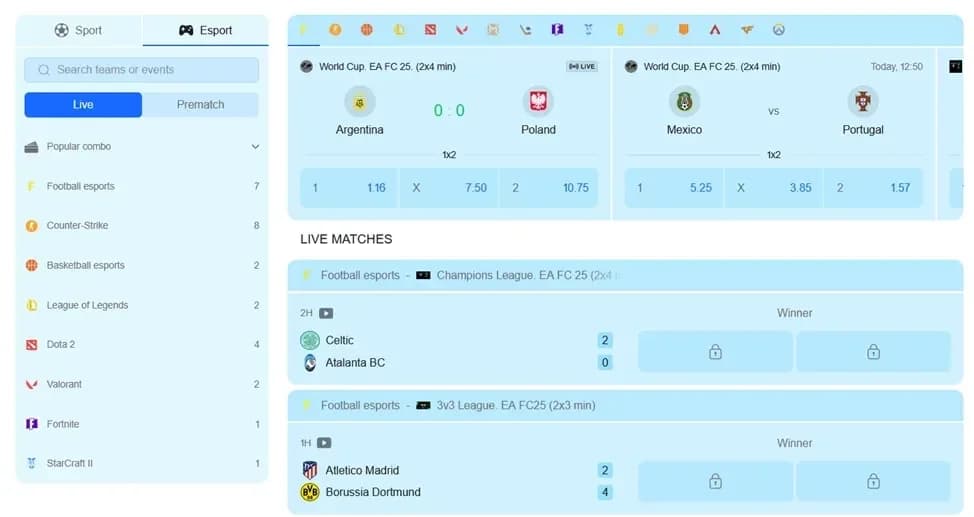
Traditional sportsbooks organise by league first, match second. eSports bettors search by game title first (Valorant, Dota 2, CS2), then tournament, then match. This fundamental difference breaks user journeys from the first click.
The following table illustrates the structural differences between effective and ineffective eSports betting content approaches:
| Structural Element | Sportsbook Template | eSports Copied Template | eSports Correct Template |
|---|---|---|---|
| Primary Navigation | Sport → League → Match works because leagues are universally recognised | Game title placed inside a generic eSports tab, tournament names unfamiliar to casual visitors | Game title at the top level (CS2, Valorant, Dota 2), each with its own navigation branch |
| Market Presentation | Full market list upfront, as football bettors know what 1X2 and BTTS mean | 30+ markets listed without explanation – map winner, first blood, round handicap presented as self-evident | Core markets appear first with a one-line format note, advanced markets are placed inside an expand option |
| Context for Markets | Sport format is universal knowledge, so no explanation is needed | Match format varies by game and tournament – BO1, BO3, BO5 affect every market but appear nowhere on the page | Format displayed next to the match header (Best of 3, 2 maps to win) before any market is shown |
| New User Support | Minimal, as traditional sports bettors don't need market definitions | None, as structure assumes familiarity that most eSports visitors don't have | Tips on unfamiliar markets, brief tournament format explanation, glossary accessible without leaving the page |
| Search Behaviour Assumed | User knows the league name and searches for it | Same assumption applied, but fails for eSports where tournament names change every season | User knows the game, not necessarily the tournament, so search and navigation should reflect this |
| Content Depth per Match | Extensive: decades of data, historical odds, team stats | Team names, odds, and little else | Game-specific stats, including recent map performance, agent/hero picks, head-to-head on specific maps |
Warning
Listing 30+ markets without context doesn't inform eSports users – it pushes them away from the conversion point entirely.
Search Intent Complexity in eSports Betting
The user searching "bet on Premier League tonight" demonstrates transactional intent – they know what they want and need a market with competitive prices. eSports betting search intent operates differently.
Information-First Behaviour Patterns
"CS2 Major betting" or "Valorant Champions odds" searches often originate from users mid-research. They're following tournaments, tracking teams, and attempting to understand how specific formats affect outcomes. These users want context before markets.
eSports bettors want context before they want a market. A page that leads with odds and nothing else answers the wrong question.
The mismatch creates user journeys that end elsewhere. Users arrive seeking information to make confident decisions, find only odds tables and deposit buttons, then research on other platforms – often placing stakes wherever their research concludes, not where it began.
Search Intent Breakdown by Query Type
| Search Query | Likely Intent | What Most Pages Serve | What the Page Should Serve |
|---|---|---|---|
| CS2 Major betting | Research – following the tournament, understanding the field | Odds table and deposit prompt | Tournament format, group stage context, then markets |
| Valorant Champions 2025 odds | Mixed – aware of the event, evaluating teams before betting | Match odds with no team context | Recent map stats, roster changes, head-to-head, then odds |
| Bet on Dota 2 today | Transactional – ready to place a stake, needs a market | Odds table, which is a correct match | Correct, but patch notes or meta context adds conversion value |
| T1 vs NaVi prediction | Informational – the user wants analysis before committing | Often nothing, as no page exists for this query | Head-to-head data, recent form, map pool comparison, market link |
| eSports live betting | Exploratory – new to eSports betting, testing the market | Generic live odds feed | Game filter, format explainer, glossary of live market types |
| What is map winner bet | Purely informational | No page, or a generic FAQ with no market link | Definition, example, direct link to a live map winner market |
Content Strategy Balance
Treat betting pages as both information resources and conversion points. The most successful eSports betting content combines educational depth with clear paths to action.
Technical SEO Requirements for eSports Betting
Research suggests the worldwide eSports market could reach $1.87 billion in revenue, driven by audiences that follow players, teams, and tournaments daily. SEO success in this vertical requires specific metrics focus:
Search Traffic Analysis
Monitor how users discover content through Google, identifying which keywords drive qualified traffic to betting pages.
Game-Specific Keyword Rankings
Track visibility for team names, player names, and game titles. Missing rankings for core entities indicates fundamental SEO gaps.
Quality Backlink Development
Secure links from gaming blogs, news sites, eSports directories, and social platforms to build topical authority.
Engagement Metric Optimisation
Analyse visitor behaviour: session duration, click patterns, and sharing activity reveal content effectiveness.
Recommended analytical tools for comprehensive performance measurement include Ahrefs, Surfer SEO, and Semrush for gathering real insights about website performance and audience behaviour.
Note
CS2, Dota 2, League of Legends, and Valorant drive the most search volume for eSports betting content. This order remains consistent, though numbers spike around major events like The International and CS2 Majors.
How to Measure eSports Betting SEO Performance
Monitor how users discover content through Google, identifying which keywords drive qualified traffic to betting pages.
Track visibility for team names, player names, and game titles. Missing rankings for core entities indicates fundamental SEO gaps.
Secure links from gaming blogs, news sites, eSports directories, and social platforms to build topical authority.
Analyse visitor behaviour: session duration, click patterns, and sharing activity reveal content effectiveness.
Mobile-First Requirements
With 56% of eSports viewers consuming content on mobile devices, technical optimisation becomes non-negotiable. Most eSports traffic occurs on mobile, with significant live betting activity happening mid-match. Slow page loads, broken odds tables, or poor mobile navigation lose users at critical conversion moments.
Critical Mobile Performance
Mobile optimisation isn't optional in eSports betting SEO – it's the primary user experience that determines success or failure.
Strategic Content Approaches That Work
The most effective eSports betting content types combine information density with clear conversion paths:
- Match previews with actual analysis beyond basic lineup summaries
- Tournament hub pages that consolidate formats, schedules, and odds in single locations
- Game-specific statistics including map performance and head-to-head data
- Format explanations that help users understand tournament structures
- Live betting guides with game filters and market type glossaries
Content Integration Strategy
The common thread is eSports betting content that connects information to decisions in the same place, rather than splitting research and conversion across separate pages.
Dynamic Content Challenges
eSports audiences react rapidly to roster changes, patches, tournament formats, and streamer influence. Search behaviour and content relevance shift much faster than traditional sports betting, requiring agile content strategies and frequent updates.
Tournament names change seasonally, patch updates alter gameplay dynamics, and roster movements create immediate shifts in search volume. Operators must build content systems that accommodate these rapid changes while maintaining SEO authority.
Industry Impact and Compliance Considerations
The fundamental mismatch between traditional sportsbook SEO strategies and eSports audience behaviour creates significant market opportunities for operators who adapt correctly. The websites that perform best combine betting functionality with informational depth and clear navigation, and game-specific context.
eSports SEO success depends not only on odds and keywords, but on how effectively pages match actual information consumption patterns. Operators continuing to apply traditional sportsbook templates to eSports content will likely struggle with both user engagement and search rankings as the market matures and competition intensifies.
The younger demographic profile of eSports bettors, combined with their longer potential customer lifecycles, makes proper content strategy implementation particularly valuable for long-term business development. However, this requires fundamental changes to content creation, site architecture, and conversion optimisation approaches that many operators have not yet undertaken.
Copying standard sportsbook layouts without considering user readiness to bet. Most websites apply transactional templates to eSports topics while ignoring game-specific language, publishing hollow match previews, and treating eSports like traditional sports.
CS2, Dota 2, League of Legends, and Valorant generate the highest search volumes. This ranking holds consistently, though numbers spike significantly around major events like The International and CS2 Majors before returning to baseline levels.
Absolutely critical. Most eSports traffic comes from mobile devices, with substantial live betting occurring mid-match. Any technical issues – slow loading, broken odds tables, poor navigation – lose users at exactly the moment they intended to act.
Traditional layouts prioritise odds and conversion over context. eSports users typically need information about tournament formats, map structures, team form, and patch-related changes before placing bets. Pages ignoring this behaviour pattern struggle with both engagement and search rankings.
eSports audiences respond quickly to roster changes, patches, tournament formats, and streamer influence. This creates much more volatile search behaviour and content relevance cycles compared to traditional sports betting markets.
According to We-Right Blog.