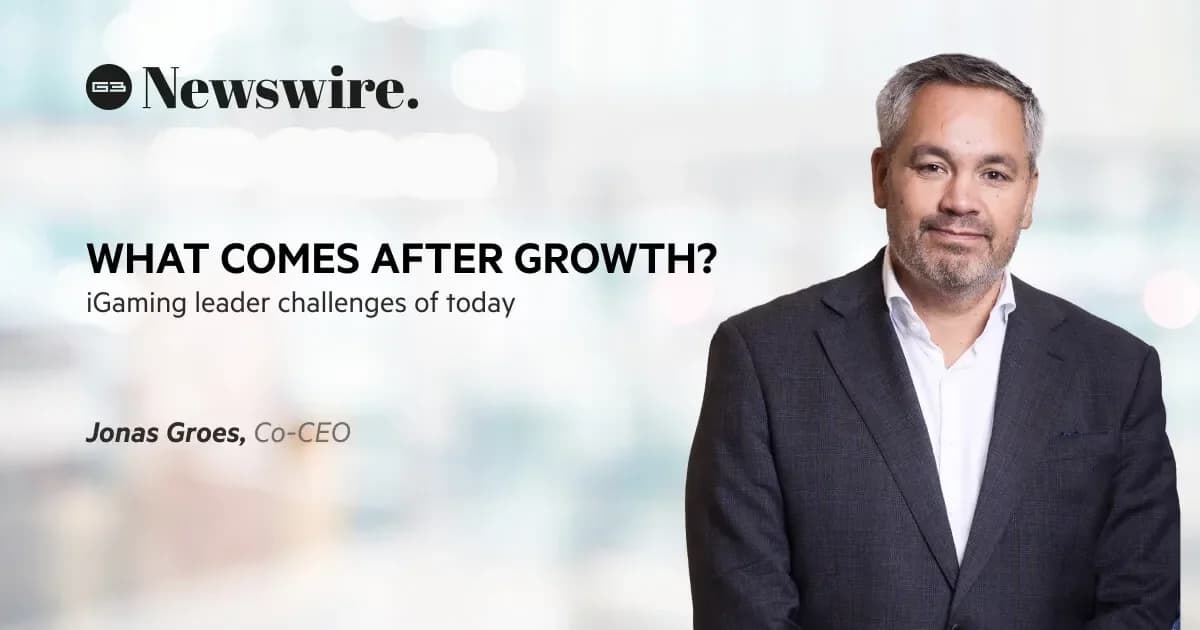
The iGaming sector's explosive growth phase is giving way to a more nuanced challenge: how operators and suppliers transition from rapid expansion to sustainable scaling. EveryMatrix co-CEO Jonas Groes recently articulated this shift during an appearance on the G3 Podcast, outlining how his company is building the operational discipline required for long-term success.
"The challenge facing today's iGaming leaders is no longer growth alone, but building the structure, discipline and clarity required to scale sustainably in an increasingly complex and competitive market."
— Jonas Groes, Co-CEO of EveryMatrix
The distinction between growth and scaling has become increasingly relevant as markets mature and competition intensifies. While growth typically focuses on expanding revenue and market presence, scaling requires building systems and structures that can support sustained expansion without proportional increases in operational complexity or costs.
Leadership Structure and Decision-Making
EveryMatrix operates under an unusual co-CEO structure, with Groes sharing leadership responsibilities with his brother. This arrangement, while potentially complex on paper, provides the company with complementary skill sets and perspectives. Groes focuses primarily on commercial operations, client relationships and organizational development, while his brother handles product development and software engineering.
"Trust is the foundation and that part is very strong for us. We know each other well and operate from that platform, which makes decision-making easier."
— Jonas Groes, Co-CEO of EveryMatrix
The fluid nature of their responsibilities allows for rapid decision-making while maintaining clear areas of expertise. This structure becomes particularly valuable in a fast-moving industry where time to market can determine competitive advantage.
Groes brings a structured approach from his background at EY, which he describes as fundamentally different from the product-driven, agile environment at EveryMatrix. The challenge lies in implementing appropriate governance without sacrificing the speed of execution that characterises successful technology companies.
Co-CEO Structure Benefits
Dual leadership arrangements in iGaming companies can provide complementary expertise during rapid scaling phases. The model works best when responsibilities are clearly divided by functional areas rather than shared decision-making authority, reducing potential conflicts while maximizing specialized knowledge application.
Private Ownership Advantages
EveryMatrix has remained privately held for nearly two decades, a structure that provides specific advantages in pursuing long-term scaling strategies. Private ownership eliminates the quarterly reporting pressures that publicly listed companies face, allowing for more deliberate investment decisions and strategic planning.
"It gives you the ability to think longer term and avoid some of the short-term pressures that come with being publicly listed. That doesn't mean there's no pressure – there's always pressure to perform – but it does allow for more deliberate decision-making around where to invest and how to build the business over time."
— Jonas Groes, Co-CEO of EveryMatrix
This flexibility becomes particularly important when balancing product development with client customisation. The company must avoid over-customising solutions to the point where scalability becomes compromised, while still meeting the specific needs of major accounts.
20 years
EveryMatrix Private Ownership Duration
2030
Target Year for Top-Tier Global Status
Strategic Market Positioning
The company's geographic strategy reflects a disciplined approach to expansion. Europe remains EveryMatrix's primary foundation with continued growth potential, while Africa and Latin America represent longer-term opportunities from smaller current bases. This tiered approach allows the company to maintain focus on established markets while developing capabilities for emerging opportunities.
Acquisitions have played a significant role alongside internal development in EveryMatrix's growth strategy. Groes indicates this approach will continue as the company seeks to shape industry consolidation rather than simply respond to it, similar to how EveryMatrix has partnered with other operators to expand into new markets.
"We already are, and I expect that to continue. Acquisitions have been an important part of our growth alongside internal development. The ambition is to continue growing and to be one of the companies shaping the industry, rather than being shaped by it."
— Jonas Groes, Co-CEO of EveryMatrix
Geographic Expansion Strategy
Successful iGaming companies often employ tiered geographic strategies, maintaining strong performance in established markets while gradually building capabilities in emerging regions. This approach allows operators to leverage proven systems and expertise before committing significant resources to unproven territories.
Product and Client Focus
The company's scaling strategy emphasises strengthening relationships with existing clients rather than pursuing aggressive customer acquisition. This approach focuses on maximising value from current partnerships while building more structured engagement processes.
"There are opportunities to be more structured in how we engage with key clients, how we manage those relationships and how we capture their perspective."
— Jonas Groes, Co-CEO of EveryMatrix
The balance between product strength and market positioning becomes crucial as the company scales. While EveryMatrix maintains confidence in its technology platform, Groes identifies client communication and relationship management as key areas for structural improvement.
Pros
- Deeper revenue per existing client relationship
- More predictable revenue streams from established partnerships
- Lower acquisition costs compared to new customer pursuit
- Enhanced product development feedback from engaged clients
Cons
- Potential over-dependence on limited client base
- Risk of excessive customization reducing scalability
- Slower overall market share expansion
- Vulnerability to major client departures
Long-Term Vision and Implementation
EveryMatrix has established a 2030 ambition to become a top-tier global technology provider. For Groes, this translates into working with the industry's leading clients where the most complex challenges and development opportunities exist.
"For me, it's about working with the best clients in the industry. That's where the most interesting challenges are and where real development happens. It's not just about scale, but about partnering with companies that have the ambition and capability to grow, because that's how we grow as well."
— Jonas Groes, Co-CEO of EveryMatrix
Translating this long-term vision into operational reality requires organizational alignment and clarity around daily decision-making. The company is working to ensure all team members understand and contribute to the 2030 objectives.
Technology Integration and Efficiency
Looking ahead to the next 12 months, EveryMatrix is focusing on operational efficiency improvements, particularly in client integrations and onboarding processes. The company is exploring how artificial intelligence technologies can streamline these processes and support more efficient scaling, building on insights from iGaming talent management experts who emphasize AI literacy as crucial for industry success.
The emphasis on structured partnerships and improved client management reflects a broader industry trend toward operational sophistication. As the iGaming sector matures, successful companies must balance innovation with disciplined execution and sustainable growth practices.
How to Implement Scaling-Focused Operational Improvements
Audit Current Integration Processes
Evaluate existing client onboarding workflows to identify bottlenecks and inefficiencies that could slow scaling efforts.
Implement AI-Assisted Streamlining
Deploy artificial intelligence technologies to automate routine integration tasks and reduce manual intervention requirements.
Develop Structured Client Management
Create systematic approaches for engaging key clients and capturing their feedback for product development priorities.
Balance Customization with Standardization
Establish guidelines for when to accommodate client-specific requests versus maintaining scalable standard solutions.
Strategic Implications for Industry Scaling
The approach outlined by EveryMatrix reflects broader challenges facing iGaming companies as they navigate the transition from growth-focused strategies to sustainable scaling models. The emphasis on operational discipline, strategic client selection, and long-term vision setting provides insights into how established players are positioning themselves for the next phase of industry development.
Groes' perspective on balancing agility with structure highlights a critical tension many technology companies face. The ability to maintain rapid decision-making while implementing appropriate governance frameworks becomes increasingly important as organisations scale and face more complex regulatory and competitive environments.
The focus on premium client partnerships rather than broad market coverage suggests a shift toward value-based growth strategies. This approach may signal broader industry maturation, where sustainable profit margins and operational efficiency take precedence over pure revenue expansion.
While the source doesn't specify exact metrics, operators should monitor revenue per client relationship, integration completion times, and operational efficiency ratios. The focus on client value over acquisition suggests measuring partnership depth rather than just customer volume.
The article suggests establishing clear guidelines for customization decisions and focusing on structured client engagement processes. Companies must balance major account needs against maintaining scalable standard solutions that support long-term growth objectives.
The source does not disclose specific regulatory requirements for AI integration in iGaming operations. Operators should evaluate data protection, algorithmic transparency, and jurisdictional AI regulations before implementing automation technologies in client-facing processes.
The article indicates private ownership enables longer-term thinking and strategic investment decisions without quarterly reporting pressure. However, the source doesn't detail specific capital requirements or funding capabilities needed for major scaling programs.
According to EveryMatrix.