Loading...
South Africa's provincial licensing system offers operators a strategic entry point into Africa's most developed gambling market through a structured 7-step process.

Mar 3, 2026 · 15 min read

South Africa's gambling market presents a unique regulatory landscape that has attracted international operators seeking entry into Africa's most developed iGaming jurisdiction. Unlike centralized licensing systems, South Africa operates through nine Provincial Licensing Authorities, creating both opportunities and complexities for operators planning market entry in 2026.
The country's two-tier regulatory structure combines national oversight from the National Gambling Board with provincial licensing authority, requiring operators to navigate specific provincial requirements while maintaining compliance with federal standards. This system creates a distinctive approach where a single provincial licence functions as a nationwide operating permit.
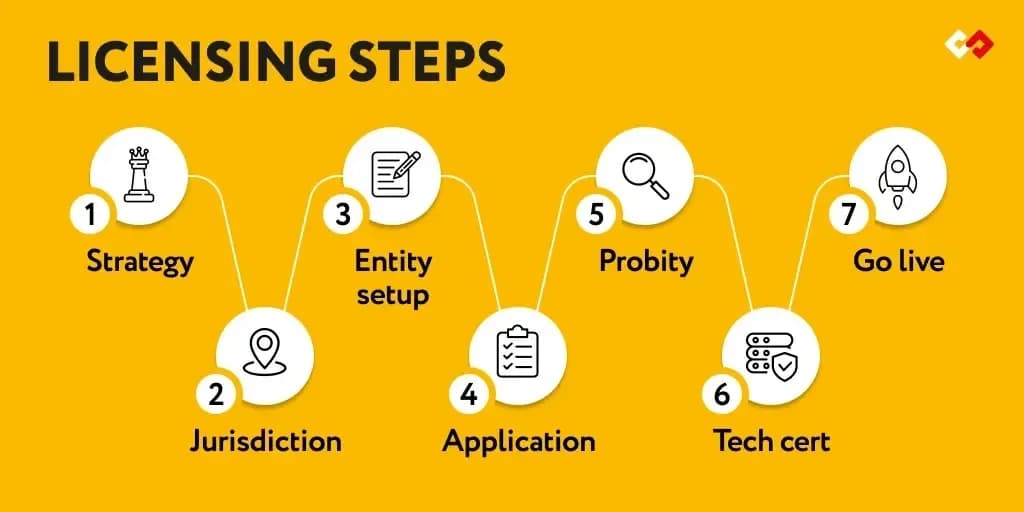
The regulatory architecture operates on dual levels, with the National Gambling Board setting overarching standards under national legislation while nine Provincial Licensing Authorities serve as the actual gatekeepers for market entry.
At the national level, the National Gambling Board establishes norms, standards, and operational limits across the industry but does not directly issue operator licences. This federal oversight ensures consistency in consumer protection and anti-money laundering standards while allowing provincial flexibility in implementation.
Provincial Licensing Authorities interpret national law and issue the licences that permit gambling operations within South African territory. This decentralized approach means operators must select their preferred provincial jurisdiction based on regulatory efficiency, transparency, and commercial considerations.
South African provinces recognize several distinct licence types, each governing specific gambling activities. Notably, there is no active 'Online Casino' licence category available to operators.
Bookmaker (Betting) Licence permits fixed-odds betting on sports, horse racing, and other events, serving as the primary legal vehicle for online betting products. This represents the only viable route for digital operators seeking to offer casino-style games within a legal framework.
Casino Licence exclusively covers land-based premises in hotels and resorts and cannot be utilized for iGaming operations. Totalisator Licence authorizes pool-based betting, primarily focused on horse racing markets.
Limited Payout Machine and Bingo licences restrict operations to physical gaming machines in pubs and land-based bingo halls. While Interactive Gambling Licence exists in national law definitions, this specific online casino licence has never been implemented, leaving the Bookmaker route as the only legal pathway for digital entry.
Licence Limitation Alert
There is no active 'Online Casino' licence category available to operators in South Africa. The Bookmaker (Betting) Licence serves as the primary legal vehicle for online betting products, representing the only viable route for digital operators seeking to offer casino-style games within a legal framework.
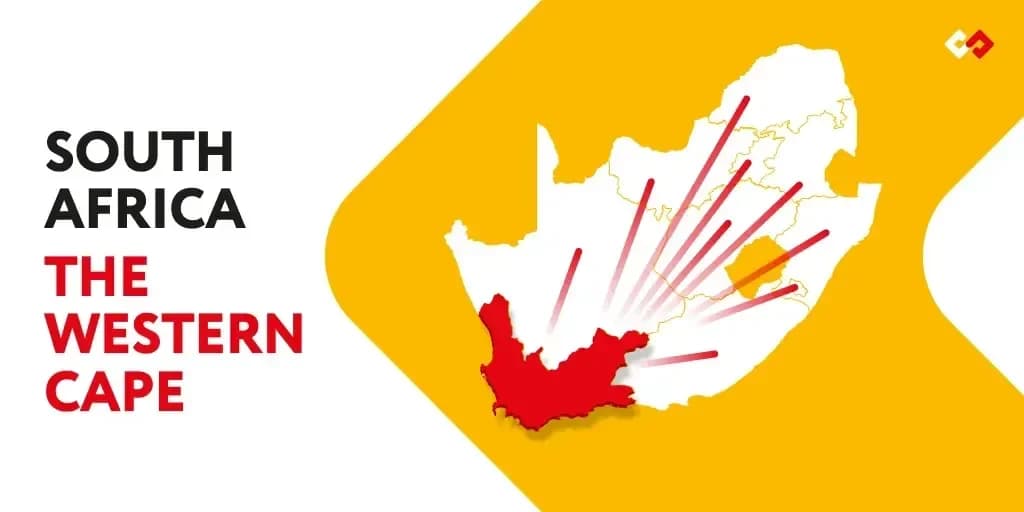
Given that operators can serve nationwide players from any single provincial licence, jurisdiction selection becomes a critical strategic decision. Market analysis shows three provinces dominate commercial betting operations.
The Western Cape Gambling and Racing Board has established itself as the industry standard for international entities seeking regulatory transparency. Its itemized legislative framework and clear documentation requirements make it the preferred choice for foreign compliance teams entering the South African market.
The Western Cape offers several distinct advantages: applications are accepted on a rolling basis rather than rigid tender windows, eliminating retail premises requirements by defining required premises simply as 'where the business is managed', and maintaining the most rigorous documentation standards that effectively stress-test compliance frameworks for other jurisdictions.
Gauteng remains critical for operators pursuing retail-led or hybrid strategies, given its position as the country's economic heartland with massive foot traffic in Johannesburg and Pretoria. KwaZulu-Natal provides a robust secondary market through the KwaZulu-Natal Gaming and Betting Board for operators seeking to diversify beyond primary commercial hubs.
The Western Cape's official fee structure for 2025/2026 provides baseline financial modeling parameters, distinguishing between administrative costs and required capital reserves.
€755
Bookmaker Application Fee
€151
Annual Licence Fee
€604
Investigation Fee (Annual) - Note: These figures appear inconsistent with later statements in the article (€605 application fees mentioned later)
Additional licence categories include premises approvals at €755 application fees, totalisator operations requiring €15,103 application fees, and key employee licences at €3,070 application costs. Exchange calculations assume ZAR 20 equals €1 for planning purposes.
Casino operator licences for land-based operations require €30,205 application fees with €15,103 annual licence fees, plus €453 per table and €302 per slot machine in investigation fees. Manufacturer and distributor licences cost €755 for applications with €302 annual fees.
| Licence Type | Application Fee | Annual Licence Fee | Investigation Fee (Annual) |
|---|---|---|---|
| Bookmaker (Online Vehicle) | €755 | €151 | €604 |
| Bookmaker Premises | €755 | €31 | €75 |
| Casino Operator (Land-Based) | €30,205 | €15,103 | €453/table + €302/slot |
| Totalisator Operator | €15,103 | €302 | €7,552 |
| Totalisator Premises | €755 | €31 | €75 |
| Manufacturer / Distributor | €755 | €302 | €1,511 |
| Key Employee | €3,070 | €8 | €31 |
| Gambling Employee | €8 | €8 | €8 |
€755
Bookmaker Application Fee
€151
Annual Licence Fee
€604
Investigation Fee (Annual)
€30,205
Casino Operator Application Fee
€15,103
Totalisator Application Fee
Business Entity Disclosure%20form%20(New%20application).pdf)
South African regulators explicitly prohibit issuing licences to foreign branches or shell companies. Market entry requires establishing complete legal presence through a registered South African Proprietary Limited company serving as the licence holder.
Operators must incorporate through the Companies and Intellectual Property Commission and appoint a Public Officer who must be a South African resident responsible for tax compliance. A physical office in the licensing province is mandatory for regulatory inspections.
SARS tax registration must be completed before licence applications, with operators facing 15% VAT on Gross Gaming Revenue plus standard 27% corporate tax on profits. B-BBEE compliance significantly impacts licensing success, with many international operators targeting Level 4 status to avoid rejection risks.
Banking relationships require three-month lead times, as South African financial institutions often reject complex offshore structures. Local bank accounts are mandatory for holding required financial guarantees and operational funds.
Personal History Disclosure (PHD Form)
The Western Cape's compliance framework serves as the regulatory benchmark, requiring comprehensive documentation across four critical pillars before investigation begins.
Provincial gambling licence applications require Business Entity Disclosure forms, complete corporate constitutional documents including Memorandum of Incorporation and Certificates of Incorporation, detailed group structure diagrams tracing to ultimate beneficial owners, and comprehensive business plans with financial projections.
Source of funds disclosures must include audited accounts and complete banking trails. Compliance policies covering FICA/AML requirements, responsible gambling procedures, and POPIA data protection standards are mandatory components.
All directors and key persons require Personal History Disclosure forms, personal financial statements detailing assets and liabilities, and police clearance certificates from countries of origin. The probity screening process examines all stakeholders involved in operational control.
Premises approval requires lease agreements or title deeds plus zoning approval from local municipalities proving business usage authorization. Technical systems documentation must include platform architecture details and certification reports from GLI or BMM Testlabs verifying SANS 1718 compliance.
| Permit / Approval Category | Key Supporting Documents |
|---|---|
| Provincial Gambling Licence | Business Entity Disclosure (BED Form), Corporate constitutional documents (MOI, Certificate of Incorporation), Group Structure Diagram (tracing to UBO), Business Plan detailing the operating model and financial projections, Source of Funds disclosures (Audited accounts and bank trails), Compliance Policies (FICA/AML, Responsible Gambling, POPIA) |
| Key Person Approvals | Personal History Disclosure (PHD Form) for all Directors/Key Persons, Personal Financial Statements (Assets & Liabilities), Police Clearance Certificates (from country of origin) |
| Premises Approval | Bookmaker Premises Application Form, Lease agreement or Title Deed, Zoning approval from the local municipality (proving the office is zoned for business usage) |
| Supplier / Tech Approval | Technical systems documentation (Platform architecture), Certification reports (from GLI/BMM) verifying SANS 1718 compliance, Supplier corporate compliance info (if using a B2B partner) |
Prepare Corporate Documentation
Complete Business Entity Disclosure forms, gather constitutional documents including Memorandum of Incorporation and Certificates of Incorporation, and create detailed group structure diagrams tracing to ultimate beneficial owners.
Submit Personnel Approvals
File Personal History Disclosure forms for all directors and key persons, provide personal financial statements detailing assets and liabilities, and obtain police clearance certificates from countries of origin.
Secure Premises Approval
Submit lease agreements or title deeds, obtain zoning approval from local municipalities proving business usage authorization, and complete Bookmaker Premises Application Form.
Complete Technical Documentation
Provide technical systems documentation including platform architecture details and submit certification reports from GLI or BMM Testlabs verifying SANS 1718 compliance.
Bookmaker Premises Application Form
Platform certification against South African National Standards represents a forensic audit verifying software functions lawfully as a fixed-odds betting system, ensuring fairness, security, and accurate tax recording capabilities.
Systems must demonstrate fixed-odds logic treating every transaction as discrete bets with defined odds, proving outcomes derive from clear result sources with potential payouts calculated before event conclusions.
Real-time liability tracking capabilities must monitor operator financial exposure continuously, enforcing liability limits per event to ensure sufficient capital for winning wager payouts. Immutable audit trails require unique, traceable transaction IDs with tamper-evident logs enabling complete transaction history reconstruction.
Operators engage accredited Independent Testing Laboratories such as GLI or BMM Testlabs for comprehensive audits. Laboratory testing examines source code and operational environments against SANS criteria before issuing Letters of Certification for submission to Provincial Licensing Boards.
Established B2B technology partners like SOFTSWISS maintain active product certifications with key provincial licensing authorities, allowing operators to inherit compliance status through pre-certified turnkey solutions and bypass expensive technical testing phases.
Warning
Platform certification against South African National Standards represents a forensic audit that can significantly delay market entry. Systems must demonstrate fixed-odds logic, real-time liability tracking, and immutable audit trails with unique transaction IDs before approval.
Before physical licence issuance, operators must settle final fees typically capping at approximately €15,000, varying by province. Simultaneously, regulators require bank guarantees ranging between €10,000 and €50,000 as fiduciary reserves ensuring player liability coverage during worst-case insolvency scenarios.
Conservative baseline costs for standard online-only bookmaker entry assume lean corporate structures and third-party turnkey platforms. Regulatory fees include €605 application fees, €5,000–€15,000 investigation fees, and €605 annual licence fees.
Operational capital requirements include €5,000–€25,000 bank guarantees as locked deposits and €100,000+ working capital proof held in banking institutions. Technical compliance costs range from €5,000–€15,000.or platform certification plus €10,000–€50,000 setup and integration fees.
Corporate establishment requires €500–€1,500 for company registration and tax setup, plus €2,500–€7,500 for legal and B-BBEE structuring. Ongoing provincial gambling tax equals 6.5% of GGR monthly, with 15% VAT on GGR and 27% corporate income tax annually.
| Cost Category | Item Description | Est. Cost (EUR) | Frequency |
|---|---|---|---|
| Regulatory Fees | Application Fee (Bookmaker) | €605 | One-off (Non-refundable) |
| Investigation Fee (Probity) | €5,000 – €15,000 | One-off (Billable hours) | |
| Annual Licence Fee | €605 | Annual (Payable upfront) | |
| Key Employee Licence (Per Director) | €30 | Annual | |
| Operational Capital | Bank Guarantee (Security Bond) | €5,000 – €25,000 | Locked Deposit (Refundable) |
| Working Capital Proof | €100,000+ | Held in Bank (Proof Only) | |
| Technical Compliance | Platform Certification (GLI/BMM) | €5,000 – €15,000 | One-off / Major Updates |
| Setup / Integration Fee (B2B) | €10,000 – €50,000 | One-off (Vendor Dependent) | |
| Corporate Setup | Company Registration & Tax | €500 – €1,500 | One-off |
| Legal & B-BBEE Structuring | €2,500 – €7,500 | One-off | |
| Ongoing Taxes | Provincial Gambling Tax | 6.5% of GGR | Monthly |
| Value Added Tax (VAT) | 15% of GGR | Monthly | |
| Corporate Income Tax | 27% of Net Profit | Annual |
Cost Optimization Strategy
Operators can reduce technical certification costs by partnering with pre-certified B2B technology providers like SOFTSWISS who maintain active product certifications with key provincial licensing authorities. This allows operators to inherit compliance status and bypass expensive technical testing phases.
Licensing processes typically require 6–12 months depending on provincial efficiency, application complexity, due diligence findings, and technical certification requirements. Industry data consistently shows extended processing periods due to thorough due diligence depth and comprehensive technical verification standards.
The probity screening phase begins after application fee payment, requiring stakeholder preparation for comprehensive due diligence including personal financial records and background checks. Proactive responses to regulator queries during this phase represent the most effective method for accelerating approval timelines.
Timeline Reality Check
Licensing processes typically require 6–12 months depending on provincial efficiency and application complexity. Industry data consistently shows extended processing periods due to thorough due diligence depth and comprehensive technical verification standards. Proactive responses to regulator queries represent the most effective method for accelerating approval timelines.
Financial sufficiency requirements mean total entry costs often reach hundreds of thousands of rand when including licensing, technical certification, corporate setup, and compliance staffing expenses. Unauthorized interactive gambling carries criminal charges, equipment seizure risks, and administrative penalties.
Gambling licences remain non-transferable and tied to specific entities and individuals who passed suitability checks. Foreign-controlled companies may apply provided they establish South African entities, meet provincial requirements, disclose beneficial ownership, and comply with FICA and POPIA obligations.
Processing times vary significantly based on application complexity and provincial resources, with 6–12 month timelines representing standard expectations. Capital requirements depend on operational scope, but regulators require comprehensive financial sufficiency proof beyond minimum statutory amounts.
Unauthorized operations face severe legal consequences including criminal prosecution and asset forfeiture. Licence transferability restrictions mean structural changes require new application processes rather than simple ownership transfers.
Foreign applicant eligibility exists but requires complete local incorporation with all directors and key employees passing provincial fit-and-proper assessments regardless of nationality or residence status.
Legal Consequences
Unauthorized interactive gambling carries criminal charges, equipment seizure risks, and administrative penalties. Gambling licences remain non-transferable and tied to specific entities and individuals who passed suitability checks, meaning structural changes require new application processes rather than simple ownership transfers.
South Africa's unique provincial licensing system creates both opportunities and challenges for international operators targeting African markets. The Western Cape's regulatory approach has established benchmarks that influence licensing standards across the continent, making successful navigation of this jurisdiction valuable for broader regional expansion strategies.
The emphasis on technical compliance as the primary bottleneck means operators benefit significantly from partnering with pre-certified technology providers, converting complex audit requirements into competitive advantages through faster market entry and reduced regulatory risk.
For operators planning 2026 market entry, early preparation of corporate structures, banking relationships, and compliance frameworks represents critical success factors in navigating South Africa's sophisticated but accessible regulatory environment. The country's mature gambling market, established player base, and clear legal framework continue attracting international investment despite complex provincial requirements.
The Western Cape's regulatory approach has established benchmarks that influence licensing standards across the continent, making successful navigation of this jurisdiction valuable for broader regional expansion strategies.
Yes, but foreign-controlled companies must establish complete legal presence through a registered South African Proprietary Limited company serving as the licence holder. All directors and key employees must pass provincial fit-and-proper assessments regardless of nationality or residence status.
The Western Cape Gambling and Racing Board has established itself as the industry standard for international entities seeking regulatory transparency. It offers rolling applications, eliminates retail premises requirements, and maintains the most rigorous documentation standards.
Conservative baseline costs typically reach hundreds of thousands of rand when including €605 application fees, €5,000–€15,000 investigation fees, €5,000–€25,000 bank guarantees, and €100,000+ working capital requirements. Additional costs include technical certification and corporate setup expenses.
Licensing processes typically require 6–12 months depending on provincial efficiency, application complexity, and technical certification requirements. The probity screening phase and comprehensive due diligence often extend processing periods beyond initial estimates.
Unauthorized interactive gambling carries criminal charges, equipment seizure risks, and administrative penalties. The legal consequences are severe and include potential criminal prosecution and asset forfeiture for operators conducting business without proper provincial authorization.
According to SoftSwiss Knowledge Base.
Get regulation updates, content insights, and market news delivered to your inbox every week.
No spam. Unsubscribe anytime.

