Loading...
The Federal Ministry of Finance maintains one of Europe's most restrictive gambling frameworks, limiting nationwide operations to just two state-approved concessionaires.

Mar 2, 2026 · 12 min read

Austria's gambling sector operates under one of Europe's most restrictive regulatory frameworks, where the Federal Ministry of Finance (Bundesministerium für Finanzen – BMF) maintains absolute control over a market worth over €1.2 billion annually. Unlike neighbouring jurisdictions that have embraced competitive licensing models, Austria steadfastly maintains its monopoly-based system with just two operators holding nationwide concessions.
The regulatory architecture centres on the Austrian Gambling Act (Glücksspielgesetz – GSpG), which establishes a centralised, state-controlled framework that treats gambling as a public interest activity rather than a commercial market. This approach puts Austria at odds with broader European trends toward market liberalisation, creating unique compliance challenges for operators seeking market access.
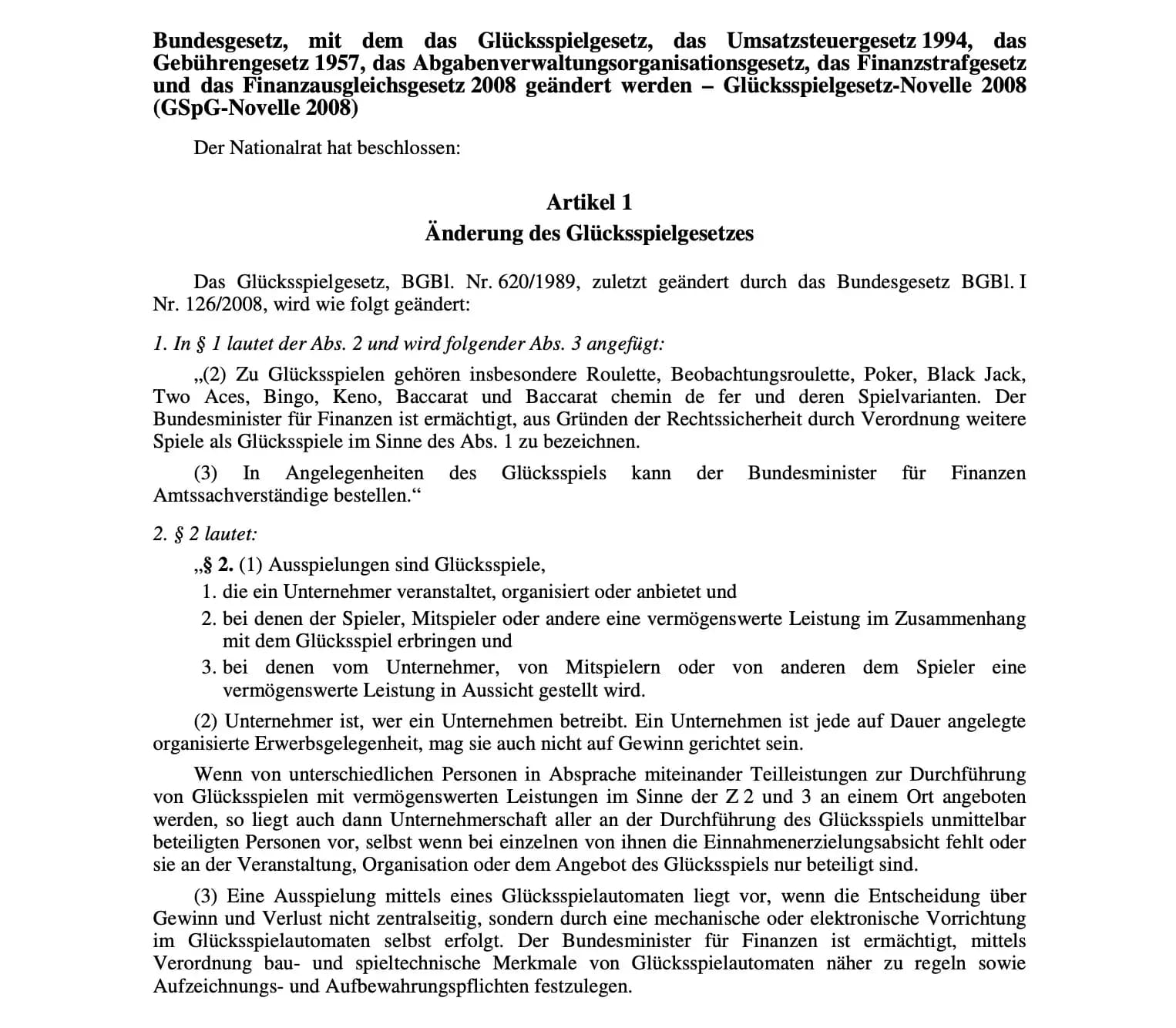
The Federal Ministry of Finance, headquartered in Vienna, serves as both regulator and supervisor for all gambling activities across the Republic of Austria. Operating under statutory mandate rather than as an independent authority, the Ministry exercises powers that extend far beyond typical regulatory oversight.
The BMF's responsibilities encompass the entire gambling ecosystem:
This centralised model ensures direct state control over gambling operations, with the Ministry maintaining detailed registers of all concessionaires and licensed operators. The approach reflects Austria's fundamental policy position that gambling should remain a tightly controlled exception to normal commercial freedoms.
| Category | Information |
|---|---|
| Official name | Federal Ministry of Finance (Bundesministerium für Finanzen – BMF) |
| Legal basis | Austrian Gambling Act (Glücksspielgesetz – GSpG) |
| Jurisdiction | Republic of Austria |
| Regulatory scope | Licensing, supervision, enforcement, player protection |
| Headquarters | Vienna |
| Licensing authority | Federal Ministry of Finance |
| Supervisory powers | Concessions, compliance monitoring, enforcement |
| Official website | bmf.gv.at |
| Registers maintained | Concessionaires and licensed operators |
€1.2 billion
Austria's annual gambling market value
2
Nationwide concession holders
12
Land-based casinos operated by Casinos Austria AG
2,010
Year Staff Unit for Addiction Prevention established
30 September 2027
Österreichische Lotterien concession expiry
31 December 2030
Latest casino concession expiry date

Austria has not adopted a liberalised gambling market structure. Instead, the Federal Ministry of Finance has granted nationwide concessions to just two operators, creating what industry observers describe as one of Europe's most restrictive market access regimes.
Österreichische Lotterien GmbH holds the exclusive federal concession for lotteries and electronic gambling, including all online gambling activities. The company's authorisation extends until 30 September 2027, covering a specifically defined catalogue of games of chance that must be explicitly listed in the concession decision.
The operator's digital monopoly includes the licensed platform win2day.at, which represents Austria's only legal online gambling destination. This arrangement effectively blocks all foreign-licensed operators from offering services to Austrian consumers, regardless of their authorisation status in other EU jurisdictions.
Casinos Austria AG operates twelve land-based casinos across Austria under federal concessions that expire on varying schedules. Depending on individual casino locations, these concessions remain valid until either 31 December 2027 or 31 December 2030.
The staggered expiration dates reflect the Ministry's approach to concession renewal, allowing for periodic review of market conditions and operator performance. Each casino operates under strict technical requirements and compliance standards monitored continuously by federal authorities.
Market Access Restriction
Austria has not adopted a liberalised gambling market structure. The Federal Ministry of Finance has granted nationwide concessions to just two operators, creating one of Europe's most restrictive market access regimes that effectively blocks all foreign-licensed operators from serving Austrian consumers.

Austria's online gambling sector represents the most restrictive element of the national framework. Foreign gambling licences do not confer market access in Austria for online gambling activities, creating a hermetically sealed market that operates independently of broader European licensing regimes.
Warning
Online gambling services offered without a federal concession are unlawful under Austrian law, regardless of whether operators hold valid licences from other EU member states or recognised jurisdictions.
The legal consequences extend beyond regulatory sanctions. According to guidance published by the Austrian Federal Economic Chamber (Wirtschaftskammer Österreich – WKO), contracts concluded with unauthorised online gambling providers may be considered legally ineffective under Austrian law, potentially triggering civil law disputes over contract validity.
This position creates significant practical challenges for consumers who engage with internationally licensed operators, as they may find themselves without legal recourse in disputes. The approach also isolates Austria from broader European market integration trends in financial services and digital commerce.
| Element | Regulatory Position in Austria |
|---|---|
| Market access | Restricted, monopoly-based |
| Licensing model | Federal concession only |
| Authorised online operator | Österreichische Lotterien GmbH |
| Licensed online platform | win2day.at |
| Legal basis | Austrian Gambling Act (Glücksspielgesetz – GSpG) |
| Recognition of foreign licences | Not recognised |
| Competitive licensing | Not available |
| Legal status of unauthorised operators | Unlawful under Austrian law |
Warning
According to [the Austrian Federal Economic Chamber, contracts concluded with unauthorised online gambling providers may be considered legally ineffective under Austrian law. This creates significant risks for consumers who engage with internationally licensed operators, as they may find themselves without legal recourse in disputes](https://we-right.com/blog/gambling-regulation/gambling-regulation-in-austria-who-oversees-the-national-gambling-system/).
Regulatory supervision combines traditional oversight functions with expanded player protection measures. The Federal Ministry of Finance established a dedicated Staff Unit for Addiction Prevention and Counselling in 2010, reflecting the government's emphasis on harm prevention over market development.
The unit coordinates multiple functions:
This integrated approach positions player protection as a core regulatory objective rather than an ancillary compliance requirement. The model treats gambling regulation as fundamentally different from other licensed commercial activities, emphasising state responsibility for social outcomes.
Dedicated Harm Prevention Unit
The Federal Ministry of Finance established a Staff Unit for Addiction Prevention and Counselling in 2010, coordinating gambling harm prevention programmes, research on gambling behaviour, and development of responsible gambling standards. This positions player protection as a core regulatory objective rather than an ancillary compliance requirement.
Austria maintains that its monopoly-based system complies with European Union law by serving recognised public interest objectives through consistent market application. Only two operators currently hold nationwide gambling concessions issued by the Federal Ministry of Finance, a restriction the government justifies through several policy objectives:
Austrian authorities emphasise that the gambling monopoly is not designed to promote participation but to limit social impact while ensuring effective state control. This positions gambling as an exception to general freedom of services principles, justified by overriding public interest considerations.
The approach has withstood legal challenges in both national and European courts, though it continues to face scrutiny from market liberalisation advocates and cross-border service providers seeking market access. This contrasts sharply with Finland's recent decision to end EU's last online gambling monopoly, highlighting the divergent regulatory approaches within Europe.
While federal concessions dominate nationwide operations, Austria's regulatory framework also accommodates regional gambling activities under specific circumstances. However, all gambling supervision ultimately flows through the Federal Ministry of Finance, ensuring consistent application of the Austrian Gambling Act across different jurisdictions.
The federal-regional coordination mechanism prevents regulatory arbitrage while maintaining central control over market access decisions. This structure contrasts sharply with federal systems where regional authorities exercise independent licensing powers, such as in Germany or the United States.
Concession holders operate under continuous regulatory supervision that extends to technical systems, financial controls, and operational procedures. The Federal Ministry of Finance maintains detailed oversight of:
This comprehensive supervision model requires operators to maintain higher compliance standards than typically demanded in competitive licensing regimes. The approach reflects Austria's treatment of gambling as a regulated utility rather than a commercial entertainment service.
Comprehensive Supervision Standards
Concession holders in Austria operate under continuous regulatory supervision extending to gaming system integrity, financial transaction monitoring, customer due diligence procedures, and cybersecurity measures. This comprehensive model requires operators to maintain higher compliance standards than typically demanded in competitive licensing regimes.
The two-operator concession system creates a duopoly structure with clear market segmentation. Österreichische Lotterien GmbH dominates digital and lottery segments, while Casinos Austria AG controls premium land-based casino entertainment.
This division prevents direct competition between concession holders while ensuring comprehensive market coverage under state oversight. The structure also facilitates regulatory supervision by limiting the number of entities requiring continuous monitoring and compliance assessment.
The economic impact extends beyond direct gambling revenues to encompass employment, tourism, and tax generation. However, the monopoly structure limits innovation incentives and market responsiveness compared to competitive regimes.
Duopoly Structure Benefits
The two-operator concession system creates clear market segmentation with Österreichische Lotterien dominating digital segments and Casinos Austria controlling land-based operations. This division prevents direct competition while ensuring comprehensive market coverage under state oversight, facilitating regulatory supervision by limiting entities requiring continuous monitoring.
Austria's regulatory stance creates significant challenges for international operators seeking European market expansion. The closed concession system offers no pathway for market entry, forcing operators to either partner with existing concessionaires or focus expansion efforts on more accessible jurisdictions.
The Austrian model represents a deliberate rejection of market liberalisation trends, prioritising state control over commercial competition in gambling services.
For compliance officers, Austria's framework demands careful attention to cross-border service restrictions and consumer protection obligations. The legal ineffectiveness of contracts with unlicensed operators createss potential liability exposure that extends beyond traditional regulatory sanctions.
The monopoly structure also influences broader European policy debates about gambling regulation, providing a reference point for jurisdictions considering restrictions on market access or operator licensing. Austria's experience demonstrates the practical feasibility of maintaining closed gambling markets within the European single market framework.
With major concessions expiring between 2027 and 2030, Austria faces critical decisions about market structure evolution. The Federal Ministry of Finance must balance maintaining regulatory control with addressing technological innovation and changing consumer preferences.
The renewal process will likely examine operator performance against public policy objectives, including harm prevention effectiveness, regulatory compliance quality, and contribution to state revenues. However, the fundamental monopoly structure appears unlikely to change given Austria's consistent policy positions and legal framework stability.
These renewal decisions will influence Austria's gambling landscape for the next decade, potentially affecting everything from online platform capabilities to responsible gambling tool development and cross-border service coordination.
The Federal Ministry of Finance (Bundesministerium für Finanzen – BMF) serves as both regulator and supervisor for all gambling activities across Austria. The Ministry operates under statutory mandate rather than as an independent authority, exercising comprehensive powers over the entire gambling ecosystem.
No, foreign gambling licences do not confer market access in Austria for online gambling activities. Only two operators hold nationwide concessions, and services offered without federal concession are unlawful under Austrian law regardless of valid licences from other EU member states.
win2day.at is Austria's only legal online gambling destination, operated by Österreichische Lotterien GmbH under exclusive federal concession. This arrangement creates a hermetically sealed market that operates independently of broader European licensing regimes.
Österreichische Lotterien's digital monopoly expires on 30 September 2027. Casinos Austria's twelve land-based casino concessions expire on varying schedules, with dates ranging until either 31 December 2027 or 31 December 2030 depending on individual casino locations.
Austria maintains its monopoly-based system complies with EU law by serving recognised public interest objectives including limiting excessive gambling, preventing criminal activity, protecting consumers, and ensuring regulatory coherence. The government emphasises the gambling monopoly is designed to limit social impact rather than promote participation.
According to We-Right.
Legal Disclaimer
This content reflects a general overview of regulatory frameworks based on publicly available information. It does not constitute legal advice or a legal opinion. iGamingWriter.blog disclaims any liability arising from reliance on this material.

Spain's DGOJ oversees national online gambling through a structured licensing system established in 2011, while regions control land-based venues.
India's gambling regulation operates through a decentralised framework split between federal law and individual states, with no single national regulator overseeing the sector.
Get regulation updates, content insights, and market news delivered to your inbox every week.
No spam. Unsubscribe anytime.
