Loading...
Spain's DGOJ oversees national online gambling through a structured licensing system established in 2011, while regions control land-based venues.

Feb 18, 2026 · 13 min read
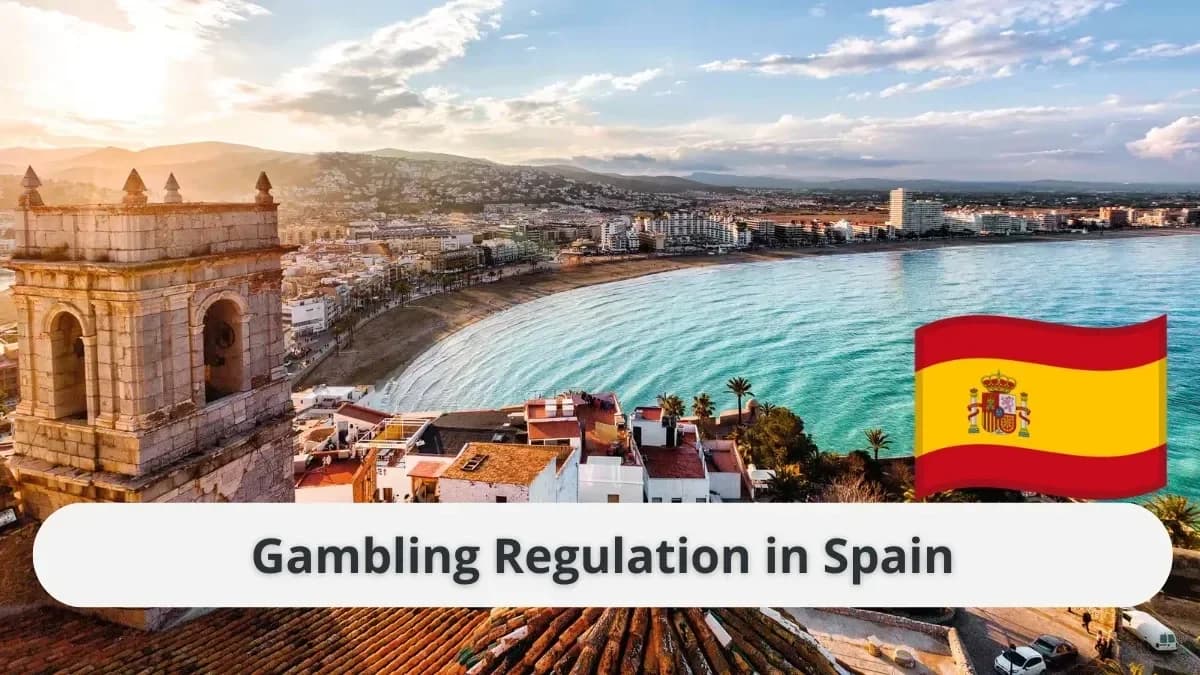
Spain operates one of Europe's most structured gambling regulatory frameworks through the Dirección General de Ordenación del Juego (DGOJ), which has overseen the national online gambling market since 2011. This comprehensive system divides regulatory responsibilities between national and regional authorities, creating a dual model that ensures consistent oversight of digital platforms while preserving regional autonomy over land-based operations.
DGOJ Quick Reference
Official Name: Dirección General de Ordenación del Juego
Established: 2011
Legal Basis: Law 13/2011 of May 27
Jurisdiction: National (online gambling)
Headquarters: Madrid, Spain
The Spanish gambling regulatory model distinguishes clearly between online and land-based gambling responsibilities. The DGOJ exercises exclusive jurisdiction over digital gambling activities offered across Spanish territory, including sports betting, online casino games, poker, and bingo platforms. Meanwhile, Spain's 17 Autonomous Communities retain regulatory authority over physical gambling venues such as casinos, gaming halls, and bingo establishments.
This constitutional division reflects Spain's decentralized administrative structure and ensures that regional governments maintain control over local gambling activities while the central government oversees the rapidly evolving online sector.
Law 13/2011 of May 27 established Spain's modern gambling regulation framework, replacing a fragmented system with unified national oversight for digital platforms. The legislation created the institutional structure for gambling supervision, defined regulatory powers, and specified which gambling activities require national authorization.
The DGOJ operates under the Ministry of Consumer Affairs and maintains its headquarters at Calle Atocha 3, 28012 Madrid. The regulator's mandate encompasses licensing, market supervision, enforcement actions, and player protection mechanisms within Spain's national gambling framework.
Important
Any gambling activity not expressly regulated or authorized under Spanish law is considered prohibited and may result in enforcement action.
Spain authorizes a clearly defined set of gambling activities at the national level, each subject to specific licensing conditions and operational requirements. Operators may only offer products for which they hold valid national licenses issued by the DGOJ.
Sports betting represents the cornerstone of Spain's regulated gambling market, offered through multiple formats under national licenses. Spanish legislation recognizes several distinct betting models:
All sports betting products must comply with approved betting programs, technical system requirements, and continuous monitoring obligations established by the DGOJ. Licensed operators undergo technical homologation processes and regular supervisory reviews to ensure ongoing compliance.
Online casino games operate under strict national regulation, limited to operators holding appropriate licenses. The DGOJ authorizes specific game categories that meet technical and functional requirements:
Each game must incorporate certified random number generators, approved software systems, and secure data transmission protocols. Games that have not received regulatory authorization or technical homologation cannot be legally offered within Spanish territory.
Online poker enjoys regulated status in Spain with operators offering multiple formats under appropriate national licenses:
Poker platforms must implement player identification systems, liquidity controls, technical certification standards, and regulatory monitoring requirements. While treated as peer-to-peer gambling activities, poker operations remain subject to comprehensive national supervision and enforcement measures.
Online bingo constitutes a distinct gambling category under Spanish national law, requiring dedicated licenses and approved technical systems. The DGOJ defines bingo as games where:
Licensed bingo platforms must ensure transparent game mechanics, certified random draws, and full compliance with responsible gambling measures, despite being often perceived as lower-risk products.
National lotteries occupy a special regulatory position within Spain's gambling framework. Non-occasional lottery organization, management, and commercialization are legally reserved to specific public operators:
These entities maintain exclusive authorization for state-wide lottery games on a non-occasional basis. Private operators cannot obtain licenses for national lotteries outside this reserved framework, ensuring state control over lottery operations.
Some Autonomous Communities, including Catalonia, operate their own lottery systems under regional competences, while others may authorize lottery product sales within their territories.
Spain operates a license-based gambling regulation model exclusively administered by the DGOJ for national-level activities. All non-occasional gambling operations require prior authorization through formal administrative procedures designed to ensure legal compliance, financial solvency, technical reliability, and responsible gambling safeguards.
Spanish gambling legislation establishes three distinct authorization types:
General Licenses enable operators to organize, market, and operate broad gambling categories including Betting, Contests, and Other Games. These licenses are granted for ten-year periods with renewal eligibility for equivalent durations. Holding a valid general license is mandatory before applying for product-specific authorizations.
Single Licenses authorize specific gambling products within existing general license scope. Only operators with valid general licenses may apply for single licenses, which are granted for minimum one-year and maximum five-year periods with renewal possibilities. General license termination automatically voids all associated single licenses.
Occasional Authorizations apply to limited-scope or temporary gambling activities under specific conditions, separate from the general licensing regime for non-occasional operations.
Gambling licenses are granted through public calls for applications published in Spain's Official State Gazette (Boletín Oficial del Estado). These procedures follow principles of publicity, competition, equality, transparency, objectivity, and non-discrimination.
The DGOJ may also initiate licensing procedures upon interested party requests, provided 18 months have elapsed since previous calls for the same gambling category. The regulator has up to six months to decide whether initiating new procedures serves the public interest.
Standard administrative procedure duration is six months from application submission. All licensing procedures ensure transparency and regulatory consistency while requiring strict compliance with technical, financial, and operational requirements defined by Spanish law.
Licensing Timeline
Operators should allow 6-8 months for complete licensing procedures, including preparation time for technical documentation and compliance materials.
The DGOJ exercises comprehensive supervisory authority over licensed operators to ensure ongoing compliance with gambling legislation and license conditions. This oversight extends beyond formal inspections to include continuous monitoring of platform operations and technical infrastructure.
Regulatory supervision encompasses multiple enforcement mechanisms:
The DGOJ maintains authority to request operational data, technical documentation, and direct access to gaming systems for compliance verification. This includes examination of player identification mechanisms, exclusion register consultations, technical system integrity certification, and gambling transaction traceability.
Spanish gambling law establishes a graduated sanctioning system allowing proportionate responses to violations. The regulator may impose financial penalties, suspend gambling activities, or revoke licenses depending on infringement severity, scope, and recurrence patterns.
Administrative sanctions are applied through formal procedures subject to publication requirements and legal safeguards. This framework preserves market integrity, prevents unlawful gambling activity, and ensures licensed operators maintain compliance with national regulatory standards.
Illegal gambling encompasses any gambling activity offered without valid Spanish authorization. Only operators holding licenses granted under Spanish law may legally offer online gambling services within Spanish territory. Foreign licenses are not recognized for Spanish market access.
The DGOJ enforces strict compliance requirements:
Traditional land-based gambling activities fall under Autonomous Community jurisdiction and remain outside national regulator supervision.
Player protection constitutes an integral component of Spain's gambling regulation, extending beyond licensing to encompass mandatory responsible gambling and consumer protection measures. Licensed operators must implement comprehensive safeguards focused on prevention and early detection of risky gambling behaviors.
The RGIAJ system represents Spain's primary self-exclusion mechanism, managed directly by the DGOJ. This national register enables individuals to exclude themselves from gambling activities while requiring licensed operators to verify player access before allowing participation.
Compliance with RGIAJ checks is mandatory for all licensed operators, creating a unified self-exclusion system across Spain's regulated gambling market.
Royal Decree 176/2023 strengthened Spain's player protection framework through mandatory safe play environments designed to prevent risky, problematic, or compulsive gambling behaviors while minimizing potential negative effects.
Licensed operators must implement active safe play measures including:
Royal Decree 958/2020 regulates gambling advertising, sponsorship, and commercial communications through strict promotional conditions. This framework establishes how operators may promote services while integrating responsible gambling and consumer protection messages into commercial communications.
The regulatory approach combines self-exclusion mechanisms, preventive operational measures, and advertising controls, making player protection a legally binding component of national gambling regulation rather than voluntary industry practice.
2011
DGOJ Establishment Year
10
General License Duration (Years)
6
Standard Licensing Process (Months)
18
Minimum Gap Between License Calls (Months)
Spain's constitutional structure creates clear jurisdictional boundaries between national and regional gambling oversight. While the DGOJ maintains exclusive authority over online gambling platforms with state-wide scope, land-based gambling falls under Autonomous Community competence.
Each of Spain's 17 Autonomous Communities establishes independent licensing rules, taxation schemes, and operational requirements for physical gambling venues. This regulatory separation ensures regional governments retain control over local gambling activities including:
The dual regulatory model requires coordination between national and regional authorities while maintaining distinct jurisdictional boundaries. Online gambling remains subject to unified national standards for licensing, supervision, player protection, and enforcement against illegal activity.
This structure allows Spain to maintain consistent digital gambling standards while granting regional flexibility to regulate physical venues according to local priorities and community preferences.
Licensed operators must comply with comprehensive technical standards covering gaming systems, random number generation, data security, and platform integrity. The DGOJ maintains detailed technical specifications for all authorized gambling categories.
Technical homologation requirements include:
Gaming software and platforms undergo rigorous testing and certification before receiving regulatory approval. Operators must demonstrate ongoing compliance with technical standards through regular audits and system updates.
Licensed platforms operate under continuous regulatory monitoring including:
These requirements ensure platform integrity while supporting the regulator's supervisory and enforcement functions across Spain's licensed gambling market.
Technical Compliance
All gaming systems must receive DGOJ technical certification before commercial deployment, with ongoing compliance monitoring throughout the license period.
Spain's competitive licensing framework enables qualified operators to enter the regulated market through transparent application procedures. The public tender system ensures equal opportunity while maintaining high regulatory standards for market participants.
Public calls for applications create competitive environments where multiple operators may apply for available licenses within specific gambling categories. The DGOJ evaluates applications based on:
Foreign operators may participate in Spain's licensed gambling market by establishing appropriate legal entities and meeting all national regulatory requirements. However, licenses from other jurisdictions provide no recognition or market access rights within Spanish territory.
International operators must undergo the same licensing procedures, technical certifications, and compliance obligations as domestic entities, ensuring regulatory equality while maintaining Spanish market protection standards.
Spain's gambling regulatory framework continues evolving to address emerging technologies, changing consumer behaviors, and developing industry practices. The DGOJ actively monitors international regulatory trends while maintaining Spain's structured approach to market oversight.
Recent developments include enhanced player protection measures, strengthened advertising restrictions, and expanded technical requirements for gaming platforms. The regulator balances market innovation with consumer protection priorities.
Royal Decree 176/2023 exemplifies Spain's proactive approach to responsible gambling, introducing mandatory safe play environments that exceed many international standards for player protection and harm prevention.
As Spain's licensed gambling market matures, the DGOJ continues refining supervisory practices, enforcement mechanisms, and industry standards. This evolutionary approach maintains regulatory effectiveness while supporting legitimate market development within Spain's legal framework.
The dual regulatory model's success demonstrates how constitutional structures can accommodate both national consistency and regional autonomy in gambling oversight, providing a potential model for other jurisdictions considering similar approaches.
Spain's approach reflects a compliance-driven, institutionally structured regulatory system in which legal certainty, consumer protection, and market integrity are core elements rather than optional safeguards.
Spain's gambling regulation represents a mature, structured approach combining clear legal frameworks, comprehensive licensing procedures, robust enforcement mechanisms, and mandatory player protection standards. The DGOJ's oversight ensures market integrity while supporting legitimate gambling operations within Spain's carefully defined regulatory boundaries.
According to the Dirección General de Ordenación del Juego.
Gambling in Spain is regulated at the national level by the Dirección General de Ordenación del Juego (DGOJ), which oversees licensing, supervision, and enforcement of online gambling nationwide.
Yes, gambling is legal in Spain when conducted in accordance with national and regional laws. Online gambling requires a valid national license issued by the DGOJ.
The primary legal framework is Law 13/2011 of May 27, which establishes the rules for gambling regulation and supervision in Spain.
Online gambling licenses in Spain are issued exclusively by the Dirección General de Ordenación del Juego.
Legal Disclaimer
This content reflects a general overview of regulatory frameworks based on publicly available information. It does not constitute legal advice or a legal opinion. iGamingWriter.blog disclaims any liability arising from reliance on this material.

The Federal Ministry of Finance maintains one of Europe's most restrictive gambling frameworks, limiting nationwide operations to just two state-approved concessionaires.
India's gambling regulation operates through a decentralised framework split between federal law and individual states, with no single national regulator overseeing the sector.
The Gambling Regulatory Authority of Ireland marks a fundamental shift from fragmented oversight to centralised regulation, introducing modern safeguards and unified licensing.
Get regulation updates, content insights, and market news delivered to your inbox every week.
No spam. Unsubscribe anytime.
