Loading...
Finland becomes the last EU member state to abandon exclusive online gambling monopoly, with new multi-licensing framework taking effect in July 2027.

Mar 2, 2026 · 7 min read
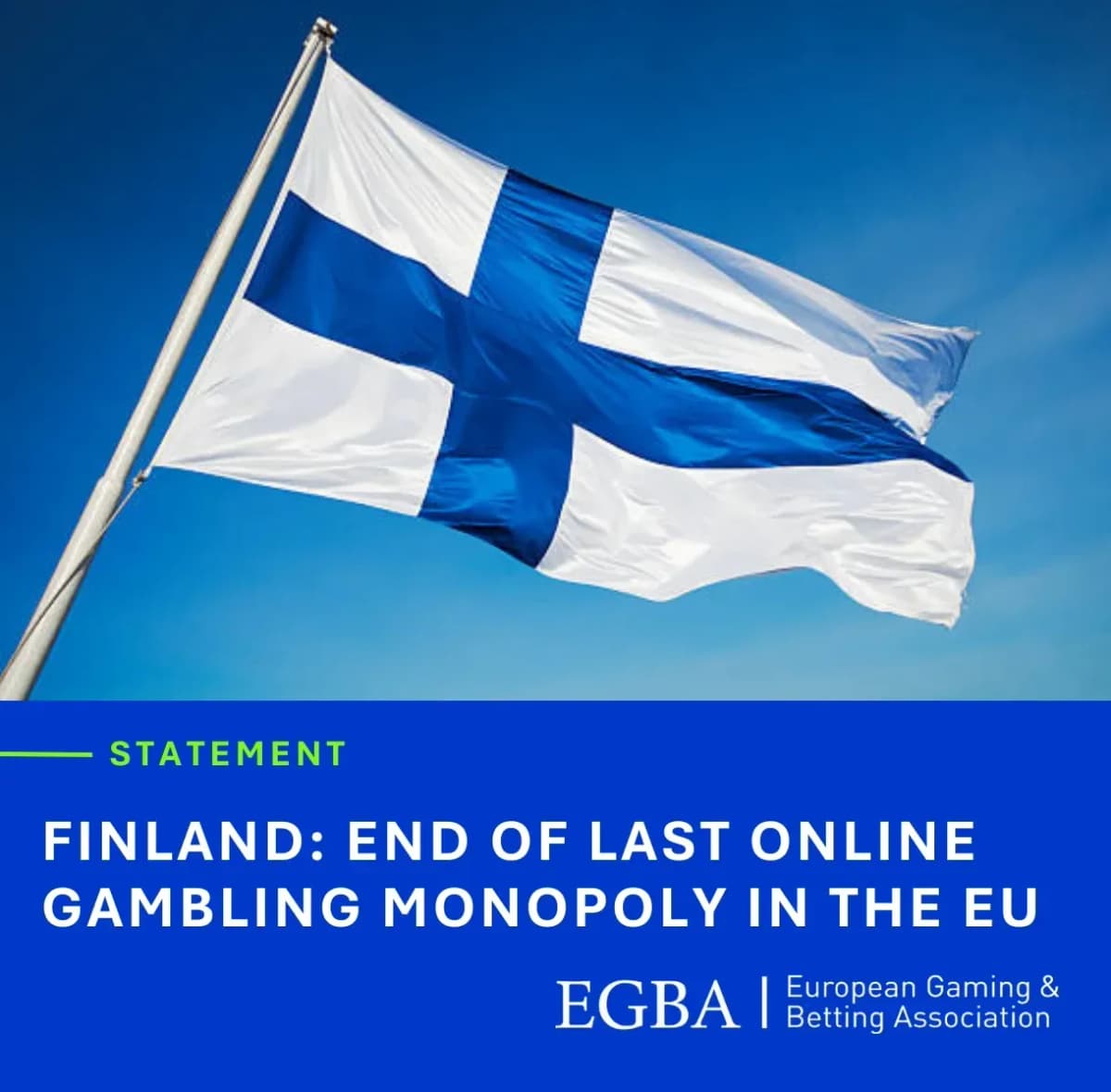
Finland has officially abandoned Europe's final exclusive online gambling monopoly after President Alexander Stubb approved legislation ending Veikkaus's market dominance. The move positions Finland as the last EU member state to embrace multi-licensing, completing a continental shift toward competitive gambling regulation.
The transition received overwhelming political support, with 95% of Finnish parliamentarians voting in favour of the new regulatory framework. This decisive margin reflects broad recognition that monopoly systems no longer serve public policy objectives effectively in the digital era.
Under the approved legislation, Finland's multi-licensing system will launch on 1 July 2027, giving regulators and operators nearly three years to prepare for market liberalisation. The extended timeline allows for comprehensive framework development and ensures operators can meet compliance requirements before market entry.
Notably, even Veikkaus – the state-owned operator that previously held exclusive rights – supported the legislative change. This backing demonstrates industry acknowledgment that competitive markets create more sustainable business environments and better serve consumer interests.
"We're pleased that Finland has finally moved to a multi-licensing system for online gambling. The momentum towards multi-licensing in Europe is now complete."
— Maarten Haijer, Secretary General of EGBA
95%
Finnish parliamentarians voting in favour
1 July 2027
Multi-licensing system launch date
3 years
Preparation timeline for market liberalisation
Finland's decision marks a significant milestone in European gambling regulation. Every EU member state that regulates online gambling now operates under multi-licensing frameworks, validating the regulatory approach long advocated by industry bodies and policy experts.
The European Gaming and Betting Association (EGBA) has championed licensing reform in Finland for years, arguing that competitive markets deliver superior consumer protection and policy outcomes compared to monopoly systems. Finland's transition provides empirical validation of this position.
This regulatory evolution reflects broader recognition that digital gambling markets require flexible, competitive frameworks to effectively channel consumer demand away from unregulated operators. Monopoly systems, while historically protective, struggle to compete with the diverse offerings and technological innovations available through unlicensed platforms.
"Governments have concluded that public policy objectives, particularly related to consumer protection, are more effectively met through well-regulated online competition fostered by multi-licensing."
— Maarten Haijer, Secretary General of EGBA
Historic Milestone
Finland's transition marks the completion of Europe's shift to multi-licensing systems. Every EU member state that regulates online gambling now operates under competitive frameworks, validating the regulatory approach long advocated by industry experts and policy makers.
Despite Finland's progress, significant regulatory challenges persist across Europe. Norway and Iceland maintain fully exclusive monopoly systems, while several EU countries operate product-specific monopolies or restrictions that create regulatory gaps.
According to EGBA analysis, these suboptimal frameworks inadvertently drive consumers toward black market operators where basic protections often don't exist. Unlicensed platforms typically offer no deposit limits, age verification, or problem gambling interventions – exposing vulnerable players to significant harm. The revenue implications are equally concerning. When players migrate to unregulated platforms, governments lose tax revenue while operators avoid compliance costs associated with consumer protection measures. This creates an economically distorted market that rewards regulatory avoidance.
Multi-licensing addresses these challenges by providing attractive regulated alternatives that can effectively compete with black market offerings. Licensed operators must invest in consumer protection, contributing to safer gambling environments while generating tax revenue for public services.
Warning
Countries maintaining exclusive monopoly systems inadvertently drive consumers toward unregulated black market operators. These unlicensed platforms typically offer no deposit limits, age verification, or problem gambling interventions, exposing vulnerable players to significant harm while governments lose tax revenue.
Finland's transition sends clear signals to remaining monopoly jurisdictions. Norway and Iceland face increasing pressure to reconsider their exclusive systems as evidence mounts regarding multi-licensing effectiveness.
"Similar deliberations about licensing are inevitable in Norway and Iceland – it's only a matter of time. With nearly 20 years of regulatory experience in Europe, it's clear that full multi-licensing, for all products, offers the best pathway to create a well-regulated, competitive and consumer-centric market."
— Maarten Haijer, Secretary General of EGBA
The Finnish example demonstrates that even countries with deeply entrenched monopoly traditions can successfully reform their systems. This precedent may accelerate regulatory discussions in other Nordic countries, particularly as cross-border gambling activity continues expanding.
For European operators, Finland's decision opens a significant new market opportunity. The country's tech-savvy population and high digital adoption rates make it an attractive expansion target for licensed operators seeking growth opportunities.
Market Opportunity
Finland's tech-savvy population and high digital adoption rates make it an attractive expansion target for licensed operators. Companies should begin preparing compliance frameworks now to capitalize on the July 2027 market opening, leveraging the three-year preparation window for strategic planning.
Finland's transition represents more than market liberalisation – it signals growing regulatory standardisation across Europe. As member states adopt similar multi-licensing frameworks, compliance processes become more predictable and scalable for operators serving multiple jurisdictions.
This standardisation trend benefits both operators and regulators. Companies can leverage compliance investments across markets, while regulators can share best practices and coordinate enforcement efforts more effectively.
The result is a more mature, interconnected European gambling market where consumer protection standards align and regulatory arbitrage opportunities diminish.
Industry Standardisation
Growing regulatory alignment across Europe enables operators to leverage compliance investments across multiple jurisdictions. This standardisation reduces regulatory arbitrage opportunities while creating more predictable and scalable compliance processes for multi-market operators.
Finland's regulatory shift creates immediate strategic considerations for industry stakeholders. EGBA members collectively hold 321 online gambling licences across 21 European countries, representing approximately 30% of Europe's online gambling gross gaming revenue.
These operators now face expanded market opportunities alongside increased competitive pressure as Finland joins the multi-licensing ecosystem. Success will depend on delivering superior customer experiences while maintaining robust compliance standards.
For compliance officers and product managers, Finland's approach provides valuable insights into effective market transition strategies. The three-year implementation timeline allows comprehensive preparation, potentially serving as a model for future regulatory reforms.
321
Online gambling licences held by EGBA members
21
European countries with EGBA member presence
30%
Share of Europe's online gambling gross gaming revenue
Finland's new multi-licensing framework will launch on 1 July 2027. This three-year timeline provides regulators and operators sufficient time to develop comprehensive compliance frameworks and prepare for market liberalisation.
Veikkaus backed the legislative change because competitive markets create more sustainable business environments and better serve consumer interests. The state-owned operator recognised that monopoly systems struggle to compete effectively with unlicensed platforms in the digital era.
Norway and Iceland maintain fully exclusive monopoly systems for online gambling. Several other EU countries operate product-specific monopolies or restrictions that create regulatory gaps, though Finland was the last to maintain a complete online gambling monopoly.
Multi-licensing provides attractive regulated alternatives that can effectively compete with black market offerings. Licensed operators must invest in consumer protection measures like deposit limits and age verification, creating safer gambling environments while generating tax revenue for governments.
Finland's transition accelerates regulatory standardisation across Europe, making compliance processes more predictable and scalable for operators serving multiple jurisdictions. This enables companies to leverage compliance investments across markets while regulators can better coordinate enforcement efforts.
According to European Gaming and Betting Association.
Legal Disclaimer
This content reflects a general overview of regulatory frameworks based on publicly available information. It does not constitute legal advice or a legal opinion. iGamingWriter.blog disclaims any liability arising from reliance on this material.
The Gambling Regulatory Authority of Ireland marks a fundamental shift from fragmented oversight to centralised regulation, introducing modern safeguards and unified licensing.

Spain's DGOJ oversees national online gambling through a structured licensing system established in 2011, while regions control land-based venues.

The Federal Ministry of Finance maintains one of Europe's most restrictive gambling frameworks, limiting nationwide operations to just two state-approved concessionaires.
Get regulation updates, content insights, and market news delivered to your inbox every week.
No spam. Unsubscribe anytime.
