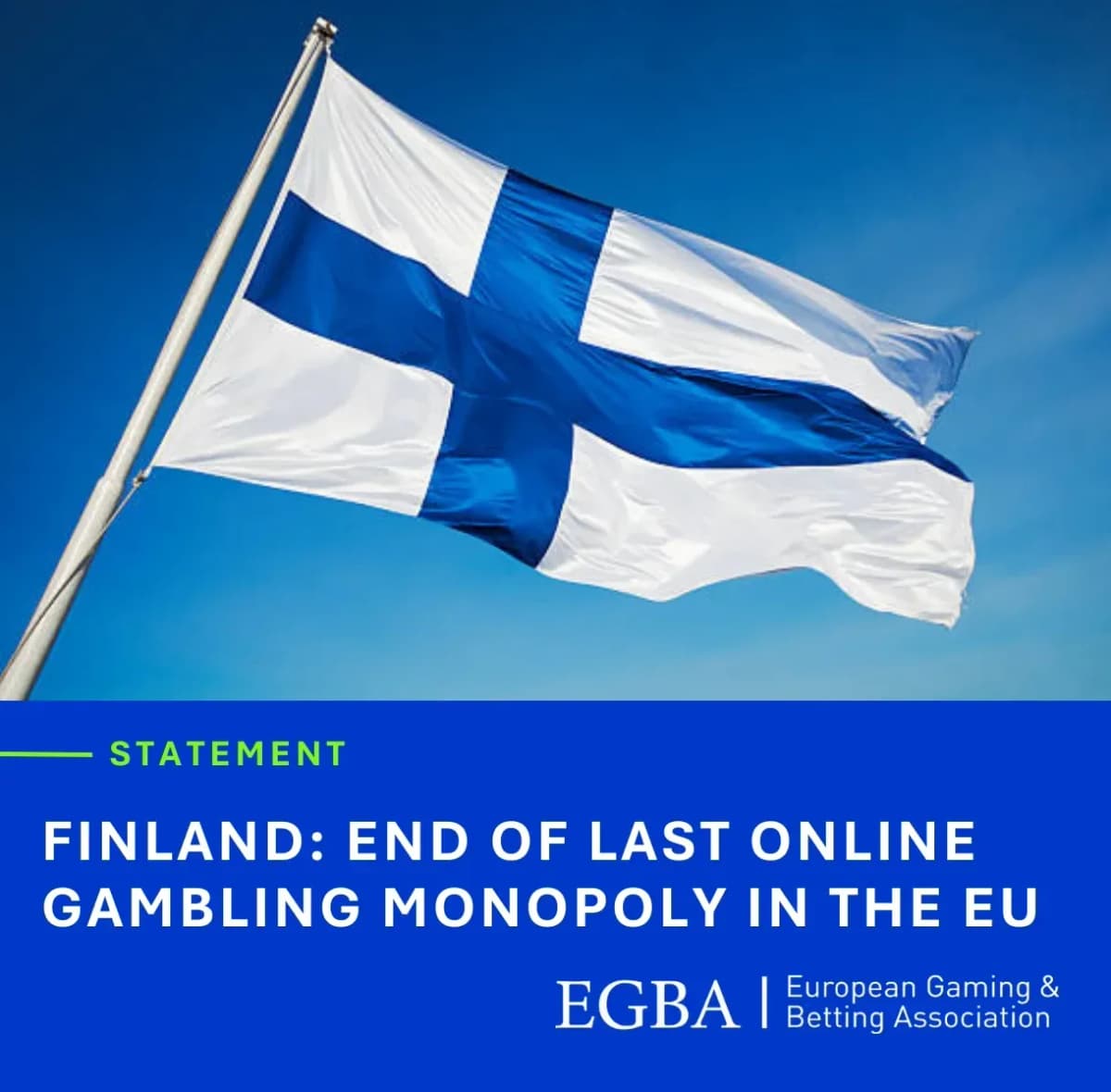
A historic chapter in European gambling regulation closed as Finland's President Alexander Stubb approved legislation ending the Veikkaus monopoly, making Finland the last EU country to embrace competitive online gambling markets. The overwhelming parliamentary support – 95% of Finnish lawmakers voting in favor – signals the definitive end of fully exclusive online gambling monopolies across the European Union.
The new multi-licensing framework will take effect on 1 July 2027, completing a regulatory transformation that has swept across Europe over the past two decades. Finland's decision means every EU member state that regulates online gambling now operates under competitive licensing systems.
Parliamentary Consensus Drives Change
The transition gained broad political backing across Finland's parliament, with even state-owned operator Veikkaus supporting the shift toward competition. The monopoly operator recognised the benefits of operating on a more level playing field with other licensed providers.
"We're pleased that Finland has finally moved to a multi-licensing system for online gambling. The momentum towards multi-licensing in Europe is now complete."
— Maarten Haijer, Secretary General of EGBA
The European Gaming and Betting Association (EGBA) had advocated for Finnish licensing reform for years, viewing the development as validation of competitive regulatory approaches over monopoly systems.
"Governments have concluded that public policy objectives, particularly related to consumer protection, are more effectively met through well-regulated online competition fostered by multi-licensing."
— Maarten Haijer, Secretary General of EGBA
95%
Finnish lawmakers voting in favor
321
EGBA member licences across Europe
21
European countries with EGBA operations
30%
Share of Europe's online gambling GGR
20
Years of European regulatory evolution
Regulatory Landscape Transformation
Finland's move completes a 20-year evolution of European gambling regulation, with competitive markets now spanning the EU. EGBA members collectively hold 321 online gambling licences across 21 European countries, operating under strict compliance requirements while accounting for approximately 30% of Europe's online gambling gross gaming revenue.
The association organises the annual European Safer Gambling Week, bringing together industry stakeholders to promote safe and sustainable play. Beyond individual licence requirements, EGBA members adhere to industry standards and codes on responsible advertising, anti-money laundering, and player protection.
Black Market Challenge Remains
Despite the EU-wide shift to multi-licensing, regulatory gaps persist. Norway and Iceland maintain fully exclusive monopoly systems, while several EU countries operate product-specific monopolies or restrictions that can drive players towards unregulated alternatives.
The unregulated black market poses ongoing challenges where basic consumer protections often don't exist, leaving players vulnerable while tax revenues disappear. Multi-licensing frameworks offer proven solutions by providing attractive regulated alternatives that effectively channel players away from illegal operators.
"Similar deliberations about licensing are inevitable in Norway and Iceland – it's only a matter of time. With nearly 20 years of regulatory experience in Europe, it's clear that full multi-licensing, for all products, offers the best pathway to create a well-regulated, competitive and consumer-centric market."
— Maarten Haijer, Secretary General of EGBA
Regulatory Gap Impact
Norway and Iceland's monopoly systems, along with product-specific restrictions in other EU countries, continue to drive players towards unregulated alternatives where basic consumer protections don't exist and tax revenues are lost.
Industry Standards and Compliance
EGBA's Brussels-based operations represent leading online gambling operators established, licensed, and regulated within the EU. The association collaborates with national and EU authorities to foster well-regulated online gambling markets that protect consumers and channel demand towards regulated operators.
Member companies operate under multiple layers of regulatory oversight, with each licence carrying strict compliance requirements. This regulatory framework enhances consumer protection, increases tax revenues, and ensures stronger regulatory control of gambling markets.
Warning
Finland's transition demonstrates that even countries with long-standing monopoly traditions can reform their systems to meet digital age requirements.
Strategic Implications for European Markets
Finland's regulatory evolution represents more than a national policy shift – it signals the maturation of European gambling regulation towards evidence-based approaches. The overwhelming political support demonstrates how competitive frameworks can gain broad consensus when public interest and regulatory evidence align.
The completion of EU multi-licensing creates new opportunities for operators while establishing clearer compliance expectations across member states. However, the persistence of monopoly systems in Norway and Iceland, along with product-specific restrictions elsewhere, suggests further regulatory convergence may emerge as these jurisdictions evaluate their frameworks against EU precedents. For compliance officers and operators, Finland's transition reinforces the trend towards comprehensive licensing systems that cover all gambling products. The emphasis on channelling players away from black markets through attractive regulated alternatives will likely influence regulatory discussions beyond the EU's borders.
Compliance Strategy
For operators entering the Finnish market post-2027, focus on comprehensive licensing systems covering all gambling products. The emphasis on channeling players from black markets through attractive regulated alternatives will be crucial for regulatory approval and market success.
The new framework will become operational on 1 July 2027, marking the end of the Veikkaus monopoly. This timeline allows for proper regulatory preparation and industry transition.
Finland was the last EU country with a fully exclusive online gambling monopoly. Its move to multi-licensing means every EU member state that regulates online gambling now operates competitive licensing systems.
Multi-licensing frameworks provide attractive regulated alternatives that effectively channel players away from illegal operators. This approach offers better consumer protection and ensures tax revenues flow to legitimate markets rather than unregulated alternatives.
According to European Gaming and Betting Association.